Showing posts with label carbohydrates. Show all posts

Wednesday, 25 November 2015

Know Them: The Protein Suppliments

Whenever you are serious and start caring about your health the first thing stuck in your mind is the required essential nutrition's and their resources and here I am informing you about these nutrition's, however the general nutrition's are vitamins, minerals such as calcium, phosphorus, potassium, sulfur, sodium, chlorine, and magnesium except these minerals we also require carbohydrate, fat, abundant amount of water and the most essential one protein now you got it how essential is the protein is? Now you will be thinking what the protein is and why is so essential then let me remind you;they are one of the building blocks of body tissues, and serve as a fuel source, but as a fuel source they only contains 4kcal per gram which is quite less than the energy offered by carbohydrate or lipids which contains around 9kcal. However the most important aspect and illustrating virtue of protein from a nutritional point of view is amino-acid's composition.
Basically proteins are the polymer chain of amino-acids which are linked together by peptide bond and these peptide linkage broke down in stomach in presence of hydrochloric acids to stimulate digestion process and this is essential for the synthesis of essential amino acids. And by knowing the Essen city of protein you will be planning to start intake of protein supplements then let me keep you aware of the phony ingredients flowering in the local markets with the same product name and theme. Sometimes it is not easy to integrate between the fake one and the genuine product. So I will recommend you to go for a branded one's with the genuine hologram image on the package and when it comes to online purchasing of products, it's concern of more beware of the fraud products or the fake/in-genuine ingredients in the supplements.

However in some of the consideration purchasing online products are also beneficial as it offers you the right to claim the authority for late delivery, for in-genuine product or the fake brand, for not giving the value for your money.These protein supplements are easily available in numerous colors and flavors alike strawberry, vanilla, chocolate, etc. It is usually recommended and advised to have these protein supplements immediately after working out, as it helps you out to rebuilds the muscles and regaining the lost energy.
One can easily have these protein bodybuilding supplements in the local market place. They're well available in most of the medical stores and other malls. These supplements comes under the name of various brand names; therefore it is important to go through the ingredients presents in the supplement before purchasing.

Source 

Wednesday, 26 August 2015

Weight Loss And The Proper Nutrition

Large-healthy-food-selectionApproaching the matter of nutrition and weight loss, we have to emphasize the two basic issues that nutrition itself is a culture of eating proper food in a proper manner. Let’s start with the first, proper food.

All cells and tissues in our body are formed by the food we eat. And also food is the energy source for our body functions. So, this can explain why proper food is so important.

Food is one of our strongest motivators. And unfortunately, most of us consider food to be a source of pleasure only!

Our bodies are not fixed statues – they are always in process, which we call metabolism.

Perception, memory and all the intricate complexities of bodily functions are possible because of having or producing enzymes, hormones and a thousand other wonders – that are produced in the body from what we eat.

As a source of energy our body uses carbohydrates (sweets), fat and protein. To be more specific, carbohydrates are the source of immediate energy, proteins are the body building blocks, and fats are the high-energy storage. But these roles sometimes overlap.

And faulty nutrition is the usual cause of illness!

At the same time, with correct choices we can prevent many food-related diseases such as heart attack (!), stroke, essential hypertension, diabetes and – even cancer!

More than a century ago, Ellen G. White, in "Counsels on Diet and Foods", shared her observation: "At mealtime cast off care and anxious thought. Do not feel hurried, but eat slowly and with cheerfulness, with your heart filled with gratitude to God for all His blessings". Isn’t it wonderful?

Just let me share with you part of our experience with nutrition and weight loss. If you haven't had any previous experience of following the simple principles I suggested when discussing how to reduce the amount of daily food, you might find them difficult to follow, but this is just on the face of it.

In reality it is much easier than it seems! And I promise, I’ll teach you how to master it. Because this issue of how to practice eating habits is essentially an important one!

The same food or eating process itself can bring you joy and fullness of life, or, on the other hand, if taken wrongly, can cause considerable damage to your health and even shorten your life!

How does overeating or eating the wrong food cause harm? The answer is: whatever food that our organism is not able to digest normally, becomes poisonous to us. Thus any poison will shorten our life!

This is the reason, why I suggest that my clients practice this: before starting to eat, gently close your eyes for a few moments, forget all your problems for a while and give yourself a smile! And then you can start eating.

Another recommendation is this: when eating, try to keep your eyes gently closed (or just turn your eyes away from the served food), while slowly chewing a small portion of food in your mouth.

Believe me, this process will bring you much more flavor, and benefits at the same time. Because just by doing this small thing you will lessen the portion of consumed meal by three to five times!!! (As I have already mentioned)

I would emphasize the importance of taking time to eat. When eating, if possible, make it a social occasion to communicate with your family or with your friends. But! (Always, there are some "buts"). If you decide to improve your eating habits, see if the company would be appropriate at this time, especially at the beginning. For this reason, it is better at first to have all the changes stabilized, so that you can resist any temptations...

But even when in difficult situations, we should never compromise basic principles of good nutrition. Always watch what you eat or drink!!! A well mannered person will know how to do this without compromising friendly relationships.

As we do this, we will have the added benefits of alertness, clear thinking, and a perception that is fully aware of life’s joyful events. But real joy comes from facing reality and patiently dealing with whatever life has to offer. If we take time to learn what is good for us and make a serious effort to put it into practice, we can expect to be rewarded with extra energy and a longer and happier life!

Let’s take a look at sweets. Which are conglomerates of simple sugars, most important of which is glucose. This simple sugar is the supplier of the most bodily energy. Penetrating into the blood stream it meets the constant need of all the cells. Due to insulin, glucose is able to pass through the cell membrane and become available for use.

At the same time, our bodies are capable of properly handling only a limited amount of simple sugars in a given period of time. When exceeded (if we eat too many sweets), the pancreas is forced to work overtime producing insulin for converting excess sugar into fat.

Small amounts of sugar will not do this, but we must remember that there is hidden sugar in most processed food and drinks. And this is the problem – we usually eat far more sweets than our pancreas can cope with!

Let’s see how we can avoid this problem. When we plan our diet we should give preference to the natural source of sweets, like fruits, then wheat, rice, potatoes, beans, and other starch-containing foods. Because these vegetable foods require quite a long period of time for to be digested, and simple sugar is released gradually. This allows our body to process this energy in an orderly fashion.

Latest scientific researches have revealed that: consuming excessive sugar (too many sweets) can lead to such problems as:

* Constipation.
* Causing dental caries by providing an ideal culture medium in the mouth, and by slowing down the internal fluid circulation in the teeth.
* Depression of the immune system, by interfering with the germ-killing capacity of white blood cells.
* Promotion of adult-onset diabetes.

Now we come to the practical application of the above for the weight loss. With the exception of some fruits the ideal diet will include only a minimal amount of sugar, and provide an abundance of complex carbohydrates such as those found in vegetables and whole-grain pasta.

Brigi G by Fit 4 Health

Saturday, 21 February 2015

How Much Protein Do We Actually Need?


proteinNutrients in food are critical for building and repairing body tissues and for regulating digestion, energy production and muscle contraction. The human body needs fuel in the form of calories from all three macronutrients—protein, carbohydrates and fat. Each macro plays an important role in the body and has specific functions. With all the hype around macros, and how much or little we really need of each, it seems that following a higher-protein, lower-carbohydrate diet is the way to go. Or is it? Should we be eating more protein than carbohydrates or fat? What are the best sources of protein—animal or plant based? Let’s break it down.
What does protein do for the body?
Protein is made up of amino acids, some of which your body can make (called “nonessential” amino acids), and some which you must obtain from food (called “essential” amino acids). Protein is the principal component of every cell in the body and is needed to build and repair tissues. It provides the building blocks for important hormones and digestive enzymes. Your body uses protein to carry oxygen in the blood and is needed for a healthy immune system. Protein is also important for blood sugar control and keeping you feeling fuller for longer periods of time. That’s why we recommend that every meal and snack contain some form of protein.
How much protein does the body need?
There's a lot of conflicting information about how much protein your body needs. The Recommended Dietary Allowance (RDA) states that you need 0.8 grams of protein for every kilogram of body weight. So, a 145-pound person (65.9 kg) would need 52.7 grams of protein a day. It has been argued that this is the minimum to prevent deficiency, and nitrogen balance studies have shown that there is a higher need for athletes, regardless of their sport. The joint American College of Sports Medicine and Academy of Nutrition and Dietetics position statement calls for 1.2 to 1.7 g/kg for strength athletes and 1.2 to 1.4 g/kg for endurance athletes.
While the body has the capacity to store carbohydrate and fat, there is no such storage for protein, which is why it must be consumed daily. When too much protein is consumed, it is either used as an inefficient source of energy or converted to fat. Excessive protein consumption, whether from food sources or by liquid or powder supplements, may cause dehydration, as well as negatively impact the kidneys and bones. When protein is consumed in the range of 1.4 to 2.0 g/kg, there does not appear to be any negative effect on the kidneys and bones.
Some people don’t want to do the math and calculate their protein needs based on body weight. Instead, you can calculate your protein needs based on a percentage of your total calorie intake. We recommend protein to comprise 15 to 35 percent of your total calorie intake. That’s a pretty big range and there are a few factors that determine your requirements, including:
1. Activity level (sedentary, athlete, recreational athlete, etc.)
2. Weight
3. Goals (maintain muscle mass, build muscle mass, lose weight, etc.)
4. Age

Special Considerations
Children and Teens
For most adults, protein plays a role in performance, recovery and injury prevention. For children and teens, a healthy, balanced diet is important for the same reasons, as well as to provide for proper growth. Most children don’t prefer protein-rich foods, opting instead for carbohydrates in the form of cereal, chips, bread and pasta. It’s important that adults (parents and caregivers) provide a wide array of protein foods and encourage their inclusion at every meal and snack. Although protein bars and powders are popular with young athletes, children and teens should be encouraged to reach for real food, including yogurt, cheese, nuts, nut butters, turkey and soybeans. 
Vegetarians
According to the Institute of Medicine, the protein needs of vegetarian athletes are no different than that of an omnivore, provided they consume a varied diet that includes complementary proteins. Because most plant-based foods are incomplete proteins (they are missing one essential amino acid), it is recommended that vegetarians consume a blend of protein-rich foods during the course of the day to provide all the essential amino acids. Some researchers and professional groups put the protein needs of vegetarian and vegan athletes higher due to the digestibility of plant-based proteins. Vegan athletes, whose primary sources of protein are nuts, seeds, soy and legumes, should aim for an additional 12 grams of protein each day.
Best Types of Protein
As mentioned earlier, protein is made up of amino acids, some of which are considered “essential” because our bodies cannot make them and must be obtained from food. However, that doesn’t mean that all of our protein choices must come from foods that have all of the essential amino acids. Instead, be aware of what foods contain protein and choose a variety of them each day.
Animal–derived Proteins
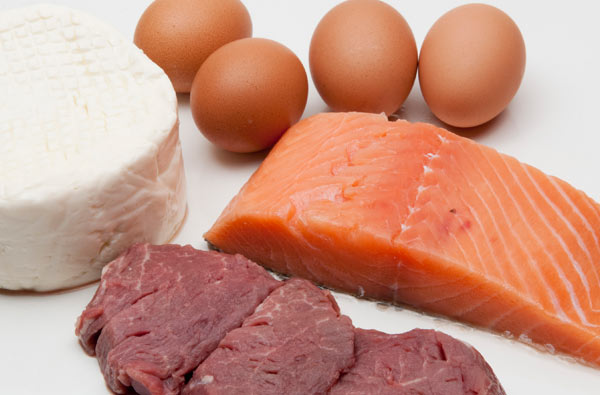
Animal protein foods include fish, chicken, turkey, meat (from cow, lamb, pig or goat), milk, yogurt, cheese and eggs. These are considered high-quality proteins because they contain all of the essential amino acids.
Plant-based Proteins
Most plant-based proteins are missing at least one essential amino acid and are therefore considered “incomplete” proteins. Exceptions include soy, quinoa, amaranth and buckwheat, which contain all of the essential amino acids. Other plant-based proteins, including vegetables, legumes, grains, nuts and seeds, are incomplete but when eaten during the same day (i.e., beans and rice) all the essential amino acids are available to the body.
Protein-rich Meals
Every meal should contain a protein, a healthy carb, vegetables and a healthy fat. Here are some of our favorite combinations that are easy to prepare and delicious!
-2/3 cup cooked black beans served over 1/2 cup cooked quinoa and topped with salsa and guacamole
-4 to 5 oz. wild Alaskan salmon, sautéed asparagus and wild rice, topped with slivered almonds
-2 poached eggs served on top of 2 slices whole-grain bread and 1/2 smashed avocado
-8 oz. plain Greek yogurt mixed with 1/2 cup berries, 1 Tbsp. each of chia, hemp and ground flax seeds
-1 banana spread with 2 Tbsp. all-natural almond butter and topped with 1 Tbsp. chia seeds
-4 turkey meatballs served over whole-grain pasta or spaghetti squash with marinara sauce and parmesan cheese


Source

Saturday, 14 February 2015

The Real Impact of Carbs

Carbohydrates


Carbohydrates have earned somewhat of a bad reputation over the years. Like other macronutrients before them, carbs have fallen victim to the latest diet trends and fads, many of which recommend significantly reducing carbohydrate intake across the board. In fact, the topic often inspires heated debate between health and fitness experts, not to mention the feelings of love, hate and guilt inspired in the average person. Carbs have become the guilty pleasure of macronutrients.
For those with weight loss as a goal, low-carb diets have seemed to provide the answer. Reduced carbohydrate diets are commonly recommended based on the initial weight loss; however, studies have found this initial weight loss is often not sustained and, in many cases, leads to weight gain down the road. Plus, without carbs to utilize for energy, the body begins to burn protein. Over the long-term, a balanced diet including carbohydrates will yield the best results.
It’s time to set the record straight about this essential macronutrient and find out the real impact of carbs on our bodies.

The Role of Carbs
Carbohydrates are a key source of energy. As the body ingests these macronutrients from food, it sets in motion a complex process of carbohydrate breakdown, insulin release and sugar absorption. This process creates, ideally, a steady stream of energy for the body, whether the individual is typing away at a desk or completing a rigorous training session. Clearly, carbohydrates play a vital role in our diets.

The Right Carb for the Right Job
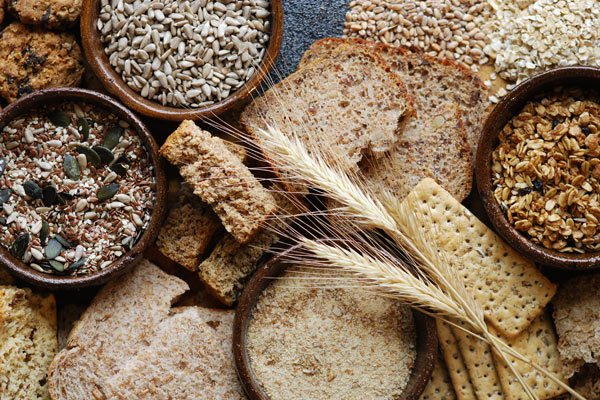
We’ve all heard the terms simple and complex carbs and, more recently, glycemic index. These refer to the structure of the carbohydrate and how quickly it’s broken down into glucose in the bloodstream. In general, the diet should focus on complex carbohydrates, such as whole-grain breads, rices and cereals, along with the right simple carbohydrates such as fruits, vegetables and low-fat dairy (simple carbs like refined sugar are best avoided). These types of carbohydrates provide not only energy, but also vitamins and minerals and, in many cases, fiber. When quickly trying to replenish energy stores after an intense workout, the right carb is often a simple carb paired with protein. Chocolate milk, yogurt with fruit and similar post-workout snacks can be good options. Like anything else in a good nutrition program, it comes down to taking a total-diet approach and choosing the right carb to fuel your day or refuel after a training session.

The Dark Side of Carbs
Yes, carbs are a primary source of energy and a must for a quality nutrition program. And yes, carbs can have a dark side just like any other macronutrient consumed in excess. This is where carbs start earning a bad reputation and it’s all in how we eat them. Carbohydrates are a source of energy, broken down by the body and then used or stored as glycogen, which is a quick source of energy to power your muscles through their next lifting session or high-intensity interval training workout. Unfortunately, the body’s ability to store glycogen is limited. Once the glycogen reserves are full, where does the excess glucose go? That extra energy broken down from excess carbohydrates is stored as fat instead of glycogen. Not all carbs lead to fat, just the excess ones.
It’s time to recognize the real impact of carbs—the energy they provide for day-to-day needs or extreme workout—as well as how we utilize them, for better or worse. Making a place for quality carbohydrates like whole grains, fruits, vegetables and legumes in a good nutrition program can ensure long-term success for you and your clients.

Source