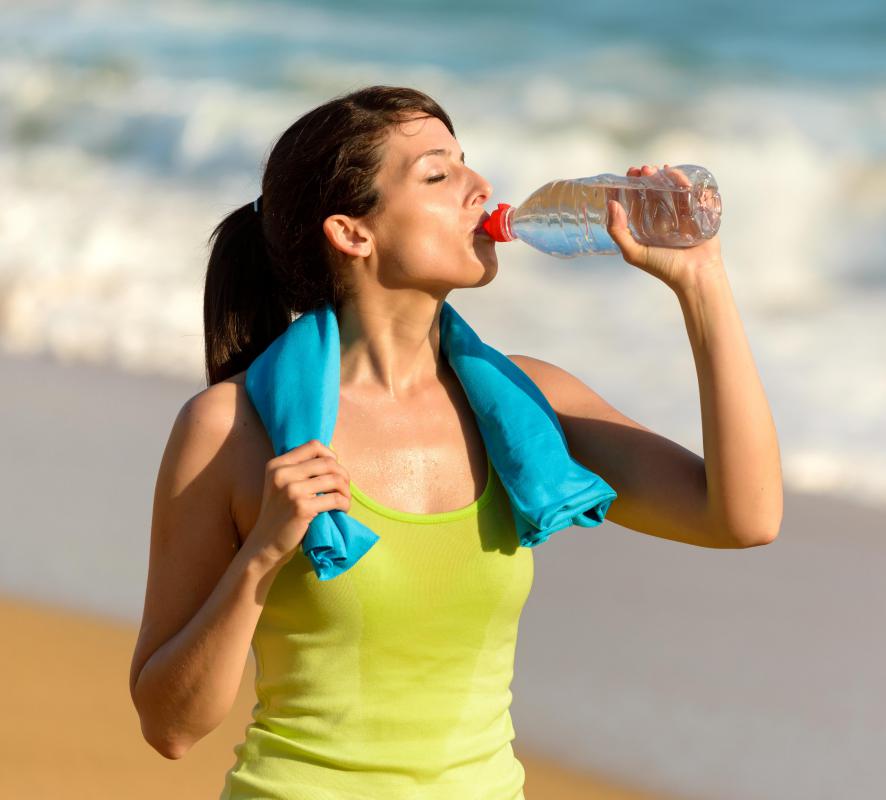
Not drinking enough water before a morning run, sweating a ton at the
gym, forgetting a water bottle to sip during spin class, and steamy
temps are surefire ways to put us on a path to dehydration doom. Staying
hydrated while exercising is important because of the added
sweat loss
(compared to day-to-day activities like working at a desk or watching
TV). Tossing back some H2O while working out can also help us fight
fatigue and prolong endurance.
Before you turn into a raisin inside and out, check out these 10 ways to prevent mid-workout dehydration.
1. Drink!
Good old H2O is critical for
rehydrating when the body experiences fluid loss, such as when we
sweat .
Even though many gyms like to keep pricey sports drinks and protein
shakes stocked on their shelves, most of the time, water will do the
trick just fine. Shoot to sip
seven to 10 ounces of fluid every 10 to 20 minutes during exercise to stay properly hydrated .
If you’re working out for longer than an hour or doing a particularly
intense exercise (like running a marathon or participating in a tough
training session), you will probably need to replace electrolytes, too —
this is where a sports drink or electrolyte-enhanced water comes in
handy . However, it’s also important to be wary of
overhydration: Too much water can lead to
hyponatremia, which is when excess water in our bodies dilutes the sodium content of our blood . "It is most often caused by long duration exercise and either drinking fluid at a rate that is
more than fluid losses or only replacing fluid losses with
hypotonic fluids like water," CamelBak hydration advisor, Doug Casa, says.
2. Sip on sports drinks and coconut water.
When we sweat, we lose
electrolytes,
which are minerals found in the blood that help to regulate (among
other things) the amount of water in the body. Research suggests and
sports drinks, such as Powerade and Gatorade, can help prolong exercise
and rehydrate our bodies because they contain electrolytes, which plain
old water does not
While an ordinary workout may not require electrolyte-replenishing,
those participating in longer and more intense periods of exertion, such
as running a marathon or going through a particularly intense workout,
will benefit from a good dose of electrolytes mid-workout . Not in to sports drinks, or want a more natural alternative? Water-enhancing electrolyte tablets,
coconut water, or a
homemade sports drink could be potentially effective substitutes.
3. Turn to fruit.
Many fruits are a great source of both electrolytes and fluids, though the dose of electrolytes can differ from fruit to fruit . Bananas and
dates are
known for having high levels of the electrolyte potassium, making them a
great option for refueling during an intense workout (for example, a
long run) . To stay hydrated while keeping up electrolytes, it’s important to drink water while munching on fruit (fruit contains
some water, but not as much as your water bottle).
4. Weigh yourself.
Hop on the scale before and after exercise. For each pound lost during activity, drink an additional
16 ounces of fluid. If your body weight change is
three percent or more, you may be experiencing significant to serious dehydration . Losing a few pounds of body weight after exercise can put
strain on the body and result in uncomfortable side effects like muscle cramps, dizziness, and fatigue . To prevent sweating away the water that keeps us hydrated, have a water bottle at the ready.
5. Check the toilet.
If you’re taking a mid-set break to hit the loo, check on the color of your urine to make sure you’re
staying hydrated.
When properly hydrated, urine should be pale yellow in color. Though it
may be tricky to keep an eye on it, try to watch the urine stream,
since the color of urine will dilute when it hits the toilet water.
Store this handy, dandy
urine color test in your phone or wallet to make sure your piddle is up to snuff — dark yellow urine may indicate dehydration.
6. Pay attention to your muscles.
Lean muscle tissue contains more than
75 percent water, so when the body is short on H2O, muscles are more easily fatigued .
"Staying hydrated helps prevent the decline in performance (strength,
power, aerobic capacity, anaerobic capacity) during exercise,"Casa
says. When your muscles feel too tired to finish a workout, try drinking
some water and resting for a bit before getting back at it.
7. Tame thirst.
Whatever you’re drinking, be it water, juice, or
sports drinks, make sure to take a sip or two whenever you
feel thirsty. Even if you’re not feeling totally parched, mild
thirst is still a sign of impending dehydration.
8. Pinch yourself. (No, really.)
Go ahead, pinch yourself!
Skin turgor,
which is the skin’s ability to change shape and return to normal (or
more simply put, it’s elasticity), is an easy way to check your
hydration (though not 100 percent reliable for everyone) .
Using your pointer finger and thumb, simply pinch the skin on the back
of your hand (not too hard!) and hold for a few seconds. When you let
go, if the skin takes a while to return to its normal position, you may
be dehydrated.
9. Keep dry mouth at bay.
One of the first signs of dehydration is
dry mouth.
If your mouth starts feeling like the Sahara, head to the water
fountain (or take a sip from your reusable water bottle!). A short water
break between sets or during quick breaks from cardio can help stave
off exercise-induced dehydration.
10. Stop if you get the dizzies.
Feeling lightheaded during a workout is a sign of
dehydration and a signal to tone it down a notch.
Though willpower sometimes makes us want to push ourselves through a
few more reps or another mile, feeling dizzy is an indicator that it’s
time to hydrate." Due to the decreased plasma volume with dehydration
during exercise," Casa says, "the heart must work harder to get blood to
the working muscles." When there’s not enough water in blood, both
blood volume and
blood pressure drop, resulting in dizziness.
Next time you plan for a sweat sesh, keep these tips in mind for a safe, hydrated workout.
Source