Showing posts with label weight lifting. Show all posts

Monday, 14 December 2015

Make Your Gym Sessions More Productive And Comfortable In The Right Gym Shoes

Getting a gym membership can be exciting whether you are looking forward to losing weight and shaping up, building muscles or simply getting fit. Whatever your reasons for going for some gym activities, you ought to remember that the shoes you select can have effects on how comfortable and productive you remain. A good gym shoe is one that does not keep reminding you that you are wearing it probably because it is too hot, too tight too heavy or because it pinches. You need to choose the right shoe to make sure that you give maximum concentration on  the gym workout.

Grip – This is very important especially when you are looking for weight lifting shoes. Shoes that offer a flat firm grip on the floor or ground gives you proper form and they keep you safe from skidding when lifting heavy weights. It is important to avoid thick soled high tech shoes when in the weight room for safety and effectiveness in the activity. Always look at the sole of your shoes and the anti-skid features it has to ensure that you select a pair that is bound to offer firm grip regardless of the gym floor that you get exposed to.

Support – This is another very important aspect of gym shoes especially for strength training and cardio sessions. Remember these are activities that consist of side to side shuffling and jumping and you therefore should look for a shoe that has ample support. Wide toe box high top sneakers can be great choices when you are looking for optimal movement. Look for shoes that offer ankle support and arch support as well to keep the aerobic movements swift and safe for you. Shoes that are able to keep your feet from inward rolling are best for treadmill time  so make sure you pay attention to this supportive feature as well.
Comfort – It is definitely something you must pay attention to. Choose high top sneakers that have ample cushioning to keep your feet comfortable whether you are strength training or lifting weight. A comfortable gym shoe should not only be cushioned but also light enough and breathable for your feet so that they don't end up feeling overheated and heavy as this can slow you down. Comfort also relies on the shoe size that you select. Make sure your workout shoes fit comfortably. Avoid choosing very tight shoes or very large ones because either way you will have a hard time keeping up with the gym demands.

Style – You might be going to the gym but you definitely do want to look stylish. There are so many stylish sneakers you can choose for your gym workouts so you do not have to compromise your sense of style just because you are hitting the gym, go for workout high tops! When you take time to weigh your options, you will find a gym shoe you love and one that matches your personality. Love the shoe to enjoy wearing it to the gym.
Bodybuilding sneakers are very important for any gym workout. Ensure you remain safe, productive and comfortable by selecting excellent gym shoes that have all important features included and get the right fit for your feet.

Source 

Monday, 7 December 2015

Exercise and Balanced Diet for a Healthy Life

A combination of a good exercise regime and a balanced diet will produce lasting results of healthy life. Exercise not only keeps a person fit but makes one feel good about oneself. As the sayings go, "a healthy body has a healthy mind" and "you are what you eat". Exercising regularly stimulates the brain to produce endorphin, a chemical that helps a person feel more relaxed and peaceful. A balanced diet is essential to maintain a healthy weight. Exercise and nutrition go hand in hand.
Studies have shown that aerobics exercises can make your bones strong which in turn helps you age better. Eating a low fat, low carb and high protein diet can be helpful in achieving goals faster. Exercising regularly prevents the risk of developing heart diseases, diabetes and certain types of cancers. To ensure that you are exercising hard enough without straining your heart, calculate heart rate by using the heart rate calculator. The optimum workout requires the heart beat to go up to 75% of heart rate which will burn a lot of calories in little amount of time.

Basic exercises to get you started:
There are three basic components to all exercise routines; Aerobics, Strength training and Flexibility or Stretching.

Aerobics exercise: Walking, jumping and swimming are the best forms of aerobics exercise. Jump rope brings the heart rate up much faster than walking. Hence, ten minutes of jump-rope, is equivalent to twenty minutes of walking. Swimming is considered as the only workout that allows all the muscle groups to work together simultaneously to burn maximum calories.
 
Strength Training: Weights and Pilates are known as muscle toning and strengthening workouts. Weight training should be done at least three times a week. Pilates are getting quite popular nowadays especially in the western countries. It teaches control of mind and body and helps strengthen core muscles.

Flexibility exercises: Yoga and stretching. Yoga is known for relaxation. It calms anxiety and brings about a holistic approach to life. Stretching is highly recommended after every workout. It is a good way to prevent injuries and soothe tired and sore muscles.

Benefits of exercising:
The benefits of exercise are innumerable, to name a few:
• Increased brain performance
• Feel more energetic
• Releases stress
• Keeps diseases at bay
• Makes the heart stronger
• Removes anxiety and depression

Importance of a Balanced Diet:
A balanced diet will provide you the energy your body needs to function properly. It is important to maintain healthy eating habits so that your immune system is strong enough to fight illnesses. Poor diet can hinder the growth and development in children. Kids with bad eating habits are more likely to continue it for the rest of their lives.
 
Easy tips to follow:
A healthy diet is a composition of fresh fruits and vegetables, lean proteins, dairy and whole grains. Here are some simple do's and don'ts to get you started.
• Don't fill yourself up with empty calories, like cakes and cookies, etc.
• Try to make every calorie count by obtaining them from the four major food groups.
• Prefer fresh fruits over store bought juices.
• Try to eat six small meals instead of three large ones.
• Always eat a healthy snack between breakfast and lunch, and between lunch and dinner.
• Finally have a small snack just before bed time. That way you won't end up consuming large portions at each meal.
When starting a healthy lifestyle, do some homework on how to calculate heart rate for optimum workout, find out the caloric intake required for your age and try to maintain a food journal in the beginning. Just keep yourself disciplined through exercise, maintain a balanced diet, and you can enjoy a happy life for many years to come. Start bringing a change today by living the healthy way.

Friday, 25 September 2015

How To Get Nice Muscle Tone And Build An Attractive Muscular Body

Most people know that they need to lift weight build muscles. However many just want to have nice muscle tone and an attractive but not too muscular body as they do not want big muscles. So they just lift light weights with high repetitions. Well, it is not going to work. To have nice muscle tone, you will have to build some muscles right? So you will have to lift heavy to force your muscles to grow. Once you are satisfied with the size of your muscles, you will then need to cut your body fats for your muscles to show up well and that means nice muscle tone.
You need to have a solid commitment and knowledge to get nice muscle tone and build an attractive muscular body. Here are some muscle building tips. Before you commence weight training, remember to warm up and as well as doing some stretching exercises.

•Train Muscle With Free Weights
Machines will have its uses, but for a start, concentrate on free weights. That means work almost exclusively with barbells and dumb bells. Free weights recruit many stabilizing muscles for balance and control. That means you will work a lot more muscle parts other than the intended ones. That will give rise to little bumps, striations and definitions all over your body instead of one huge lump of muscle on your intended muscle. Because of the extra stimulant created, your muscles grow faster too. Why else do you think all professional body builders almost exclusively use free weights?

•Train With Compound Exercises
Incorporate as many compound exercises as possible to your routines. Compound exercises are exercises that involve 2 or more joint movements. Because they utilize more joints, which means greater muscle mass are involved. Greater muscle mass means heavier weights. Heavier weights mean encouragement of greater muscle growth. More muscle growth means more tone to your muscles.
Some excellent compound exercises are the Squat, Deadlift, Chin ups, Dips, Bench press, Barbell Press, Lunges, Bent-Over Barbell Row...etc.

•Train Intensively But Do Not Over train
You must train intensively for your muscle to grow. Try to do more reps or add more weight than the previous session or else your muscles will think (actually muscles don't think, they adapt), "Ah... we've done that. Nothing new, so no need to grow bigger and stronger." That being the case, you will wreck your chances of attaining an attractive muscular body.
Because of this, it is important that every time you train hard, you give your body time to recover as it has suffered strains and actually sustained many small scarring. Contrary to popular belief, your muscles grow when you rest, especially when you sleep and not in the gym. So sleep at least 8 hours a day. Also, do not train everyday or work the same muscle group more than once or twice a week. If your training was vigorous enough, do no more than an hour per session.
Try not to do cardio work on the same day as your weight lifting work. In fact, during the muscle building phase, you should do less cardio work as aerobic exercises burn muscles. You can increase your cardio work at cutting body fat phase, so as to lose body fat in order for your muscle tone to show up nicely.

•Technique And Form
This is the most neglected fundamental of bodybuilding. Everywhere, everyday, you will see people using wrong forms and techniques. This not only compromises your growth, it will also make you susceptible to injuries... sometimes even permanently putting you out of the gym.
Wrong form occurs usually when people try to lift weights that are too heavy, whether out of vanity or ignorance. As a guide, always lift with strict focus on the muscle you intend to build for that exercise. Feel it contract and extend. Lift the weights deliberately and slowly. Never ever swing your weights up especially when doing bicep curls or the military press.

•To Build Muscles Fast You Must Perform Lower Body Exercises!
This is what most people don't realize. Your lower body makes up 60-70% of your musculature. If you don't train them, not only will you look spider-legged, your entire body will not grow as quickly and as large. Don't think that you can hide those skinny limbs in pants! Most people do not train their legs because squats, dead lifts and lunges can be very grueling exercises. But it is precisely because of such intensity that you will produce more growth hormones when you sleep and overall muscular development is stimulated. Your body shape will also be more balanced and therefore more attractive.
Do read up more to understand how your muscles work and then work on it so that in no time you will be a proud owner of a well tone attractive muscular body.

Source 

Wednesday, 16 September 2015

Fitness Programs for Women: Four Essential Tips

Fitness programs for women are often wrought with bad advice and pseudoscience. It's no wonder that so many fitness programs for women utterly fail! There's plenty of great information out there, but it can be impossible to find amidst the gimmicks, fad diets, and ineffective workout routines. If you're looking for fitness programs for women that really work, try using the four following tips.

1. Lift Heavy Weights
Plenty of women make their way into the weight room now and again, but most are afraid that they'll get "bulky" if they lift too heavy. That's nonsense! It takes male bodybuilders years of dedicated effort to pack on muscle mass, and they've got testosterone and tons of food on their side. Not only will you not get "too big" by lifting challenging weights - you'll actually look better.
Lifts like squats, bench presses, deadlifts, and other heavy movements are great for stimulating your metabolism and packing on a little bit of lean mass. Whether or not you realize it, that's really what you want! The right amount of muscle gives you a lean, fit look that you simply can't achieve with cardio alone. Challenging yourself in the gym will also cause you to burn more calories, which means you get to eat more and still lose weight.
2. Low Fat is NOT Healthy!
Some nutritionists are still stuck in the 1980s' low-fat craze, but avoiding dietary fat is NOT going to get you the results you want. In fact, most "low-fat" products like crackers, pretzels, and other grain-based products will make it nearly impossible to get lean! They make your blood sugar levels skyrocket, which in turn causes your body to secrete tons of insulin - a hormone which actually makes your body store even more fat. If you're trying to get lean, ditch most of your carbs and eat plenty of olive oil, avocados, nuts, and even some red meat.
3. Ease Up on the Cardio
If you're going to start lifting heavy weights (which you should!), then you're also going to need to ease up on all of that cardio you're probably doing. Slaving away on a treadmill or elliptical is simply not necessary, and it eats up way too much of your time. It's great to do a few short sessions per week for your cardiovascular health, but hours upon hours of monotonous movement aren't going to help you lose fat.
However, there is a much better type of cardio for optimal fat loss: interval training! On a track, treadmill, elliptical, or exercise bike, simply alternate short bursts of all-out sprinting with longer bouts of active rest. For example, you might do eight rounds of fifteen-second sprints and forty-five second "jogs" on an elliptical machine. The whole thing will be over in under ten minutes, but the intensity of the workout will cause your body to burn more fat all day long.
4. Don't Under-eat
One of the worst things you can do in fitness programs for women is to eat too little. Your body is an adaptive machine, and it will respond to severe calorie restriction by slowing its metabolism way down. Have you ever noticed how lethargic, tired, and cold you get when you don't eat enough? Those are sure signs that your body is burning less fuel!
That's not to say that you shouldn't cut calories at all - your body does need a reason to use its fat stores for energy instead of your food. The key is to eat just little enough that you can burn fat while avoiding hunger. Focus first on the right food choices, and then start counting calories if you truly need to. Overall, it's best to take it slow and steady with your fitness programs for women and focus on losing no more than a pound per week.

Monday, 31 August 2015

Best Weight Lifting Workout Tips

Image starting your strength training routine knowing you are about to begin the most effective, efficient workout routine possible. Being on a weight lifting workout routine that gets you in and out of the gym as quickly as possible with maximum benefit is what everyone should be aiming for.

After twenty plus years of celebrity fitness training in Beverly Hills, California, I would like to share with you my top six, most effective, weight lifting tips. If you follow these tips, you will know you have accomplished the maximum in the least amount of time.

Here are the six best muscle building workout tips I have discovered throughout my years as a celebrity fitness trainer. Please note: consult with your physician prior to taking part in any exercise program. Each individual has their own specific medical history, and overall objectives.

1. Use Multi-Joint Exercises

You will want to incorporate weight lifting exercises that work more than one muscle group at a time. Two or more joints are moving throughout a particular strength training exercise. Performing an exercise like this will utilize a greater amount of muscle fibers, thus stimulating growth, as well as burning more calories. Examples of such multi-joint exercises are the chest press, leg press, leg squat, pulldown, and shoulder press. These are all very effective exercises leading to greater muscle development.

2. Focus on Form Before Weight

While lifting weights, it is important to focus on form. Let the particular muscle do the work, not momentum, or other muscles you are not targeting. You goal is to fatigue a particular muscle to its absolute maximum. It is not important to impress someone else in the gym with the weights you are lifting. Focus on working the muscle!

3. Repetitions Should Be Slow and Controlled

Eliminating the external force, momentum, is the key. Once again, let the targeted muscle do the work, and nothing else. Zone in on that particular muscle. You should concentrate on moving the weight using a cadence of two seconds positive motion, and four seconds back (negative). Please remember, this is weight lifting, not weight throwing.

4. Proper Rest Between Workouts Is Critical

Make sure your weight training workouts are high enough in intensity to stimulate muscle tissue growth, and have the proper rest between workouts to allow this growth to occur. The average amount of rest between workouts is 2-10+ days depending upon the intensity level. You shouldn't feel tired, and sore before your next workout, but eager to conquer the weights.

5. Don't Do Too Many Sets

Too many sets will put you in an over-trained zone. All you need is one, all out, set to momentary muscle failure in order to stimulate optimal muscle growth. Anything more is counter productive. However, light warm up sets are fine, and necessary.

6. Track Your Progress

Without tracking your workouts you will not know where you are, and where you need to go. Be a mad scientist and track your workouts. The information you gather will tell you more about yourself than a muscle magazine will.

If you want the most effective, efficient weight training workout, then follow these six simple tips to maximum muscle development.

Jim O'Connor - Exercise Physiologist / The Fitness Promoter

Copyright (c) - Wellness Word, LLC,

Wednesday, 29 July 2015

5 Steps for a Successful CrossFit™ Experience

Newly released ACE-sponsored research confirmed that CrossFit can be a great way to get fit, but this high-intensity workout can also lead to injury if done incorrectly. Here are five important steps to ensure you have a great CrossFit experience and get the most out of your workouts.

1. Take the introductory course offered by your CrossFit affiliate.
If you are new to CrossFit, taking the orientation course at your CrossFit box (gym) that teaches you proper exercise technique is a must. These introductory classes are vital to your success as a “CrossFitter,” especially if you have never regularly performed the foundational movements of CrossFit. These movements include, but are not limited to, various types of squats, overhead presses, dead lifts, and Olympic lifts. Even if you are an experienced CrossFitter, it’s a good idea to periodically revisit an introductory course to review the basics of proper movement technique.
Bottom line: Make sure you are ready for all of the CrossFit movements by attending your box’s introductory course.

2. Know how to modify every movement, every time.
Practicing excellent form during every repetition of every exercise is one of the most effective injury-prevention strategies. Make sure you know your options for the successful completion of every single repetition. In CrossFit, the workout of the day (or WOD) is posted along with recommendations (or Rx) for load and/or movement skill. For example, the load recommendations for the wall ball movement, which involves quickly moving from a deep squat to standing while tossing a large medicine ball several feet overhead, typically include a 20-lb ball for men and a 14-lb ball for women. However, some individuals cannot safely perform wall balls with that amount of weight. In fact, some people cannot safely perform wall balls at all, and they must modify the exercise to one that is suitable to their capabilities. Whether it’s selecting a lighter weight than the Rx recommendation, or altering the movement (e.g., modifying to a half-squat rather than a deep squat in the wall ball example), knowing how to scale the different variables of an exercise to meet your specific goals or limitations will help you safely and effectively complete a WOD. Knowing the right modifications for your individual needs is best learned during the introductory CrossFit course (see Step #1), and through having a frank discussion with your CrossFit coach (See Step #3). Lastly, understand that your physical capacity changes from day-to-day and, depending on your fatigue level and frequency of training, you might need to modify a movement one day, but several days later perform that same movement at the Rx recommendation.
Bottom line: Be sure you approach each WOD with the knowledge of how to modify a movement, if necessary.

3. Regularly communicate with your CrossFit coach.
Although this is Step 3 on the list, it fits in with the previous points and cannot be emphasized enough. First, let the coach of the class you are attending know about any limitations or past injuries that might make the performance of a particular WOD unsuitable for you. Then discuss with your coach possible modifications in movement and/or weight load that will make the exercises work for you. Be sure to arrive a few minutes early and talk with your coach BEFORE class so that when the timer is winding down to begin the WOD, you are not left wondering what to do. As a coach myself, I ALWAYS appreciate it when participants approach me before class to inform me of any current limitations. In addition, I always announce modifications that can be performed instead of the Rx recommendations before each workout.
Bottom line: If you are unsure about how to perform an exercise so that it works for your individual needs, ask your coach before the WOD begins!

4. Respect your limits.
We all have limitations and strengths. Because the programming is so varied in CrossFit, you will probably find that some movements come more naturally to you than others. For example, people with endurance-training backgrounds who have low body fat and lighter body weights often find the gymnastics-style movements, such as pull-ups and burpees, easier to tackle. However, those same body types often find strength-based exercises such as squats and deadlifts more challenging. The point is to recognize that everyone (including you) will experience exercises that are more or less difficult to master than others. You must respect your limitations and not let the highly competitive atmosphere of performing a CrossFit WOD with your peers cloud your judgment. Only perform movements that you can safely execute with good form. This might mean that you need to unload your barbell during a WOD if fatigue sets in and your form starts to decline.
Bottom line: Be honest about your limitations and avoid letting competition prevail over proper form.

5. Avoid overtraining.
This step might seem obvious, but it can be overlooked by new and veteran CrossFitters alike who are eager to compete and improve. To be successful in CrossFit, participants must train smartly by progressing training volume gradually. The high-intensity nature of CrossFit WODs requires adequate rest and recovery between sessions to decrease the likelihood of injury. Initially, a frequency of two CrossFit workouts per week is a good starting point. Over time, adding in more days, while still paying attention to rest and recovery, can be accomplished. The number of days per week that an individual can tolerate performing WODs depends on numerous factors (e.g., current state of fitness, goals, and desire). Be sure to discuss your goals with your CrossFit coach so that he or she can provide you with safe and effective programming guidelines to help you achieve them.
Bottom line: Have a plan for proper progression to decrease the risk of overtraining.

Source

Monday, 20 July 2015

Everything You Need to Know About CrossFit


Looking to take your fitness to a whole new level? Sick and tired of your boring workout at the gym--the same one you've been doing for the last six months? For those that want to take their level of fitness to the near-superhuman, CrossFit is the workout that will get you there!

What is CrossFit?

CrossFit is a high-intensity fitness regime that has become popular all around the world. The workout became popular in 2000, and now more than 7,000 gyms teach it.

The workout is a combination of three things:

  1. High-intensity aerobic exercise
  2. Gymnastics
  3. Olympic weightlifting
The purpose: push your body to its limits and beyond. The workout pushes your strength, your flexibility and your endurance--both muscular and cardiovascular. By the time you stagger out of your intense workout, your entire body has been put through its paces.

The Anatomy of a CrossFit Class


The class begins with a warm-up--an absolutely essential part of the program. Without the warmup, the risk of injuries is much higher.

Following the warmup is an activity training segment, in which participants learn and practice one specific movement (i.e. handstand push-ups).

The WOD (Workout of the Day) takes up the majority of the class, pushing participants through a fast-paced workout that targets various muscles at a time. The workout is changed on a daily basis, so there's little risk of participants being bored.

Finally, the class ends with stretching and cooling down.

Why CrossFit?

There are four main reasons:

  1. Muscle Confusion: With the random ever-changing workouts, your muscles will never quite adapt to a single movement--ensuring continued muscle growth.
  2. Variety: Never get bored with your workout. Not only does each session offer a variety of movements, but you're just too exhausted to feel boredom.
  3. Fitness to the Extreme: No matter who you are--athlete, bodybuilder, Average Joe--you can take your fitness to the next level and beyond. The workouts are supremely intense, so you'll push every part of your body every time.
  4. Cheap: The workouts are meant to be done either at a CrossFit gym or at home, and there's a wide range of instructional materials and video that can help you get your WOD.
Is CrossFit for You?

Are you someone interested in going beyond just your traditional workout? Do you have a specific fitness goal that you want to reach in record time? Is your goal to push past your current limits and find your true potential as an athlete? If so, CrossFit may just be the right workout for you.

However, be warned:

  • CrossFit does increase your risk of injury, particularly among beginners.
  • Certain injuries are more common among those who do CrossFit, including shoulder injuries, Achilles injuries and joint problems.
  • CrossFit is extremely intense, and not everyone is able to do it.
  • Those with health problems should avoid very vigorous forms of exercise.
The fact that you are doing high-intensity multi-joint exercises means that the workouts are going to be much more dangerous. If you've never done strength training before, the Olympic-style movements will increase your risk of injury. Newbies should stay away from this workout until they have a base of strength training.

If, however, you have been lifting weights and training for at least a few months to a year, it may be a good idea to look into CrossFit.

Tuesday, 23 June 2015

Weight Training for Beginners: Lifting Basics


weight training for beginnersWeightlifting is not just for body-builders…regular people can also benefit from these muscle training exercises.  By adjusting the weight, repetition and techniques, weightlifting can be scaled to an appropriate level to suit anyone’s exercise goals.  Including the proper use of weight training in your exercise regime provides unparalleled ability to increase strength and target particular muscle groups, but it is important to know what you’re doing because it is also an easy way to injure yourself.
Excessive weight, poor technique, and inadequate warm-up are all serious risks, and far from improving fitness, they can contribute to the kinds of chronic injuries that prevent people from exercising at all.  But this is no reason not to take advantage of weightlifting, with a few basic guidelines and the appropriate equipment you can safely enjoy the benefits of lifting weights.

First things first, how does weight training fit into your life?  While belonging to a gym offers the most equipment options and resources, not having access to a gym membership does not mean that you can’t lift weights.  It is easy to find inexpensive used dumbbells on Craigslist, and there are a lot of exercises you can perform with just a set of dumbbells.  Even if you can’t get your hands on any equipment there are still plenty of exercise for home that take advantage of weight training principles.  If you are new to weightlifting and muscle training, it might be useful to have a trainer plan out a routine that meets your needs and helps you become familiar with the exercises involved.  Most gyms offer both classes and personal trainers to help you get going and stay motivated, but there are also exercise classes online and on DVDs.  All it takes is a bit of research to find the plan that fits your needs and experience. Whether you are working out at home or hitting the gym, you are going to use the same set of muscles, and the importance of the warm up cannot be overstated.
The keys to a good pre-workout are getting warm, and stretching out.  Aerobic exercises that get the blood pumping are the first step.  With increased blood flow your muscles perform better, recover faster and are less likely to be injured.  Along with aerobic exercises you should do some light pre-workout stretching to increase your range of motion and lengthen the muscle fibers so they are less likely to tear while lifting.  Dynamic stretching is preferable, that is stretches that involve movement, as opposed to static stretches where you hold a position.  Focus you stretching on the areas that are most likely to be injured, such as your rotator cuff, shoulder and back muscles, neck, and knees.  Warming up for ten to twenty minutes is perfect, with most of the time spent on aerobic work.

Once you are all warmed up and ready to lift there are a few considerations that will maximize your benefits and decrease your risk of injury.  Check them out:
  1. Start off with light weights.  No, even lighter.  Especially if you are just getting into lifting, it is important not to push yourself at first.  Pick a weight that allows you to do more than 10 repetitions, without too much strain or fatigue.  Even most serious weight lifters often begin their routine with a set of low weight reps and then progress to heavier weights in later sets.  Better to wish you’d lifted more than wish you’d lifted less.
  2. Concentrate on performing each exercise with correct technique.  This is important both for maximizing the benefit to the muscle you are working out and minimizing the risk of injury.  Avoid swinging weights around while using them.  You want to maintain good posture, take a firm stance and lift with only the essential muscles- don’t compensate with other muscles.  Be careful with shoulder and knee exercises.  If you are holding a weight at arm’s length don’t lift it above your shoulder, and if you are performing weighted squats don’t bend lower than where your thigh is parallel to the ground.
  3. Go for high reps, full range, and multiple sets.  It is most beneficial for strengthening muscles to perform exercises that engage them at every point along the range of motion.  Additionally there is more benefit in gradually fatiguing your muscle, by performing three sets of fifteen repetitions for each exercise, for example, than in trying to lift as much as you can all at once.
  4. Go slowly.  Take time between exercises to keep stretch and staying warm.  Your muscles will improve the most if you give them a chance to recover after each exercise and then do another set.  Also it is important to lift in a slow and controlled motion.  Jerking the weights around is a good way to injure yourself, but lifting them slowly will make every exercise more challenging.
  5. Stay hydrated so you can keep sweating but bring a towel to wipe down equipment.  Water is essential to muscle recovery and it is important to stay hydrated during and after working out, but it is also important not to drip sweat all over the place, especially if you are in a gym sharing equipment with everyone else.
  6. Be sure to cool down properly.  After lifting it is a good idea to get a bit more cardio work in and do some more stretching, making sure that as your muscles cool they are not contracting and cramping.  Find some time to get in a few more quick stretching or yoga sessions in the hours following your workout to keep loose.
As you become familiar with weight training and want to get even more out of your exercises, look into improving your diet, creating a schedule that includes sufficient rest and recovery periods between workouts, and if you are training for something specific, do some research or seek advice on how to tailor your workout to your needs.

Sourse 

Thursday, 18 June 2015

Improve Your Strength and Performance With This 5 x 5 Workout


Figuring out how to safely and effectively challenge your clients while helping them to achieve the results they want can be tough. Here’s a technique from the former Soviet Union you might want to consider: lifting just five reps at a time.
The former Soviet Union had the best sports scientists in the world. In the 1950s and ‘60s, at a time when coaches in the U.S. did not want athletes to lift weights because it was feared it would make them slower, the Soviets conducted research that showed that a proper strength-training program could boost athletic performance. The Soviet system focused on developing maximal muscle tension to improve levels of strength. Lifts that involved large amounts of muscle mass to create the highest levels of tension helped athletes improve their strength, which, when combined with proper skills practice, can improve sport-specific performance.
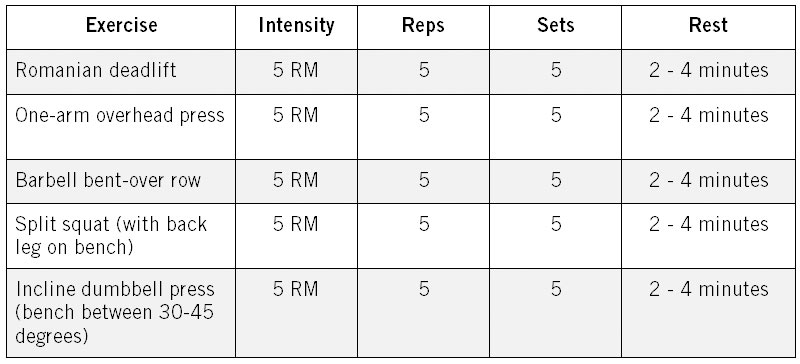
The Soviets pioneered many technical training techniques that can be difficult to replicate during a limited amount of exercise time. However, one technique that can easily be applied in less than an hour is doing exercises for only five repetitions at a time. To achieve the greatest benefits, the exercises should be compound movements involving large amounts of muscle mass, which is reflected in the workout below. The goal of each lift is to achieve the greatest amount of muscle tension possible. The Soviets were the first to recognize that using heavy loads to develop high levels of muscle tension involved recruiting more motor units and their attached muscle fibers, which led to strength gains. And, as a bonus, this technique also applies the science of muscle physiology to increase strength without significantly increasing muscle size.
Make sure that you have your clients perform a complete dynamic warm-up before starting this workout. For the best results, use a weight that is heavy enough to make the final rep extremely challenging, but it should not cause failure. In addition, resting for a second or two between each repetition allows maximal tension to be generated with each rep. Complete at least five sets of each exercise, with approximately two to four minutes of rest between sets to allow for optimal recovery. To save time, perform this workout as a circuit, with approximately two minutes of rest between each exercise.

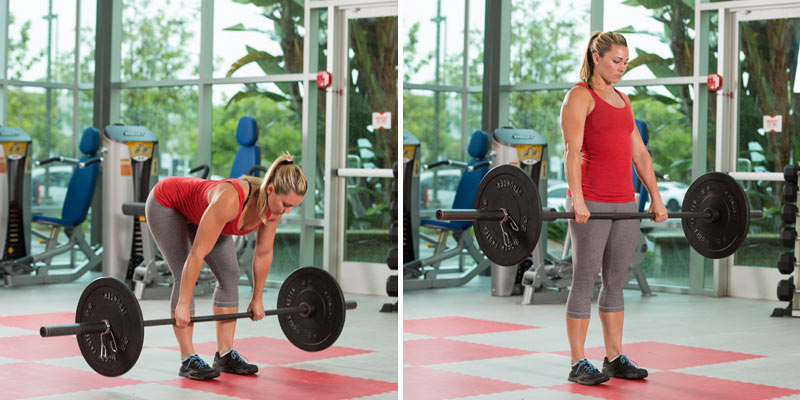
Romanian Deadlift

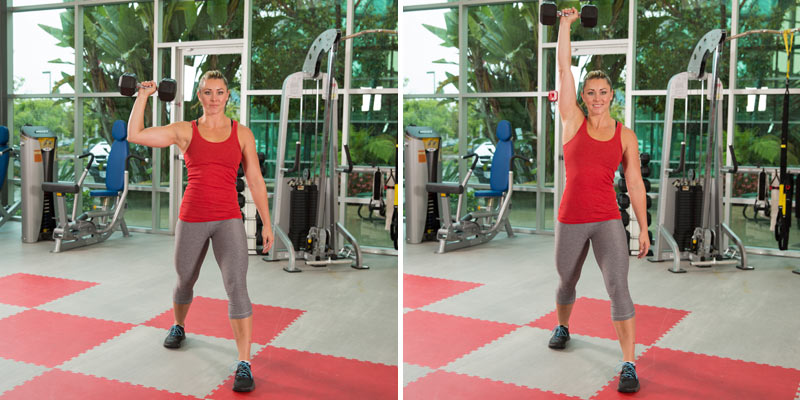
One-arm overhead press

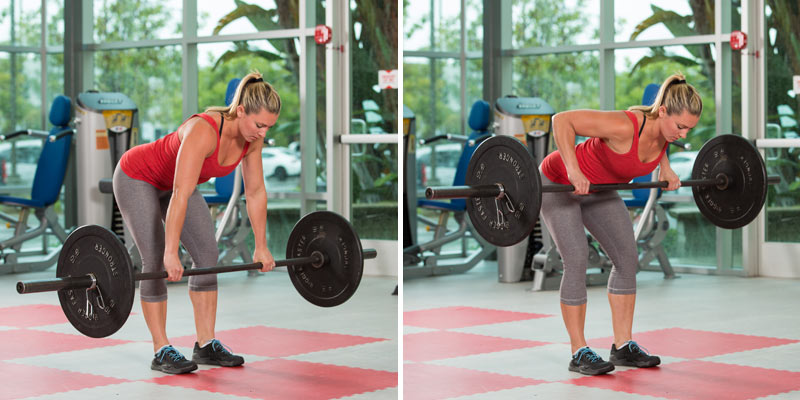
Barbell bent-over row

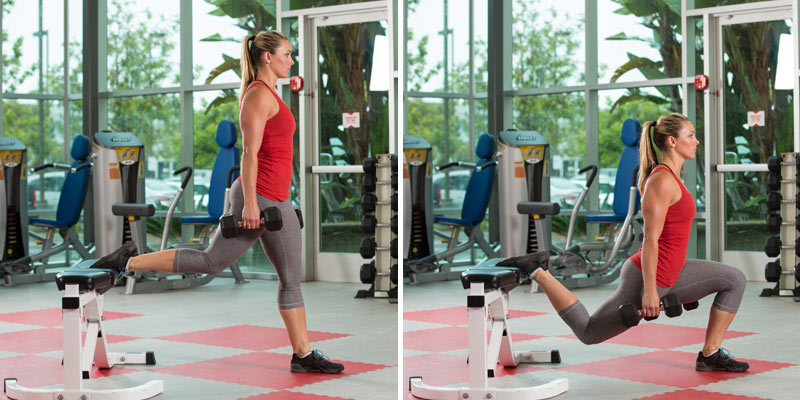
Split squat (with back leg on bench)

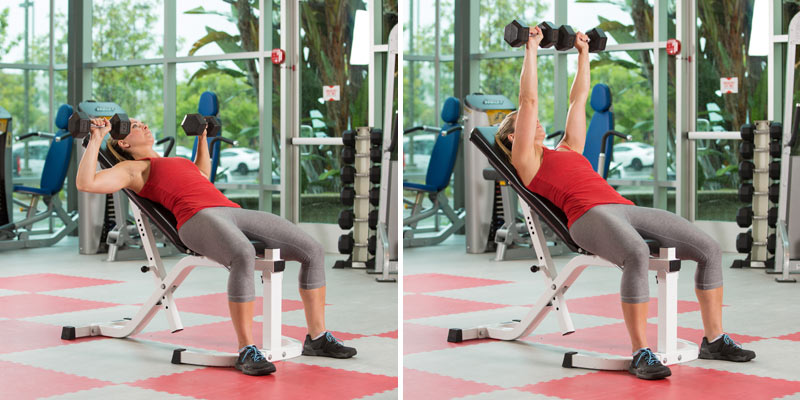
Include dumbbell press (bench between 30-45 degrees)

Thursday, 19 March 2015

8 CrossFit Workouts for Women To Keep Fit!

CrossFit is a popular type of fitness and workout strategy that includes several types of exercises such as weight lifting, running and jogging, calisthenics, gymnastics, ball training, and others. It is distinct from other exercise routines in a way that it is performed at a very high intensity within a limited amount of time.

CrossFit workouts are generally intended to improve and develop strength and conditioning. It is an ideal routine for women since it allows the enhancement of a wide variety of physical skills such as endurance, stamina, speed, balance, strength, and flexibility. Since the focal point of CrossFit workouts is functional body movement, it is the perfect choice for women who are involved in physical activities and those who are always on the go.
With this strategy, you are met with everyday workout challenges that continually changes. The result would be that you're likely to reach your highest fitness level in no time. Let's have a look at eight CrossFit workouts for women to keep fit.

Combination of dead lift, squat, and push press – the initial stage of a CrossFit workout is the practicing the basics of squatting, push press, and dead lifts. A woman should be able to feel things out first before starting some heavy routines later. This can be done in a week.

Light and moderate weight for the early stages – the purpose of lifting weights is to develop strength as well as determine a good technique for the entire duration of the workouts. Remember a woman's objective in CrossFit workouts is to be fit, not hurt herself.
Now let's go down to business...

Cindy – Cindy is a routine composed of a combination of pull ups, pushups, and squats. Repeat a pattern of 10 pushups, 5 pull ups, and 15 squats in a 15-20 minute span. As one can see, everything starts with a light training and progress will be seen in no time.

Dead lift to fast run – the next ideal CrossFit for women is a pair of dead lift and running. What you need to do is perform five sets of dead lift. Each set must be with five repetitions as well. After that, you run 1.5-2.0 miles and record the duration of the entire routine.

Double under + sit-ups – double under is an exercise done with the help of a jumping rope. What you do is jump with good enough elevation to enable the rope to go and pass under your feet twice. This can be pretty tough for women but it sure does develop reflexes. Combine this exercise with sit-ups right after.


Fast run coupled with pull-ups – perform a repetitive routine of pull-ups (the maximum you can perform simultaneously) and then be able to run not more than 500 meters right after. Repeat and then determine if there is an increase or decrease in the number of pull-ups you can do right after every run.

Thrusters and pull-ups – the key in this routine is repetition. Start with similar number of thrusters and pull ups. For instance, begin with 20 and 20, and then repeat with lesser, say 15 and 15 and so on.

Burpee – Burpee is a term referring to a type of pushup that incorporates elevation or a jump. This is quite a tough routine for a woman but it can enhance endurance and the cardiovascular strength in general.
Remember that CrossFit workouts are performed in order to enhance the entirely of your body system. It is not limited to a certain area life developing large biceps or six-pack abs. This strategy is perfect for women who want to be fit and needs to be fit. And finally, they're not as tough as they seem to be.
 

Thursday, 29 January 2015

What are the benefits of weight lifting for woman?


So many woman truly do not understand the positive impact weight lifting can have when introduced into their training. By adding weight lifting into your exercise routine, you’ll be able to feel and see the benefits quickly, by losing weight, gaining muscle, and toning and sculpting until you get the body you’ve always wanted.

Most people shy away from weight lifting because they are afraid they will bulk up and appear too masculine. This is simply not the case, although I do understand some females out there do build muscle very quickly and are afraid of weight training for that reason, it all comes down to what type of weight lifting you are doing. *If you are one of those people that builds muscle quickly ask your trainer directly how you can transform that amazing muscle into lean and toned muscle.
Adding weight lifting into your exercise routine can help dramatically increase your metabolism, tone and sculpt your body and strengthen your bones. It can also help you lose weight faster, this is because the more muscle you build the more calories you lose throughout the day even when you are resting. To put it bluntly woman who lift weights burn more calories than woman who don’t. What more motivation do you need!
Here’s a list of all the benefits to encourage you to get started!
You will lose body fat – Weight lifting helps with weight loss because the more lean muscle a woman has, the more calories she burns. Strength training increases your metabolic rate by increasing the calories you burn on a daily basis. The more calories you burn, the more chance you have to drop body fat.
You will be physically stronger – Being stronger can benefit in many ways, day to day activities will become easier.Lifting your kids, doing the groceries or lifting heavy objects will become easier and you will be far less likely to injure yourself. Through weight training you can expect substantial increase in your strength. Quality of life is better because you can perform activities with more ease and less pain.
Your mood will be improved, and it can fight depression – Weight training can make you feel more confident and capable. It can also significantly improve a person’s mood.
Injury prevention – Strength training strengthens our muscles and tendons. The stronger we are the less chance we have of an injury. This is especially important as we grow older. Strengthening the muscles around our joints is one of the best ways to prevent and recover from injury. For example: The best way to recover from a knee injury is to strengthen the quads and calves. I have also seen lots of study proving that weight training can ease the pain of osteoarthritis and weight training can also increase spinal bone mineral density. This coupled with an adequate amount of dietary calcium can be a woman’s best defense against osteoporosis.
You will reduce your risk of diabetes – Weight training can improve the way the body processes sugar which reduces the risk of diabetes.
I hope I have encouraged some of you ladies out there to push past your insecurities of weight training and decide to try it out and reap the benefits.
Please remember that before you start your weight lifting routine make sure you are taught on proper lifting techniques. Ask a professional at the gym to show you the proper technique so you’re lifting the right way. If your using free weights, make sure you’re using weights that are appropriate for you.

Source