Showing posts with label muscle performance. Show all posts

Friday, 11 September 2015

Seven Habits of Highly Successful Athletes

They say a habit takes 21 days to form. That’s three weeks of constant, recurrent, focused activity – or inactivity. The differences between good and bad habits lie in the details, but they both exist as an end to the same means: repetition.
“We are what we repeatedly do,” Aristotle said, once upon a time. Essentially, we are our habits. For  athletes, those habits determine their game, their success, their production, their relevance. Elite athletes carefully develop the habits that define them well past the 21-day qualifying point.
Most of us aren’t built to be elite athletes, at least not genetically, but our choices are within our control, and can elevate our game at any level. Choosing to adopt these seven habits of successful athletes is a sure-fire way to find success for yourself. If you can’t beat ‘em, join ‘em.

THE LIST:

1. They set attainable goals and track them

Tim HippsAs athletes, we all have ambitious goals. We want to win that 3-on-3 tournament next month. We want to compete in that triathlon at the end of the year. We want to hoist that trophy at the end the season. That victorious moment is a driving force we all share.
Successful athletes have those goals, but they also create their own moments of victory in parallel to their pursuit of the endgame. While they’re training for that championship, they’re simultaneously working toward attainable goals to check off their list.  While they’re training for that marathon, they’re also working toward that six-minute mile. While they’re pursuing that Gold medal, they’re also locking down tournament MVPs.
Achieving a goal, no matter the size of the prize, is a powerful incentive. It’s a reminder that following through pays off.


2. They discipline and reward themselves


It’s a simple concept, just a matter of application.
Motivation is all about incentive. What’s the payoff? What’s the punishment? Successful athletes make it a point to take themselves seriously, and that means calling themselves out and holding themselves accountable.
Didn’t get out of bed this morning for that run? Skipped breakfast? That’s ok, but yeah, you’re grounded. Ran an extra mile at the end of practice today? Grounding revoked.


3. They sleep

An even simpler concept. Successful athletes make sure to clock at least seven hours of sleep every night to aid in rest and recovery. For optimal performance, sleep is crucial in maintaining energy and endurance.


4. They feed their competitive nature

Sir MervsAverage isn’t okay for elite athletes. The successful ones go out there and compete every time, no matter who they’re with, what they’re doing or where they are. Competition is fuel to athletic fire, and the best in the game are out there burning it up every day.
Successful athletes are constantly pushing to be better than the guy next to them, better than they were yesterday, better than the standard. Pushing forward with intensity and a competitive drive keeps you on your toes and dynamic as an athlete.
Too many people mistake competition for comparison. Successful athletes know the difference. One will make you, one will break you.


5. They take instruction and criticism constructively 


Successful athletes can take advice and apply it usefully to their game. Coaching is crucial in sports, but absorbing the information they provide is even more important.
The best athletes are willing to make adjustments and set their pride aside to better themselves and their teammates.


6. They let things go

They follow the 24-hour rule. 24 hours after a failure, the misstep has long since moved into nonexistence. Bye-bye blunder.
Holding onto negativity can be detrimental to athletes. Mentally, it’s crippling. It gives pitchers the yips, it turns a basketball into a brick, it makes a wide receiver’s fingers all buttery.
The successful ones take 24 hours to reflect on what went wrong and then they let go of that heavy weight and move on without flinching.

7. They aren’t afraid to fail

The most distinctive habit of a successful athlete is their ability to stare a challenge in the eye and attack it without hesitation. The fear of failure builds the walls of that box you’re supposed to be thinking outside of and seals you up inside. When you’re scared of failing, the best option is to avoid trying at all – right?
Chicken.
Fearing failure is a mental state successful athletes don’t acknowledge. Everyone will fail at one point or another – it’s inevitable. The best athletes are fully aware of this, but attach no value to it. They fall and they get up. The ends outweigh the means. Success outweighs failure.
Plus, chicks dig scars.

Source By: Morgan Urtso Seven Habits of Highly Successful Athletes

Tuesday, 30 June 2015

7 Squat Variations That Will Strengthen Your Lower Body


Squatting is a foundational movement that most of us perform every single day. All over the world, people are squatting while doing everything from household chores to sitting down in a chair. Even so, the squat can pose a challenge to many people. Starting with various squatting patterns and progressing to more challenging moves can be a great way for beginning exercisers to strengthen the muscles of the lower body and improve their ability to perform this foundational movement.
The best place to start is the body weight squat, and then progress to adding different loads and varying the movement patterns. The following seven exercises will help your clients regain the natural squatting ability they undoubtedly possessed as a child. After all, as strength and conditioning coach Mike Boyle says, “Squatting isn’t an ability you gain, it’s an ability you lose.”

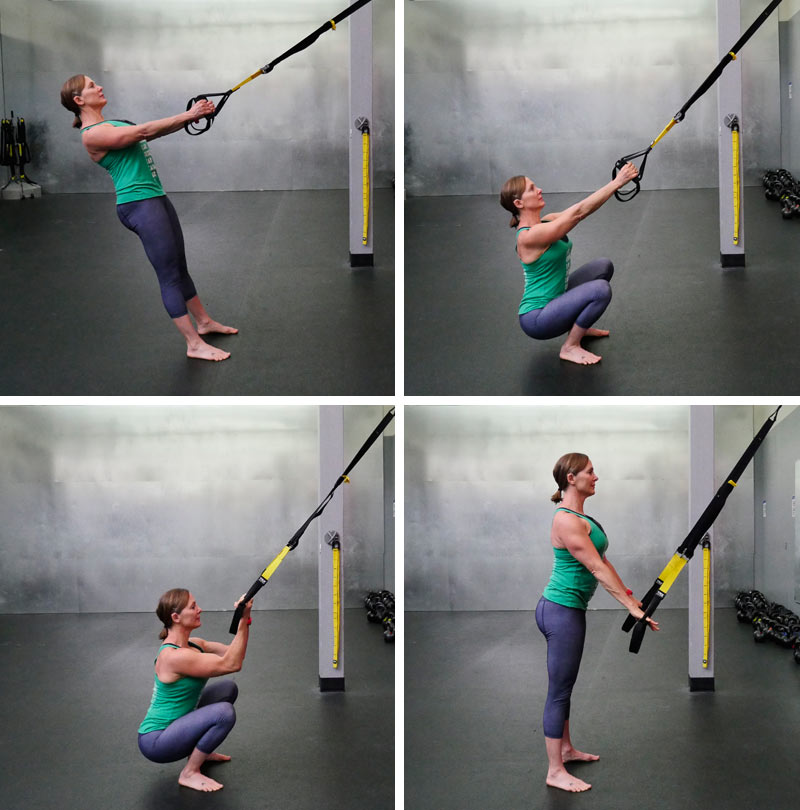
1. TRX Squat Bottom’s Up 


Adjust the TRX Suspension Trainer to mid length. Stand facing the anchor point with the elbows bent below the shoulders. Keeping a solid plank, lean back until the arms are extended. Pull the tailbone toward your heels and hold for a beat or two. Extend the spine, trying to pull the chest through the arms. Curl your torso up, keeping the elbows in line with shoulders. Stomp around a bit and then hold for about 10 seconds. Press into the handles, maintaining a strong plank, to stand. Perform as many repetitions as possible while maintaining proper form.

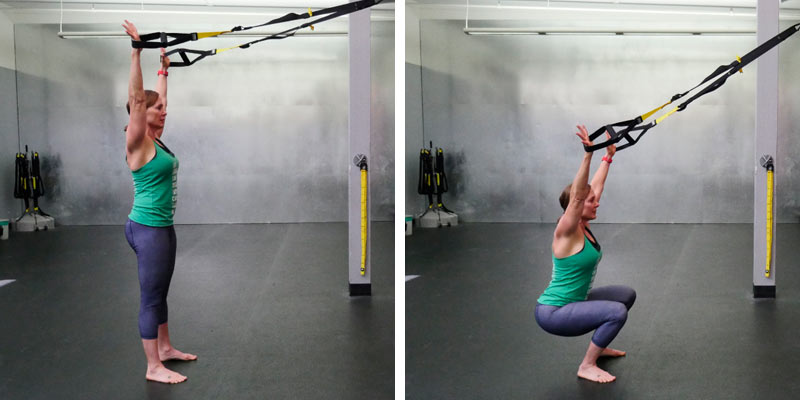
2. TRX Overhead Squat 


Adjust the TRX Suspension Trainer to mid length. Stand facing the anchor point, with the legs about shoulder-width apart. Extend the arms overhead while holding the straps. Press the hands into the foot cradles, creating tension in the straps; keep the shoulders down and back. Root into the ground while pressing back into the straps and pull the body toward the ground; be sure to maintain a stable torso. Lower only to where proper form can be maintained. Drive the feet into the ground to rise up to full extension.  Perform as many repetitions as possible while maintaining proper form.

3. TRX Overhead Squat: Single Leg (Advanced Progression) 

Adjust the TRX Suspension Trainer to mid length and stand facing the anchor point. Stand on the left leg and center the right leg toward the anchor point. Press the hands into the foot cradles, creating tension in the straps; keep the shoulders down and back. Root into the ground while pressing back into the straps and pull the body toward the ground; be sure to maintain a stable torso. Lower only to where proper form can be maintained. Drive the feet into the ground to rise up to full extension. Repeat on the other side. Perform as many repetitions as possible while maintaining proper form.

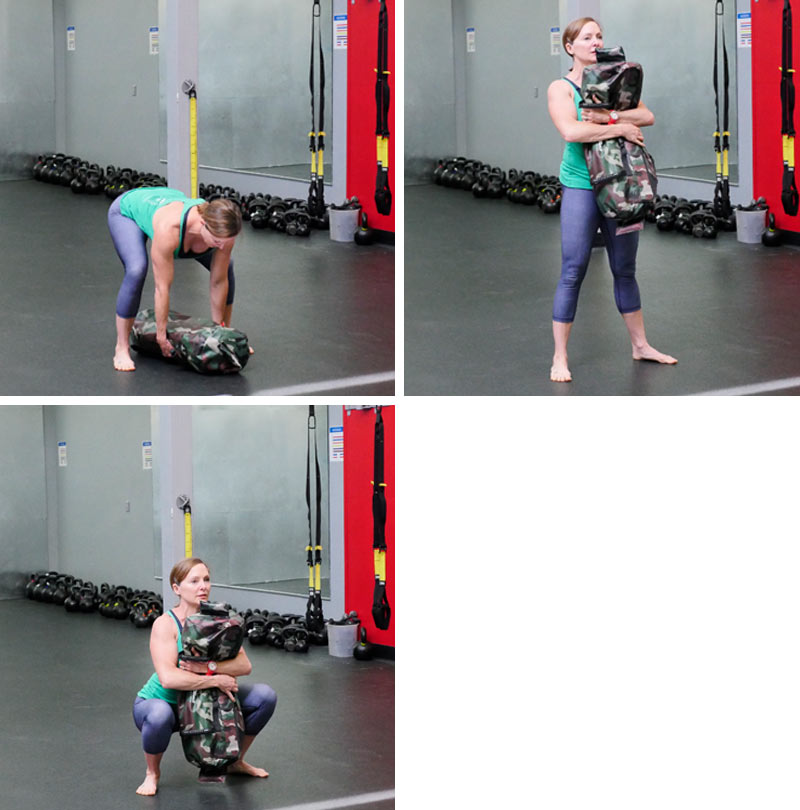
4. DVRT Bear Hug Squat 


Place a Strength Ultimate Sandbag (USB) on the floor and stand halfway over the bag. Keep a flat back, the hips hinged and the knees flexed while grabbing under the bag. If the hips are too tight to reach the bag with proper form, put the USB on a higher surface. Keep the arms locked and the shoulders packed. Use enough force from the hips to adjust the grip on the USB, ending in a hugging position. Try to pull the USB apart to engage the postural muscles of the back. Maintain tension throughout the posterior chain by keeping the USB close to the body. Lower the tailbone toward the ground into a deep squat. Keep the torso tall and drive through the heels to stand. Repeat.

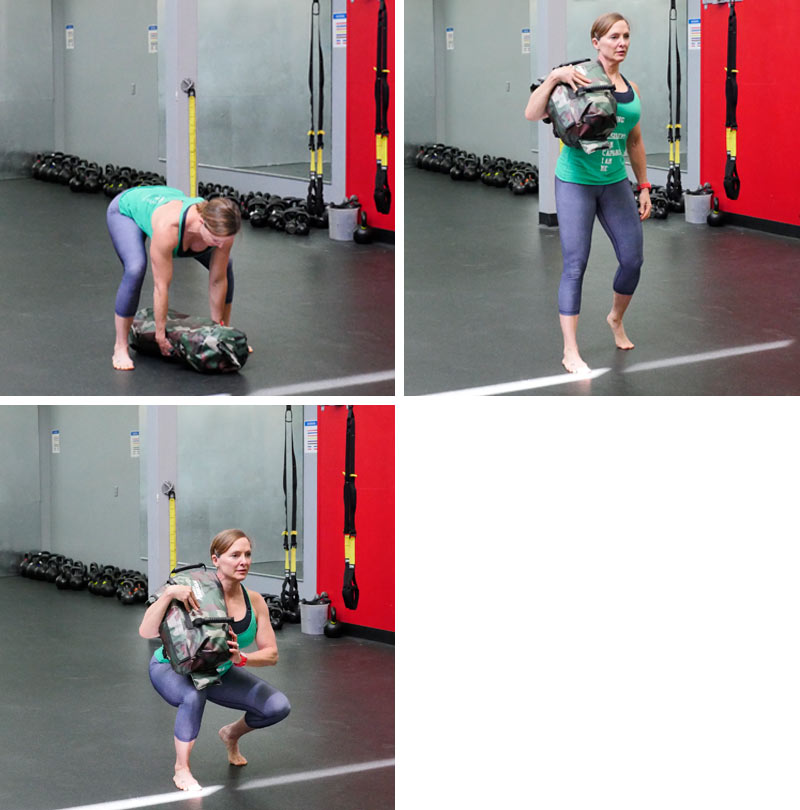
5. DVRT Shoulder Squat: Staggered Stance 


Place a Power USB on the floor, smooth side up, and stand halfway over the bag. Hinge the hips back and then slightly bend the knees. Keep the shoulders packed and reach under or grab the sides of the USB. Press the feet into the ground and explosively direct the USB to the right shoulder. Step the left foot back so that the left toe is in line with the right heel. Stay on the ball of the foot with about 40 percent of body weight distributed on the rear foot. The shoulders should be parallel to the floor; watch for lateral swaying. Keeping the feet rooted into the ground, pull the tailbone toward the ground. Only go as deep as possible without losing form. Drive the front heel into the ground to return to extension. Repeat on the other side.

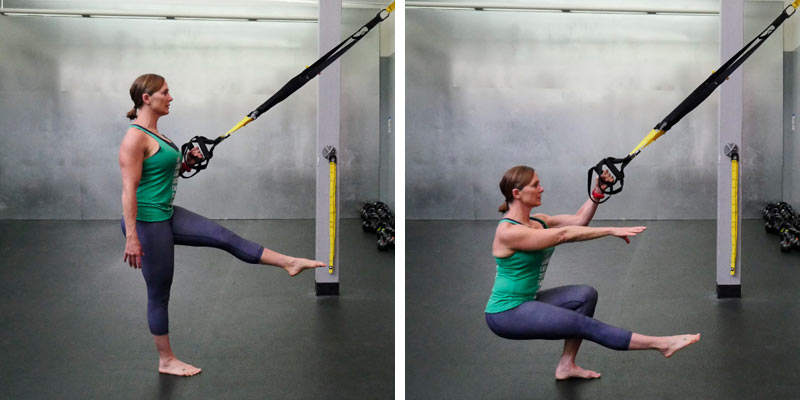
6. TRX Single-arm, Single-leg Squat 


Adjust the TRX Suspension Trainer to mid length. Grab the handles with the right hand, keeping the elbow under the shoulder. Position the right leg in line with the anchor. Keep the torso stable and tall and lower the tailbone toward the floor. Keep the knee in line with the mid foot, taking care not to let the knee collapse. Repeat on the other leg.

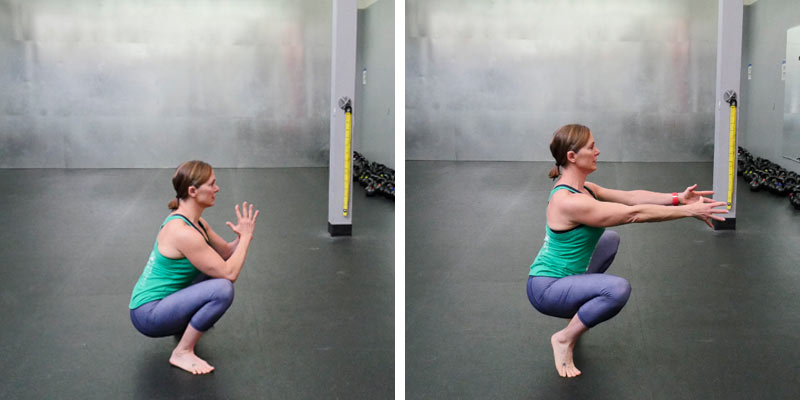
7. Deep Squat With Toe Balance 


Stand with the legs about shoulder-width apart. Root the feet into the ground and corkscrew the hips. Keep a stable torso and pull the tailbone toward the ground while keeping the weight in the heels. Squat between the knees. Hold the position at the bottom and lift the heels to balance on the toes. Keep the knees wide and the torso tall. Balance on the toes and then slowly rise up to the starting position. Repeat.

Thursday, 18 June 2015

Improve Your Strength and Performance With This 5 x 5 Workout


Figuring out how to safely and effectively challenge your clients while helping them to achieve the results they want can be tough. Here’s a technique from the former Soviet Union you might want to consider: lifting just five reps at a time.
The former Soviet Union had the best sports scientists in the world. In the 1950s and ‘60s, at a time when coaches in the U.S. did not want athletes to lift weights because it was feared it would make them slower, the Soviets conducted research that showed that a proper strength-training program could boost athletic performance. The Soviet system focused on developing maximal muscle tension to improve levels of strength. Lifts that involved large amounts of muscle mass to create the highest levels of tension helped athletes improve their strength, which, when combined with proper skills practice, can improve sport-specific performance.
The Soviets pioneered many technical training techniques that can be difficult to replicate during a limited amount of exercise time. However, one technique that can easily be applied in less than an hour is doing exercises for only five repetitions at a time. To achieve the greatest benefits, the exercises should be compound movements involving large amounts of muscle mass, which is reflected in the workout below. The goal of each lift is to achieve the greatest amount of muscle tension possible. The Soviets were the first to recognize that using heavy loads to develop high levels of muscle tension involved recruiting more motor units and their attached muscle fibers, which led to strength gains. And, as a bonus, this technique also applies the science of muscle physiology to increase strength without significantly increasing muscle size.
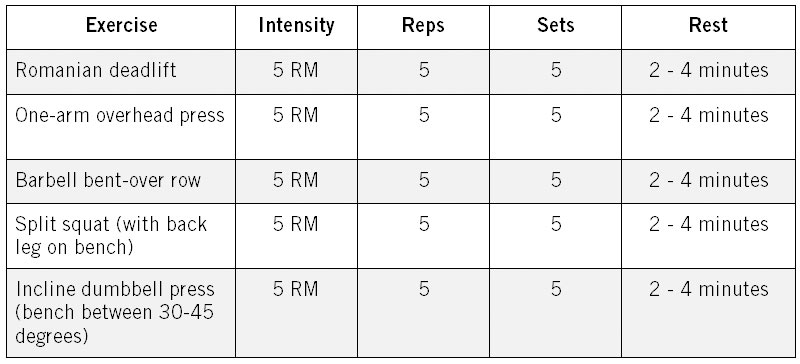
Make sure that you have your clients perform a complete dynamic warm-up before starting this workout. For the best results, use a weight that is heavy enough to make the final rep extremely challenging, but it should not cause failure. In addition, resting for a second or two between each repetition allows maximal tension to be generated with each rep. Complete at least five sets of each exercise, with approximately two to four minutes of rest between sets to allow for optimal recovery. To save time, perform this workout as a circuit, with approximately two minutes of rest between each exercise.

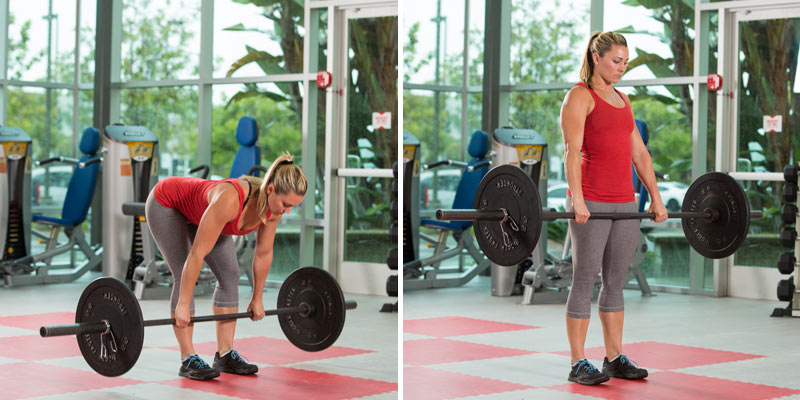
Romanian Deadlift

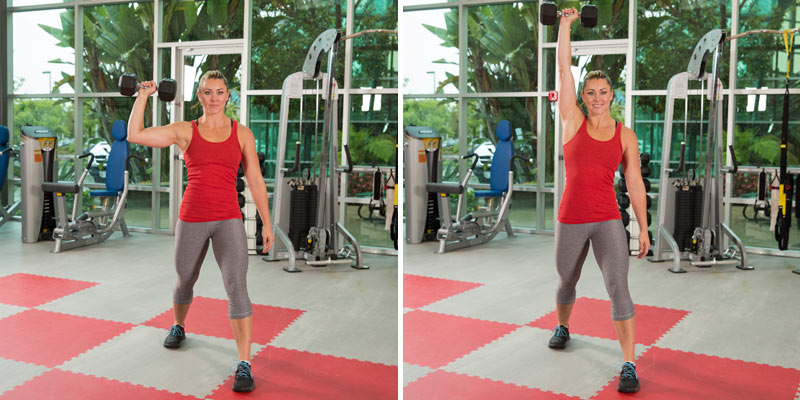
One-arm overhead press

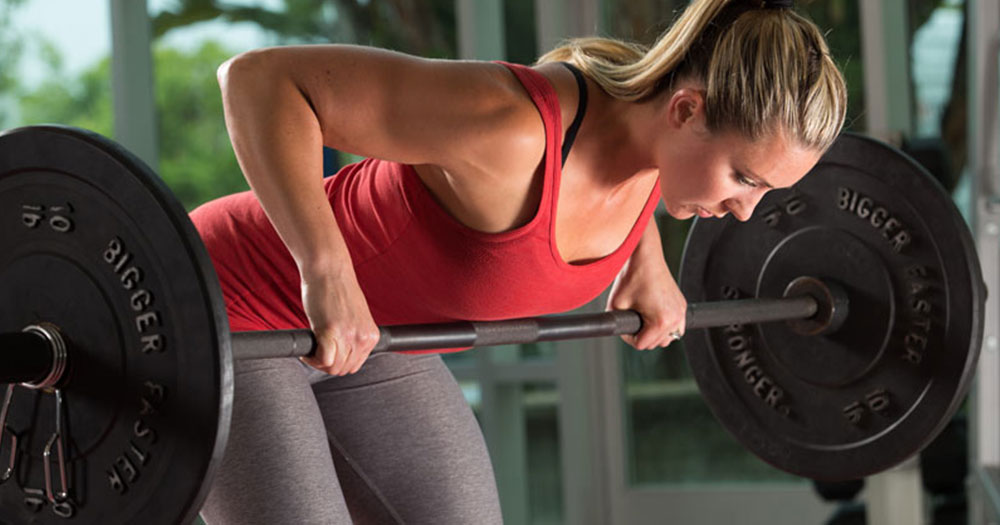
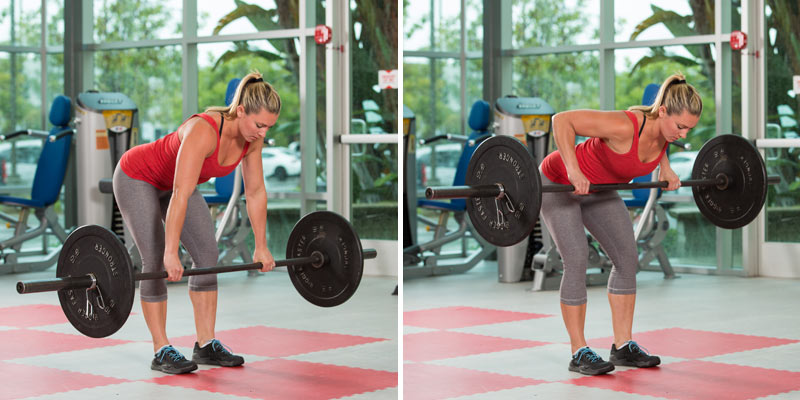
Barbell bent-over row

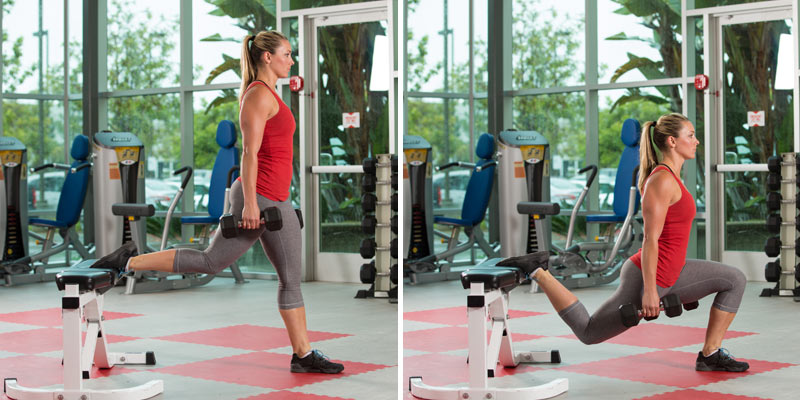
Split squat (with back leg on bench)

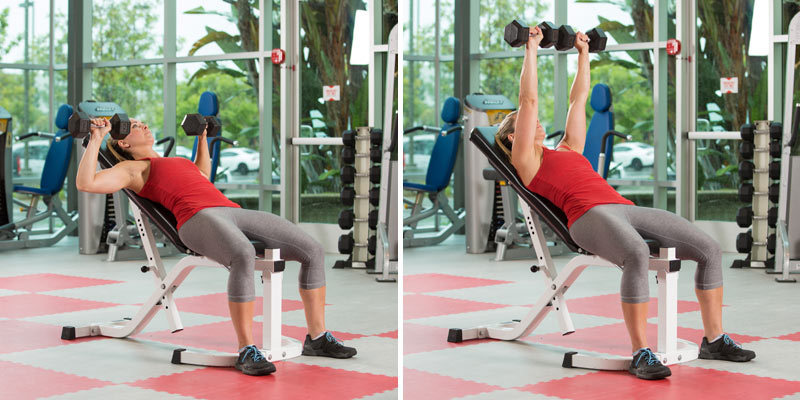
Include dumbbell press (bench between 30-45 degrees)

Wednesday, 10 June 2015

What Compression Clothing Can and Cannot Do for You

by Harry Shane

Anyone who is into running would certainly do anything in their power to have the ability to run faster and have the advantage on the track. Anyone who is into basketball would also definitely do anything they could to jump higher and have the advantage inside the court. Well, if you are familiar with compression clothing, you probably realize that these are the things manufacturers promise athletes who buy their products. But, the question is, can compression tights really help you jump higher and can compression clothes really help you run faster?
First, let's take a look at the claims of manufacturers regarding their products. If you observe ads about compression clothing today, you will notice phrases like "explosive power," "long-term endurance," and "increased stamina." According to manufacturers of compression gear, wearing compression shirts and tights can deliver graduated pressure on areas of your body where you wear them and improve circulation on that area, resulting to improved muscle performance.
While there is a degree of truth in these claims, wearing compression clothing won't actually make you run faster as soon as you wear them. This can be proven by several studies done to test the efficiency of compression clothing. In a study done in Australia, a dozen volunteers were asked to run on treadmills wearing compression tights. Unsurprisingly, wearing compression tights did little to improve the endurance of the volunteers and neither of the runners were able to run further and at higher speeds.
A similar test was done at a university in India where more than twenty volunteers were divided into three groups. Each of the group was given a different type of compression shorts, but after the test, the researchers didn't find any benefit of wearing compression shorts in terms of the athletes' ability to jump. Again, no direct benefit of wearing compression gear found on this test.
One particular test, however, discovered something that the two previous tests did not. This particular study was done by researchers in New Zealand. In the study, cyclists were told to ride 40-kilometer time trials for two days. They did the test twice giving the volunteers a week to rest in between tests. The result was encouraging - the riders who wore compression tights went up to 1.2 percent faster on the second-day trials than those who didn't wear them. The conclusion was that wearing compression tights allowed greater recovery. According to the researchers, wearing compression tights helped increase blood flow, resulting to faster recovery and refueling for the muscles of the riders who wore them.
Should you wear compression clothing then because of this encouraging news? It depends. If you're thinking of buying expensive sets of compression gear for your weekly basketball or running schedule, you would rather stick to low-priced compression gear. You can check out Slashsport website for a collection of cheap, yet high-quality compression clothing.
If you're joining the Olympics or some big competition, though, and need the benefit of recovery, then you should definitely go for expensive compression gear. Good luck!

Friday, 5 June 2015

How to Stretch your Way to Fitness

Brigi G | Fitness Inspired Formula

Not many things pay off for the body as much as stretching.  Nothing could be simpler or take less time.  Alas, most Americans neglect stretching as part of an every day fitness program.

Stretching boosts muscle flexibility, which in turn leads to decreased likelihood of injury, better muscle performance, and a sense of well-being that lasts for hours after you’ve finished.

Ideally, you should stretch several times each day.  Stretching in the morning gets your body ready for the activities ahead.  It also presents your brain with a focused, quiet activity can result in a feeling of peace and lowering of anxiety levels. 

In the evening, stretching will help work out the kinks of a day’s wear and tear.  Stretching and relaxing muscles before going to bed will lessen soreness after a hard day and will have you waking up feeling wonderful.

Finally, stretching is an unquestionable must prior to any vigorous physical activity to prevent injury and reduce post-activity soreness

10-15 minutes is plenty of time for the morning, evening, or pre-activity stretch.  The following stretches provide brief examples. An abundance of books and videos are available for more detail.

The most basic stretches can be performed while seated.  Start with your neck.  Look down at your stomach.  Then slowly roll your head to the left, then back so you’re looking at the ceiling, to the right, and back down.  You should feel the muscles in your neck stretching.  A similar motion can be performed with the wrists.  While seated, simply move your closed hand in a circle using your wrist.  Then lift each leg, and draw the same circle with the feet around the ankle.  Make 3-5 such circles in the clock-wise direction and then the counter-clockwise direction with your neck, both wrists and both ankles.

Move to the calf muscle.  Find a wall, chair, stability ball, or something that you can safely lean on.  While leaning comfortably against the object, move your right foot two feet back.  Slowly bend your left knee so that your right ankle flexes.  You should feel the muscle in the back of your lower right leg being stretched.  Hold the stretch for 30 seconds and release.  Repeat the exercise with your left calf. 

The best way to stretch the front of the upper leg (the quadriceps) is to lie down on a flat surface (floor, bed, mat, et cetera).  While lying on your left side, with your left elbow on the surface, and your left hand supporting your head, pull your right foot up behind you, so that the knee is bent as far as possible.  Reach back with your right hand and grab onto your right foot.  Pull you foot towards your back until you feel the muscle stretching.  Hold this stretch for 30 seconds.  Perform the same stretch for your right leg.  
For a basic shoulder stretch, clasp your hands behind your back and slowly lift them upwards.  You’ll feel the muscles in your shoulder stretching.  Hold this stretch for 30 seconds.

Countless other stretches exist, but this schedule gives you a basic routine.  Consult with your doctor and, if possible, a physical trainer to fine tune a “flex schedule” that’s right for you.