Showing posts with label swimming. Show all posts

Sunday, 6 September 2015

Health and Fitness Essentials – The Cardio-vascular Workout

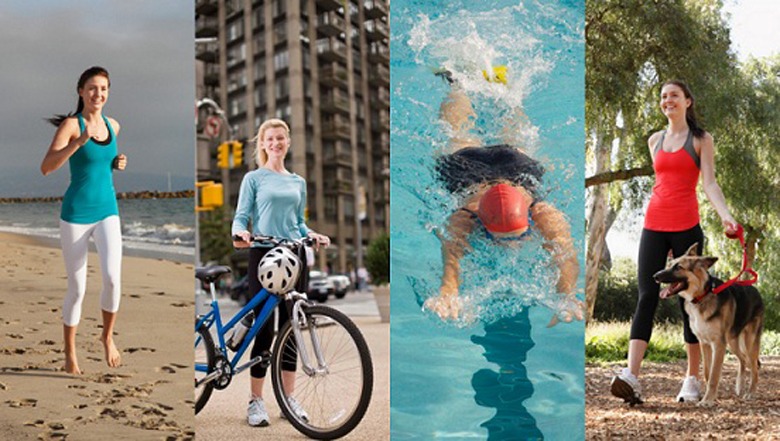
To accomplish a good cardio-vascular workout all you really need is a good pair of running shoes. Most cardio-vascular exercise needs little or no third party apparatus to help you accomplish your routine. Running, dancing, walking can all be done with no equipment (well, if dancing, then maybe some music would help). Other forms of cardio are step, circuit training, bike riding, swimming, aerobics and more...

With most exercise you should always remember to warm up first and cool down afterwards. This means gently stretching and moving your muscles to start off with. Suddenly moving into full exercise without building up first will cause problems such as stiffness and cramps. Ease yourself into it. Then after exercise, the cool down is basically gently moving the muscles and joints to stretch and relax, as your body returns to its normal pace.

Running:
Make sure you have a good pair of running shoes. The technology put into these shoes nowadays is highly researched and designed to reduce shock to the feet, ankles, legs and back. So don't skimp on these - you get what you pay for.

Before you start your run, be sure to warm up first. Start with a brisk walk ensuring you move your arms vigorously gradually breaking into a slow jog. It is better to run at a speed to which you can still converse. If you find yourself losing breath, slow your pace down until you've recovered. If you are a novice runner try running and walking, until you can hold your run for 15 minutes.

Now increase the length and time of your run by a couple of minutes every other time you hit the road or treadmill, until you can run for 30 minutes without stopping. Try to increase your run time by 10% each week, remember not to over do it and don’t forget to warm down at the end of each by slowing down gradually. When your run is complete stretch your legs for 30 seconds per muscle, hamstring, calf and thigh.

Cycling:
Cycling is one of the best ways to get a good cardio-vascular workout.

First of all, if you are riding on the roads safety is paramount, always use the appropriate safety equipment when road riding. You can stay fit by riding a bike to work, most people work within a five mile radius of there place of work, which is a perfect distance for a bike ride.

Exercise bikes can be used in a variety of ways, general riding for specified length of time, this is like going for a bike ride with out the dangers of road riding and the weather. Warm up riding you can use an exercise bike for warming up the legs before a leg workout. Also exercise bike classes, these classes are taken by an instructor, who will put you through various levels of pace, quite like a circuit training exercise with a bike.

You may find it surprising to find that riding a bike five miles 3 times per week will improve your heart rate, your posture, skin and weight control. Some even say that riding and running are great ways of relieving stress.

Swimming:
One of the best ways to firm up and trim your body down. Due to the resistance the water has on the body swimming involves all the major muscle groups this allows the body to burn up to 20% more calories than swimming through air. Swimming a few lengths per day will keep you fit and give you an excellent workout. Swimming also has less impact on the joints than say, running.

If you wish to take your swim a little further try picking up the pace of your swim, you can work up to a great aerobic exercise and give your body an excellent workout.

Start off by swimming 1-2 lengths at a time resting between sets if necessary, after you have swam ten lengths call it a day. The next day repeat the process until you can swim five lengths without a break. Progress to ten lengths in by adding an extra length each time you return.

You can put together your own cardio raining routing in the gym, if you have a problem with this then the staff on hand will write one for you and show you how to achieve your goal. Try to make your cardio last between an hour and an hour and a half. A good start point for cardio is always a run.

This cardio workout will work for a person of medium fitness, however adjust the times and pace according to your fitness levels.

1. Run at a light pace for 20 minutes, start off at a walking pace and gradually move to a run, this helps you get warmed up and the blood pumping.

2. Rowing machine- set the rowing machine for a countdown time of 15 minutes or keep a check on your watch or the clock. Start off with a slow rowing motion to get the pace up, maintain this steady pace throughout the full 13 minutes and use the 2 minutes to slow the pace down.

3. Move immediately on to exercise bike take a stead paced ride for 12 minutes with a sprint finish for the remaining 3 minutes.

4. After the exercise bike move directly on to the step climber for a period of 15 minutes climbing on a light level to get the legs going. Try to move at a swift pace for the full 15 minutes as this is the last of the leg work you will be doing.

5. When you have completed the step climber, move onto the abs bench for some crunches. 4 sets of crunches to failure is your target for this exercise. Try twisting your body and touching your left knee with your right elbow and vice versa.

6. The last exercise in this quick cardio workout is the leg raise apparatus. Bring your knees up to your chest for 3-4 sets for as many reps as possible (failure)
After the completion of this cardio workout, remember to do a full warm down by stretching the muscles. The full workout should take you around 1 hour 20 minutes.

Brigi G by Fit 4 Health

Tuesday, 4 August 2015

Prenatal Workout Recommendations

In part 1 of this two-part series, prenatal precautions and specific exercises to counteract some of the common physical issues of pregnancy were presented. This second and final installment covers recommendations for cardio and the importance of social support. 

Prenatal Cardiovascular Fitness

What is comfortable during pregnancy varies from mother to mother. Water fitness is my personal favorite. Getting in the pool eases the aches and pains that come with increased weight and a shifted center of gravity. Exercises in these classes are also easily modified based on the amount of energy you have on any given day.
Other great cardiovascular options include:

Walking

Being a runner most of my life, I had to embrace the fact that walking can actually be a wonderful workout. If your client needs more of a challenge, encourage her add some hills to her route.

Group Indoor Cycling

Body weight does not play a major factor in this type of workout, which makes it a good option for those who want to continue exercising throughout the duration of their pregnancy. Others, however, may find the seat and positioning a little uncomfortable.

Swimming

Floating in the water can give the pregnant exerciser a sense of relief and freedom. If your client’s low back feels at all strained while swimming, recommend adding a pull buoy between the ankles to help keep the body aligned.

Cardiovascular Machines

The elliptical, stationary bike, Stairmaster and treadmill are all great options, particularly because they offer less impact on the body than other forms of cardiovascular exercise.  

Mind/Body

I cannot emphasize the importance of taking a prenatal yoga and/or meditation class during pregnancy. These classes can provide the expecting mother with many exercise options to alleviate pain and can help her become more comfortable with her changing body. Plus, the relaxation techniques will come in handy during labor and throughout stressful new-mom moments.

Putting it All Together

During pregnancy, a woman should aim for a minimum of three, 30- to 60-minute workouts per week, featuring a combination of cardiovascular fitness, strength training and mind/body exercise.

The Importance of Social Support

I love spending time chatting with other pregnant women, whether it is complaining about the latest pregnancy symptom, or reviewing which jogging stroller we like the best. Most communities have prenatal exercise classes, including prenatal water fitness, and prenatal yoga. Encourage your pregnant clients to sign up for at least one of these classes as a way to get some exercise and meet other women going through the same life-changing experience. On top of all of the support, many playgroups and lifelong friendships are formed in these classes.

Source

Sunday, 28 June 2015

The Fit Way to a Woman’s Health

Fitness, muscle-building and gym workouts have gone beyond the traditional all-male club. With the hype over fitness and health and a healthy lifestyle, women have joined the club as well. However, men and women have different fitness needs.

Women’s fitness and exercise needs are focused on the muscles of the upper back. Most of their exercise work-outs are also designed for the stomach muscles, especially those who have just given birth. At the same time, exercises for women are usually designed for weight loss. And while men tend to focus on muscle building whereas women work on toning their muscles, strength training is important for both.

Here are a few things to make you women out there go out and start building up your muscle strength.

Make the performance of your usual tasks easier with a physically strong body. Chores will be easier, lifting your kids, the grocery or the laundry will be a piece of cake. Consequently, it will reduce possible strain on the muscles and injury. Training can increase a woman’s strength by 30 to 50 percent.

Lose fat at the same time. A strength training done 2 to 3 times a week for a span of two months can result to two pounds of muscles and would mean a reduction of 3.5 pounds of fat. The more muscles and less fat, the faster is the metabolism, which ultimately means your body burns calories faster than normal.

Fight osteoporosis. Weight training increases spinal bone mineral density which means lesser chances of the risk of osteoporosis.

Fight heart disease and diabetes. Weight improvement improves cardiovascular health by lowering the bad cholesterol and blood pressure. It also improves glucose use in the body by 23 percent which reduces the risk of diabetes.

The road to a healthier you. Not only does it promote a healthier body, but it also develops a healthier attitude and a healthier heart. Women who engage in regular strength training are more confident, with a more positive outlook in life.

So how do you get started?

For those who lead very busy lifestyles, hitting the gym and starting on a regular fitness plan may seem the perfect way to keep fit. But for most, starting out on a regular walking exercise is the way to go. Start at a manageable rate. A 10 to 15 minute walk is a good way to start. Prior to a workout, make sure to stretch your major muscles. Work your muscles on the front of your thighs. Stretch your shoulder muscles by standing straight and rolling the shoulders backward in a circular motion. And of course, don’t forget to observe proper nutrition. Load up on water to prevent dehydration. Consume carbohydrates before starting on your work-out.

For those with joint and bone diseases, swimming may prove to be a less stressful activity for your muscles.

But the most important is, make time for your exercise. If you can’t hit the gym or start on a regular workout plan, make sure that your day is filled with enough physical activity that keeps you going and always on the go. Women’s fitness is the key to your beauty!

Brigi G | Fitness Inspired Formula

Wednesday, 24 June 2015

Cross Training for Fitness and Weight loss

The numbers on your scale do not indicate whether you are fit or fat. Far more significant than your total body weight is the composition of your body tissue. If a man's fatty tissue is bigger than 14% up to 15% of his body mass, or if a woman's is more than 20% to 22%, he or she is overweight, or more precisely, overweight.

A small amount of fat is needed for padding the internal organs and as insulation under the skin. Excess fat leads to such diseases as diabetes, gout, high blood pressure, coronary artery disease, and gallbladder problems. There are very few, very fat persons. The reason is that the fittest, not the fattest survive.

The problem now is focused on how to resolve the problem. The problem with most people who want to lose weight is that they have the propensity to concentrate more on getting those numbers lower than what they are seeing now. What happens next is that they strive harder to achieve a lower weight, according to the "ever reliable" result of the weighing scale.

It would be more important to think of the human body as a heat-exchange engine that works on the basic principles of energy physics. The caloric balance equals the total calorie intake minus the total calorie expenditure.

Some of the calories people ingest are used for basal metabolism. As people get old, their bodies require fewer calories for this basic upkeep. Some calories are excreted as waste products. Some go into "work metabolism," the energy expenditure required for any physical activity.

Hence, if people take in more calories than are used by these functions, there is a definite caloric excess. By the laws of physics, energy is transformed rather than destroyed. In this case, each excess of 3,500 calories is changed into a pound of fat. If people want to reverse this process, they have to burn up 3,500 calories to lose a single pound.

Winning the War Against Fat

When you think of fighting fat with exercise, you probably think of hours of hard, sweaty exertion. If this is the case, then, you will not get any farther. This is because people who are so much into losing more by exerting more effort tend to get bored easily.

Why? Because experts contend that when people exert more effort than what they are capable of doing creates a tendency to develop weariness and ennui. Hence, they give up, stop doing their routine exercises, and end up sulking in the corner with a bag of chips that seems to have all the bad calories in this world.

Now, you might ask, "What should be done instead?" The answer: cross training.

After some intensive studies and experimentations, health experts were able to come up with the concept of incorporating cross training in order to overcome or break the monotony or dullness in an exercise program.

Cross training refers to the integration of diverse movements or activities into a person's conventional exercise routine. The main purpose of incorporating cross training into an exercise program is to avoid overdoing excess muscle damages and to put a stop to an imminent boredom.

Three of the most commonly used activities whenever a person decides to engage into cross training are swimming, running, and cycling.

In cross training, distance is one way to extend your activity as your condition improves. For this reason, you need to traverse a measured distance.

If possible, swim the course and measure the distance. If you will be using a running track, such courses usually are a quarter-mile per lap for a complete circuit.

Cross training offers a variety of benefits for fitness and fatloss. It builds up the strength and endurance of the heart, lungs, and blood vessels. It has also some tranquilizing effect on the nerves, and it burns up calories as much as it makes your "losing weight" more bearable.

Cross training has three basic components:

1. Endurance exercises to condition the heart, lungs, and blood vessels and to induce relaxation. These begin with a careful planned walking and jogging regimen, depending on fitness level.

2. Exercises to strengthen the muscles, particularly those important to good posture. These include some activities that are selected to encourage some people who are already burnt out with a particular routine.

3. Exercises to improve joint mobility and prevent or relieve aches and pains. These consist of a series of static stretching positions that are safe and effective for most of the people who wish to try to lose some fat.

Indeed, cross training is a great way to modify the concept of exercising and losing fat without having to endure monotonous activities. In fact, the idea of exercising is to like what you are doing, hence, if you engage into cross training, you will be aware of it that you have already achieve your desired weight.

Boiled down, cross training is, certainly, one way of having fun.

Brigi G | Fitness Inspired Formula

Tuesday, 25 November 2014

7 Ways to Find Love and Passion for Fitness ...

Do you want to know the ways to find passion for fitness? You know, the feeling where you wake up and cannot wait to get out the door to work out. Or the midday itch to get a walk in on your lunch break. Basically, the feeling that you live to exercise, rather than exercise to live. If you are feeling the urge to exercise, this passion is within you. And if you are lacking this desire to exercise, have no fears because I can help you find this. As a personal trainer, I have helped thousands of lives and I am looking forward to helping you find love and passion for fitness too! Just #read these tips:


1. Try Different Workouts

If you are finding that every #time you begin a traditional workout like running, you lack enthusiasm, you may just need to switch it up and break tradition. Go indoor mountain climbing, hiking, biking, swimming and dancing to see what sparks your passion for fitness. If you diversify your #exercise, I guarantee you are going to find what works best for you!

2. Find the Workout You Enjoy

So you discovered you are like a fish in the water and swimming is your sport. Now, how can you make this part of your workout? Begin by swimming laps several days a week, altering swim strokes and tracking the #time you are in the water. Your ultimate goal should be exercising for five days a week for 45 minutes to an hour. This schedule will help you to reach your fitness and health goals.

3. Add Some Tunes

Download your favorite music to your phone or iPod to inspire you to work out longer and stronger. If you find that music helps you move, you need to download your songs pronto so you can get moving and find passion and love for fitness. How can you not love working out to your favorite music as you sculpt and tone your body?


4. Jazz up Your Apparel

Tired of going to the gym in the same gray pants and tank? Switch up your gear and find fitness wear that shows your personality. There is an endless array of workout attire that you can even accessorize with. So pick up a sparkly hair band to hold your #hair back, fitted shorts and whatever else you shows your personality. Studies show that wearing new workout wear will help motivate you to get moving!

5. Get Techy

With the countless techy products like a Garmin GPS, you can now wear a watch that will track your distance, pace and #calories burned while you run or bike. Tech gear can help motivate you to go a further distance when you work out. And the instant feedback of the watch will have you excited for your next workout!

6. Analyze Your Goals

Get in touch with what your goals are and if you are looking to lose #weight, start making healthier food choices and get excited over your exercise. Write out a food and #exercise schedule to help you to achieve your goal. And if you diversify your workouts, add some tunes and get in the zone, you will find love and passion in your workouts!

7. Have Fun

If you get in a happier place and try to have fun in your workouts, you may be surprised at the outcome. You will begin to have more fun and working out will no longer feel like it is as much work. You will feel de-stressed after your workouts and life will just seem better. So put on a smile and work out your stress, energy and give it all you got!
So are you ready to find your inner fitness passion? Then get moving to find the right #fitness workout for you!

Source