
The best place to start is the body weight squat, and then progress to adding different loads and varying the movement patterns. The following seven exercises will help your clients regain the natural squatting ability they undoubtedly possessed as a child. After all, as strength and conditioning coach Mike Boyle says, “Squatting isn’t an ability you gain, it’s an ability you lose.”
1. TRX Squat Bottom’s Up
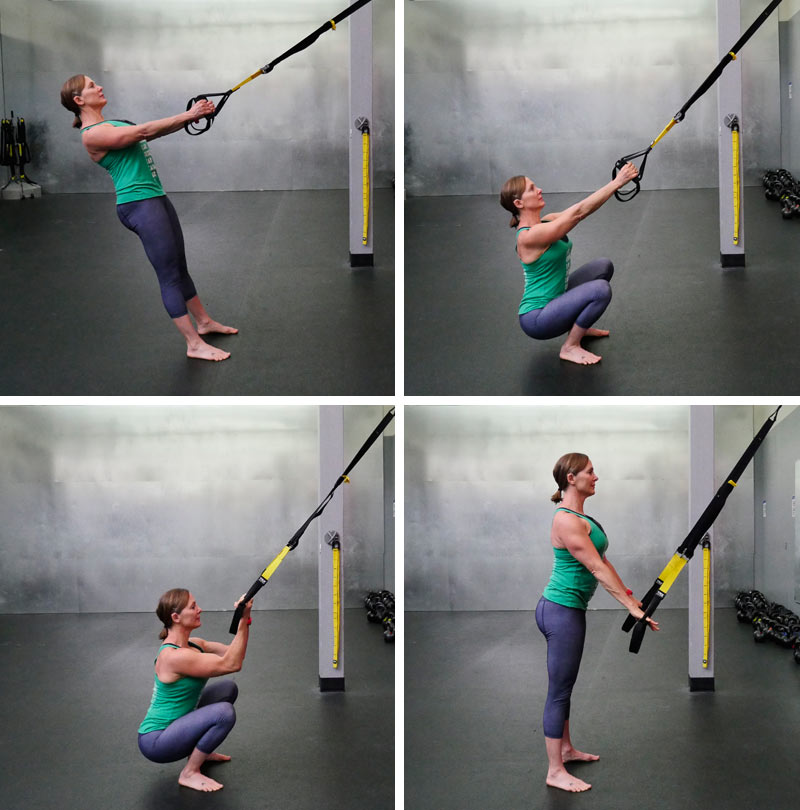
Adjust the TRX Suspension Trainer to mid length. Stand facing the anchor point with the elbows bent below the shoulders. Keeping a solid plank, lean back until the arms are extended. Pull the tailbone toward your heels and hold for a beat or two. Extend the spine, trying to pull the chest through the arms. Curl your torso up, keeping the elbows in line with shoulders. Stomp around a bit and then hold for about 10 seconds. Press into the handles, maintaining a strong plank, to stand. Perform as many repetitions as possible while maintaining proper form.
2. TRX Overhead Squat
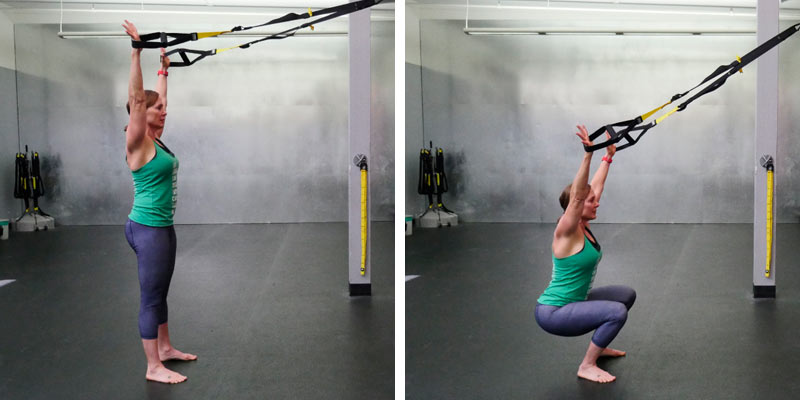
Adjust the TRX Suspension Trainer to mid length. Stand facing the anchor point, with the legs about shoulder-width apart. Extend the arms overhead while holding the straps. Press the hands into the foot cradles, creating tension in the straps; keep the shoulders down and back. Root into the ground while pressing back into the straps and pull the body toward the ground; be sure to maintain a stable torso. Lower only to where proper form can be maintained. Drive the feet into the ground to rise up to full extension. Perform as many repetitions as possible while maintaining proper form.
3. TRX Overhead Squat: Single Leg (Advanced Progression)
Adjust the TRX Suspension Trainer to mid length and stand facing the anchor point. Stand on the left leg and center the right leg toward the anchor point. Press the hands into the foot cradles, creating tension in the straps; keep the shoulders down and back. Root into the ground while pressing back into the straps and pull the body toward the ground; be sure to maintain a stable torso. Lower only to where proper form can be maintained. Drive the feet into the ground to rise up to full extension. Repeat on the other side. Perform as many repetitions as possible while maintaining proper form.4. DVRT Bear Hug Squat
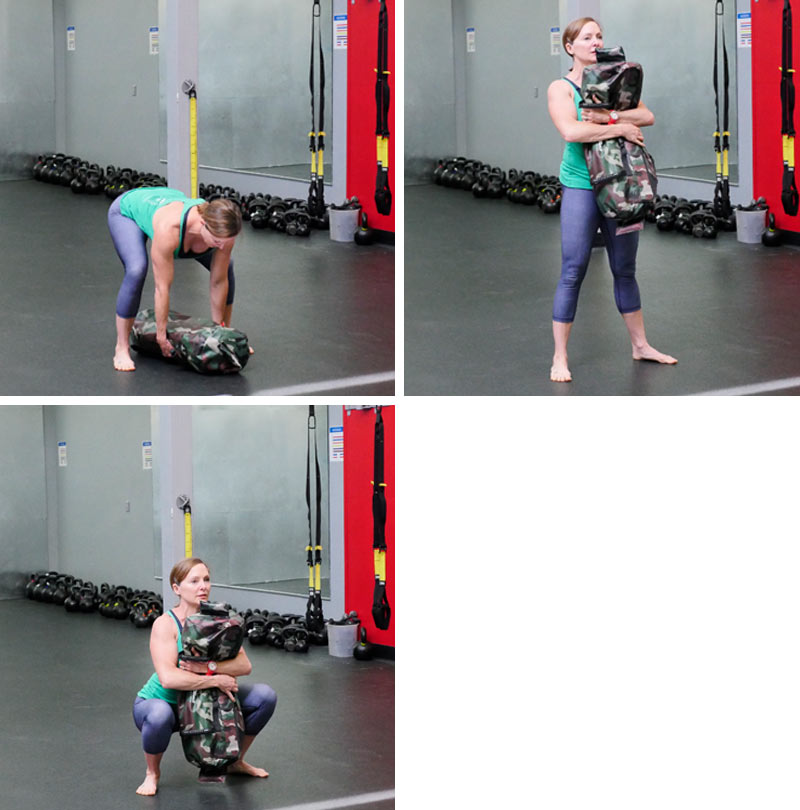
Place a Strength Ultimate Sandbag (USB) on the floor and stand halfway over the bag. Keep a flat back, the hips hinged and the knees flexed while grabbing under the bag. If the hips are too tight to reach the bag with proper form, put the USB on a higher surface. Keep the arms locked and the shoulders packed. Use enough force from the hips to adjust the grip on the USB, ending in a hugging position. Try to pull the USB apart to engage the postural muscles of the back. Maintain tension throughout the posterior chain by keeping the USB close to the body. Lower the tailbone toward the ground into a deep squat. Keep the torso tall and drive through the heels to stand. Repeat.
5. DVRT Shoulder Squat: Staggered Stance
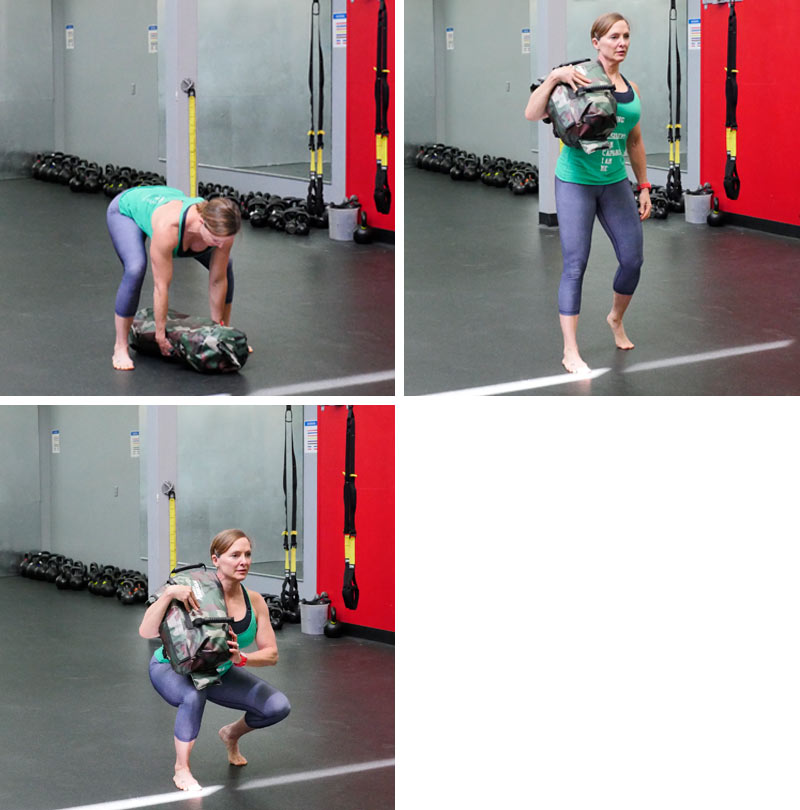
Place a Power USB on the floor, smooth side up, and stand halfway over the bag. Hinge the hips back and then slightly bend the knees. Keep the shoulders packed and reach under or grab the sides of the USB. Press the feet into the ground and explosively direct the USB to the right shoulder. Step the left foot back so that the left toe is in line with the right heel. Stay on the ball of the foot with about 40 percent of body weight distributed on the rear foot. The shoulders should be parallel to the floor; watch for lateral swaying. Keeping the feet rooted into the ground, pull the tailbone toward the ground. Only go as deep as possible without losing form. Drive the front heel into the ground to return to extension. Repeat on the other side.
6. TRX Single-arm, Single-leg Squat
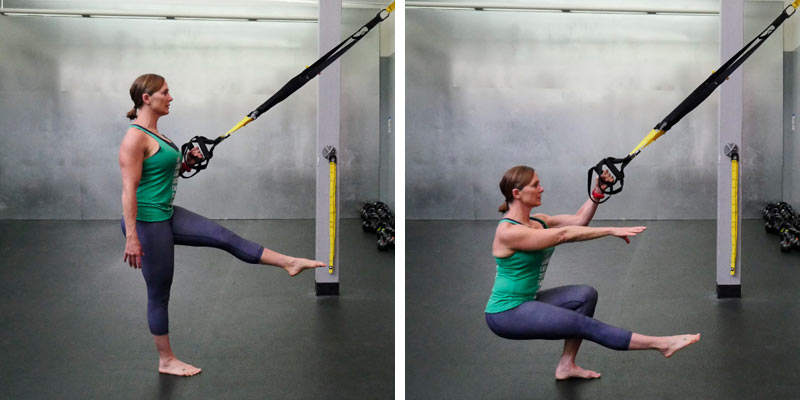
Adjust the TRX Suspension Trainer to mid length. Grab the handles with the right hand, keeping the elbow under the shoulder. Position the right leg in line with the anchor. Keep the torso stable and tall and lower the tailbone toward the floor. Keep the knee in line with the mid foot, taking care not to let the knee collapse. Repeat on the other leg.
7. Deep Squat With Toe Balance
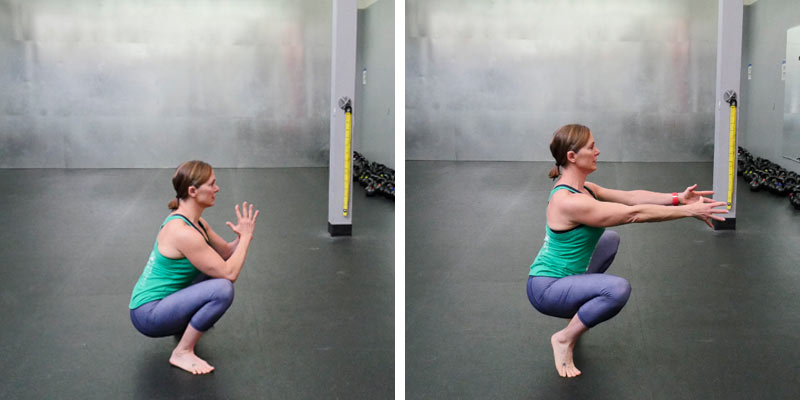
Stand with the legs about shoulder-width apart. Root the feet into the ground and corkscrew the hips. Keep a stable torso and pull the tailbone toward the ground while keeping the weight in the heels. Squat between the knees. Hold the position at the bottom and lift the heels to balance on the toes. Keep the knees wide and the torso tall. Balance on the toes and then slowly rise up to the starting position. Repeat.
Source


