One of the most common ways to learn how to exercise in
a gym is by watching others go through their workouts. I’m sure most of
us, at one time or another, have tried an exercise after watching
someone else perform the movement. But just because someone with a buff
body is doing an exercise does not mean that particular exercise is
effective. In fact, there are many exercises that seem to be producing a
desired outcome, yet aren’t really creating a beneficial physiological
response. If you’re doing certain exercises because you saw other gym
goers do them, you might want to consider trying these exercises
instead:
If you want to work your chest…
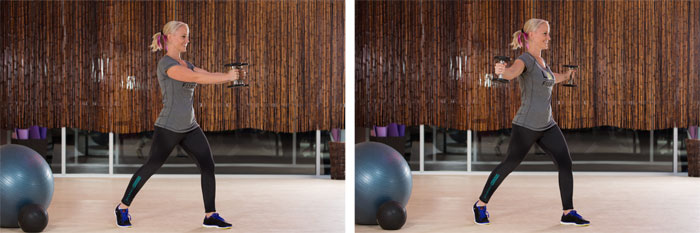
Instead of This: Standing Chest Flys With Dumbbells
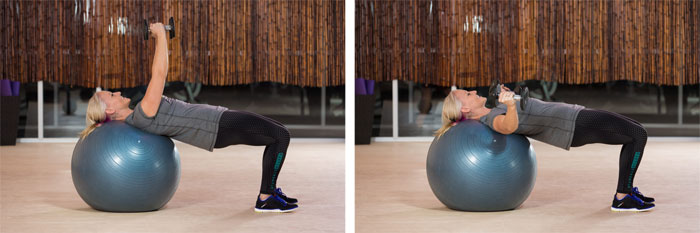
Do This: Lying Flys
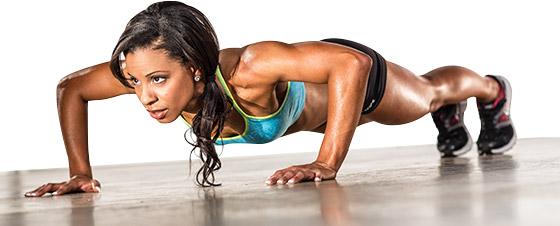
When the goal is to strengthen the chest muscles, the
load should be placed directly into the pectoralis major and minor, as
is the case with push-ups, the bench press, pec-deck machine, or flys
with dumbbells or cables. This is because the pull of resistance is
lined up directly with the muscles, so when they shorten they are
generating the greatest amount of force to move the shoulder joint. When
doing chest flys while standing and holding dumbbells, the deltoid
muscles of the shoulder are doing most of the work, while the pectoralis
major or minor act as secondary muscles, which makes it more of a
shoulder exercise than a chest exercise. If an instructor has you doing
this exercise and says it’s for your shoulders, however, that’s fine.
If you want to work your glutes…
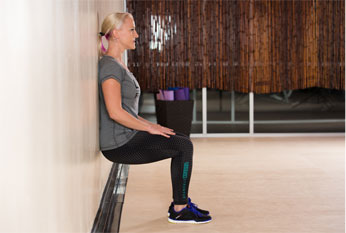
Instead of This: Wall Sit
Do This: Glute Bridge
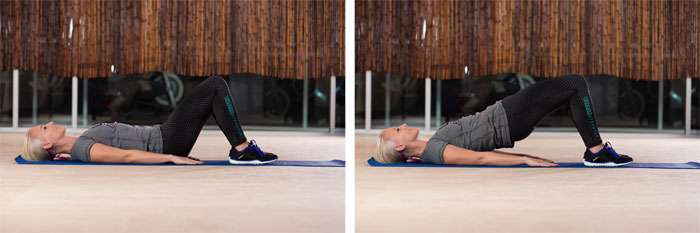
The purpose of squats is to strengthen and tone the
muscles of the butt, thighs and hips. The most effective way to
strengthen a muscle and develop definition is to take it through a full
range of motion (ROM), which includes lengthening as well as shortening
the involved muscle fibers. During a wall sit, an exercise featuring an
isometric (non-moving) contraction, muscles are shortening, but they are
not making the transition from lengthening to shortening because only a
finite amount of muscle fibers are engaged. Compare that to an exercise
like a regular squat where the muscles transition from lengthening to
shortening through a complete ROM, which covers much more distance and
allows more work to be completed. A wall sit makes you feel like your
muscles are burning, but that is because they are holding static,
non-moving contractions. The actual strength benefits, however, are
minimal. The glute bridge is a better option because they take the hips
through a full ROM. The benefit of lying on the ground is that it
focuses the work on the hip extensor muscles of the glutes, hamstrings
and adductors.
If you want to work your inner thighs…
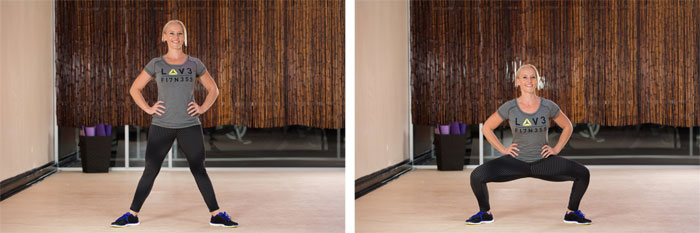
Instead of This: Plié Squats
Do This: Lunges
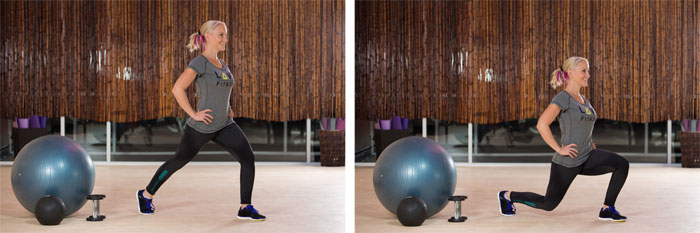
Plié squats are often done to create the perception of
working the adductor muscles of the inner thigh. When the feet are in a
plié position, the hips are in external rotation, which does lengthen
the adductor muscles of the inner thigh. Holding this position tricks
you into feeling your inner thigh because those muscles are being
stretched during the motion. However, just because you feel a stretch
doesn’t mean those muscles are doing more work. Understanding how a
muscle works during gait can help us determine the best way to train
that muscle with exercise. The adductor muscles of the inner thigh are
responsible for creating hip flexion and extension during gait. They can
bring the leg closer to the midline of the body (adduction), but should
be trained with exercises that emphasize extension and flexion of the
hip to help prepare the muscles for the forces they experience during
normal movement patterns. Plié squats won’t necessarily increase your
risk of injury, but they don’t provide the best option for training the
adductor muscles. Don’t be fooled—if you really want to strengthen and
tone your inner thigh muscles, do
single leg step-ups,
lunges or
single-leg squats to engage all of the hip muscles.
If you want to work your inner and outer thighs…
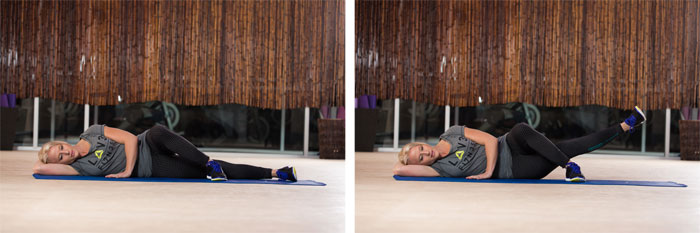
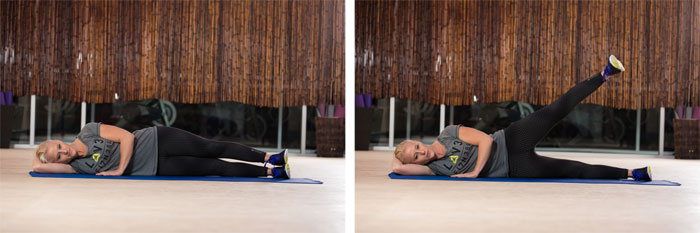
Instead of This: Lying Inner/Outer Thigh Leg Lifts
Do This: Ice Skaters
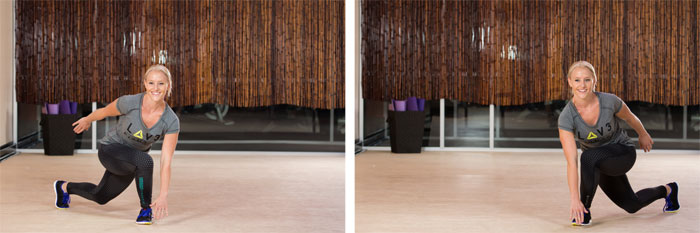
Lying on your side and lifting your legs off of the
ground can help you feel like you’re using the muscles of the inner and
outer thigh, but this is not the case. Again, we need to understand how
these muscles actually function during gait to determine the most
effective way to use them during exercise. Traditional anatomy teaches
that the muscles of the outer thigh work to move the leg away from the
midline of the body. However, during the gait cycle the muscles that
move the leg away from the body actually work to stabilize the body when
you’re standing on one leg. For example, when you’re walking, your
right outer-thigh muscles stabilize your body when you are balancing on
your right leg and your left leg is swinging through the air. The most
effective way to strengthen your outer-thigh muscles is to do single-leg
exercises like step-ups, lunges or ice-skater (lateral) bounds. While
leg lifts are unlikely to cause an injury, they are not the best use of
your limited exercise time.
If you want to work your abs…
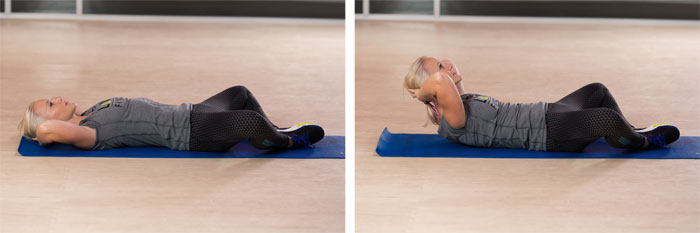
Instead of This: Frog Leg Crunch
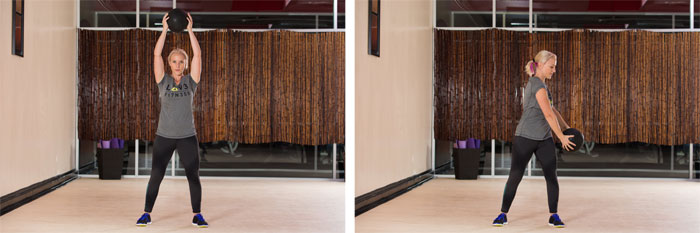
Do This: Medicine Ball Chops
The idea behind frog-leg crunches is that placing the
hips in an abducted position (with the upper thighs and knees touching
the floor) will recruit the lower abs. The standard crunch involves
using the abdominal muscles to roll the rib cage toward the pelvis,
which can strengthen these muscles, but does not train them the way they
are actually used during upright movement patterns. If your
ab muscles
were really responsible for flexing your spine, you would walk around
bending forward every time your foot hit the ground. During gait, the
six-pack muscle of the rectus abdominis is involved in decelerating the
anterior (forward) rotation of the pelvis, while the external obliques
are responsible for assisting with rotation of the trunk. While lying on
the floor to train the abs can create the perception of muscle
involvement and can be useful for individuals training for specific
appearance-based goals, if you want to train your body the way it was
actually designed to function, then consider training your core from a
standing position.
Medicine ball chops, for example, involve the muscles of the hips,
thighs, back and shoulder, which can all be considered core muscles
because of their attachments to the spine and pelvis. Start with the
medicine ball near the right hip, sink into a quarter squat, and then
use the hips and arms together to push the ball overhead before bringing
it down to the left hip; alternate from side to side.
If you want to work your calves…
Instead of This: Toe Raises
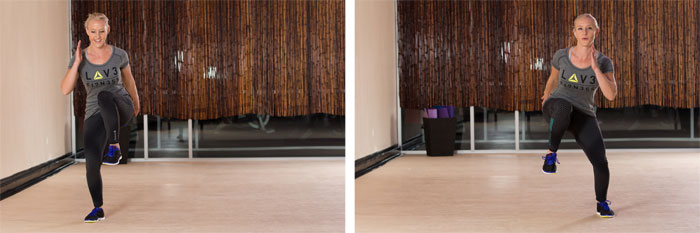
Do This: The Heisman
Standard toe raises are great for strengthening and
toning the calves because this exercise focuses on the concentric action
of muscle shortening, which can increase size and definition. However,
the function of the calf muscles during dynamic movements such as
walking, running or jumping is to help decelerate the force of the body
hitting the ground. As a result, the calves can experience extremely
large lengthening forces. This means that exercises that focus on the
shortening action of the muscles do not adequately prepare the muscles
for the forces they frequently experience. Toe raises can make a calf
stronger, but this exercise also increases muscle tightness, which can
be a liability during explosive movements when the calves are required
to rapidly lengthen as the foot hits the ground. In addition, people who
wear shoes with an elevated heel keep their calves in a shortened
position all day. Doing additional exercises to shorten the muscle could
lead to a muscle imbalance along with potential knee or hip soreness.
If you want to strengthen and tone your calves, adding
sprints or
agility drills to your workouts, such as the Heisman, are better options.
If you only have a limited amount of time to exercise,
it’s worth taking the time to take a close look at your exercise
selection and focus on the ones that will provide the greatest benefits.
If you have any questions about how to perform these exercises,
consider investing in a few training sessions with an ACE Certified
Personal Trainer who can provide the guidance you need to meet your
fitness goals in the shortest amount of time possible.

 Most people think that for a workout to be successful, it has to be lengthy and tiresome. People often struggle to spend two hours or more in the gym in the notion that the more time spent exercising would translate into more gains (in muscle) or more losses (in fat). While such feats may be worthy of a round of applause, they are often counterproductive. There will always come a point where you would get tired of going to the gym, and even dread the several hours you spend there. Soon, you might stop working out and put all the efforts you exerted to waste.