
Showing posts with label burn calories. Show all posts
Showing posts with label burn calories. Show all posts
Saturday, 3 October 2015

Saturday, 26 September 2015
30-Minute Cardio - The CafeMom Studios Workout
Work up a sweat and burn fat and calories with this 30-minute workout.
This workout uses high intensity exercises to get your heart going,
followed by lower intensity exercises to lower your heart rate. This is a
great workout for moms to relieve stress and keep your energy levels
high. Don't quit! The more you do this workout, the easier it will get.
This workout uses high intensity exercises to get your heart going,
followed by lower intensity exercises to lower your heart rate. This is a
great workout for moms to relieve stress and keep your energy levels
high. Don't quit! The more you do this workout, the easier it will get.
Thursday, 20 August 2015
15-Minute Full-Body Workout: Fast and Furious Calorie Burn
Short on time? Then this is the workout for you. Autumn Calabrese,
creator of the 21-Day Fix (21DayFix.com), shortened her signature Dirty
30 Workout just for us. It may only be 15 minutes long, but every second
is designed to tone you all over while keeping your heart rate up. Yep,
you're about to burn significant calories while building
metabolism-boosting muscle.
creator of the 21-Day Fix (21DayFix.com), shortened her signature Dirty
30 Workout just for us. It may only be 15 minutes long, but every second
is designed to tone you all over while keeping your heart rate up. Yep,
you're about to burn significant calories while building
metabolism-boosting muscle.
Thursday, 6 August 2015
Apple's iWatch and HealthKit: What They Mean for Health and Fitness Pros and Their Clients
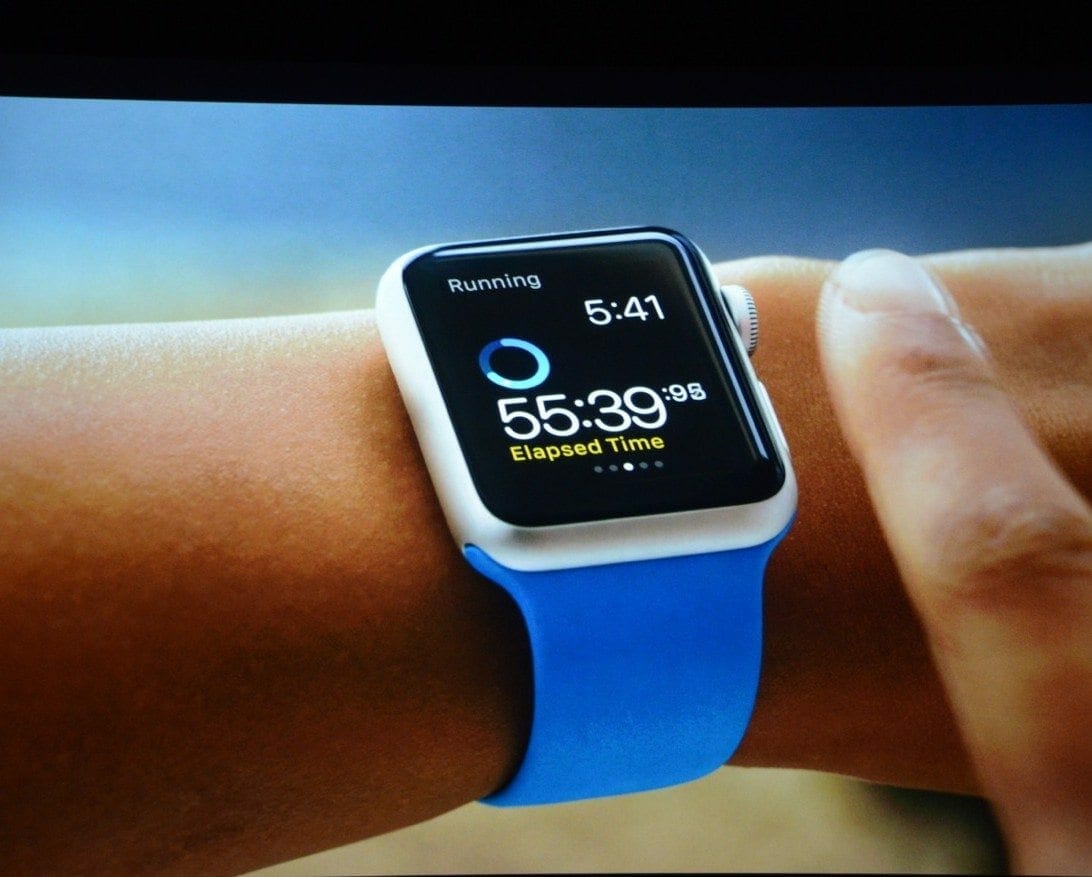 The fusion of technology and the fitness industry continues at warp
speed. This brings both excitement and concern, with users around the
world waiting for the release of the new iPhone 6, new iOS 8 and the
closely guarded Apple iWatch. Rumors suggest the devices will be both fashionable and practical.
The fusion of technology and the fitness industry continues at warp
speed. This brings both excitement and concern, with users around the
world waiting for the release of the new iPhone 6, new iOS 8 and the
closely guarded Apple iWatch. Rumors suggest the devices will be both fashionable and practical.Wall Street has also been watching the buzz around the new Apple products, as this is the most significant event for Apple under the leadership of Tim Cook (and not Steve Jobs). With the introduction of HealthKit, it is also Apple’s attempt to make the iPhone not only the center of the user’s digital world, but also of his or her physical world as well.
The HealthKit framework within iOS 8 will offer more health and fitness functionality by linking devices with a user’s health information, using the iPhone as the central hub. Now users will be able to capture and monitor health and fitness information such as pulse, steps, blood pressure and sleep habits. These health measures offer a clear and current overview of a person’s overall well-being. While it is true that individual apps have been doing this for years, the new HealthKit will allow these health and fitness apps to sync data about the user’s health and fitness across a variety of wearables and apps, organizing them all into one dashboard application—the iPhone.
Within the fitness industry, excitement started a year ago when Apple hired fitness-industry expert and ACE Pro Jay Blahnik as one of the first of many hires specific to health and fitness. After years spent consulting with Gatorade, Nautilus, Schwinn and Nike, Blahnik was all in with Apple. In December 2013, Apple met with the Food and Drug Administration, the U.S. governing arm of the federal government for all things medical, to discuss mobile medical applications, likely to ensure that HealthKit would not cross a regulatory line.
This is exciting news for our industry, so how can personal trainers and health coaches benefit from such technology? Here are three things I will be watching for in the weeks and months that follow the announcement:

Deeper Collaboration. We’ve seen that it takes a team to make a real difference in the lives of our clients. From trainer to physician, coach to nutritionist, the power of collaboration, being in sync and in real time, is one highlight of the new HealthKit. It will take time for each team member to understand his or her place in the overall HealthKit matrix, but what is exciting is the possibility of overall health for our collective clients. More teamwork between practitioners allows trainers and coaches to stay within their scope of practice and seek partnerships with others in the healthcare industry.
Proceed with Caution. Apple is late to the game with regards to fitness tracking, but many expect it to succeed where others have not. While Jawbone and FitBit do a good job of tracking activity, many consumers still see wearables as “unstylish” and the buzz of the wearable soon wears off with a sharp decline in use after just six months. A device has yet to emerge with enough authority to encourage mass adoption (not good if you are relying on this data). Apple could change that perception with their historic strengths in design and new hires in fashion, which means more people will be more inclined to wear a device and thus more health data will be collected.
As we share more personal and confidential information across the cloud, there will be more debate surrounding security and privacy with this type of information. Apple has taken steps to ensure our privacy, with requirements that apps using HealthKit not store information on the cloud and not share information without user consent. Of course, there will always be a risk when sharing data through the cloud, but does the benefit of sharing outweigh the concern over privacy? Or vice versa?
Remember, Apple is not the only kid on the block using smartphones for health. In the US, there are nearly 170 million cellphone users, 70 percent of whom use smartphones. Within the smartphone category, the iPhone is by far the most popular, with 42 percent of users, followed by Samsung at 28 percent, 7 percent for LG, 6 percent Motorola and 5 percent for HTC. However, when looking at the operating systems of these smartphones, Android takes the lead with 52 percent, Apple at 42 percent, and Microsoft, BlackBerry and others making up the remaining 8 percent (ComScore, 2014). The takeaway? If you only work with Apple, you will be missing out on 58 percent of the population that uses a smartphone other than an iPhone.

Source : By Ted Vickey Ted Vickey Ted Vickey, M.S., is the Senior Consultant - Fitness Technology for ACE. He’s been an ACE Certified Personal Trainer since 1992
Tuesday, 21 July 2015
5 Key Woman Workout Exercises For Beautiful Defined Arms

While many women work hard to avoid it, women's workout routines should include muscle building. I love how muscle definition looks on a female. It's a great way for others to instantly see that you've been working out. The great thing that happens naturally, once you've melted away enough of the body fat, is to see muscle definition.
The Benefits of Building Muscle and Why You Need to Do It
There's no denying that nicely defined muscles look sexy. Muscle mass is about more than just making sure you look good though.
Muscle building will:
- Increase your strength and flexibility
- Improve your posture
- Give you better balance
- Increase the number of calories burned with each movement, making it possible to burn more calories overall throughout the day
- Make daily tasks easier to perform
- Improve body composition

There are a few things you need to know about muscles, energy, and metabolism:
- Muscles use energy when they contract (they're highly metabolic).
- The more intense muscle contractions become, the more energy they'll use to perform the movement.
- Eventually, movements can become so intense that your muscles will use more oxygen than your body can produce. This creates an oxygen deficit that can last for hours after a workout.
- Your body needs more nutrients after an oxygen deficit because it needs to replenish its energy and oxygen levels.
- Resistance training and high intensity exercises prevent muscle loss by stimulating protein synthesis.
The only way to keep your metabolism at its highest levels and ready to burn calories is through regular resistance training, eating healthy, wholesome meals frequently and consistent, and customizing your workout routines to avoid muscle adaption. And if you stick to these three steps, your body should stay healthy, fit, and young for years to come. Ensure your female fitness workouts include resistance training so you can look and feel your best.
The Importance of Tempo Training in Women Workout Routines
 Weight lifting tempo refers to the number of seconds it takes for you
to complete a full range of motion of one repetition, usually called a
lift. There are four numbers represented when using tempo:
Weight lifting tempo refers to the number of seconds it takes for you
to complete a full range of motion of one repetition, usually called a
lift. There are four numbers represented when using tempo:The first number is the eccentric or down motion of the lift, also known as the "negative" phase. It is during this phase that the muscle is being stretched. When trying to build muscle, this number is usually slow and controlled to fatigue the muscle, causing breakdown and thus, stimulating growth.
The second number is the pause or hold before the concentric phase or upward motion, which represents the third number. The concentric phase is also known as the "positive" phase in which you are contracting the muscle while carrying the weight or load. Here we typically use a faster momentum to return the weight to the start position. The fourth number represents the starting point of the movement. Here you can either pause or immediately begin the next repetition.
Changing the tempo of a lift is good practice to provide a different stimulus on the muscle. Once the muscle has adapted to a certain tempo, changing the tempo will stimulated the muscle, causing increased fatigue and results in more strength and muscle gains. It is important to note that using proper form is most important element when weight lifting. A common mistake beginners make is using a fast tempo that sabotages form. When momentum is introduced, there will be less tension on the muscle, which will lesson your gains.
5 Exercises for Women Workout Exercises for Beautiful Defined Arms
 1-Shoulder Press
Muscles targeted: front deltoids, middle deltoids, and triceps. Also activates your upper traps, rotator cuff and serratus which assists and stabilizes.
Stand with your feet shoulder width apart or narrower and grab the bar with a slightly wider-than shoulder- width grip. To get the bar into position, you can either forcefully pick it up off the floor and up to your shoulders or set the bar on the supports of a power rack. If the bar is on the rack, push it off and let it rest against the front of your shoulders. Squeeze your shoulder blades together and push your chest out.
Begin pressing the bar overhead, moving your head back as the bar rises to keep it out of the way. When the bar passes your head, press it up and slightly backward so that it ends up in line with the back of your head. Hold for a moment, and then lower the bar back to your shoulders. That's one rep.
 2-Bicep curl
Tip - to ensure your elbow flexors are getting the most range at the bottom of the movements squeeze your triceps. This will ensure full lengthening of the bicep.
Muscle targeted: elbow flexors
Stand with your feet shoulder-width apart, while holding a dumbbell at your side, with you palm facing forward. Next, curl, or flex, your elbow so that the dumbbell moves up towards your shoulder. For the return phase, slowly lower, or extend, your elbow to reassume the starting position.
3-Tricep Parallel dip

Next, lower yourself to a final position where your elbows are bent and your shoulders are mildly stretched, and then use your arms to push yourself upwards to the initial starting position.
4-Pull Up/Chin Up

Grab the bar with a shoulder-width underhand/overhand grip .Hang at arm's length and pull your chest to the bar. Try to pause at the top, with your chest touching the bar before you slowly lower yourself back down.
Muscles targeted: tere major (stabilizer muscle) and biceps.
5-Push up

Place hands slightly wider than shoulder-width apart. Squeeze your glutes for the entire movement. Lower your body until your chest nearly touches the floor. Tuck your elbows as you lower your body and don't drop your hips. Pause at the bottom before pushing yourself to start position. Your head should remain in the same position throughout the movement.
An important aspect of any woman's workout routine should always include a solid arm exercise regime to get beautifully defined and toned arms. In order to have gains in muscle building it is always vital to understand the science behind each and every exercise for the best results.
Source
Subscribe to:
Posts (Atom)