Showing posts with label warm up. Show all posts

Sunday, 6 September 2015

Health and Fitness Essentials – The Cardio-vascular Workout

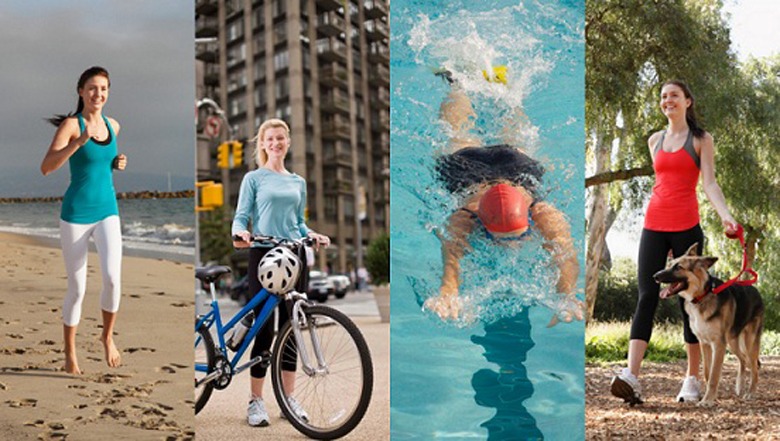
To accomplish a good cardio-vascular workout all you really need is a good pair of running shoes. Most cardio-vascular exercise needs little or no third party apparatus to help you accomplish your routine. Running, dancing, walking can all be done with no equipment (well, if dancing, then maybe some music would help). Other forms of cardio are step, circuit training, bike riding, swimming, aerobics and more...

With most exercise you should always remember to warm up first and cool down afterwards. This means gently stretching and moving your muscles to start off with. Suddenly moving into full exercise without building up first will cause problems such as stiffness and cramps. Ease yourself into it. Then after exercise, the cool down is basically gently moving the muscles and joints to stretch and relax, as your body returns to its normal pace.

Running:
Make sure you have a good pair of running shoes. The technology put into these shoes nowadays is highly researched and designed to reduce shock to the feet, ankles, legs and back. So don't skimp on these - you get what you pay for.

Before you start your run, be sure to warm up first. Start with a brisk walk ensuring you move your arms vigorously gradually breaking into a slow jog. It is better to run at a speed to which you can still converse. If you find yourself losing breath, slow your pace down until you've recovered. If you are a novice runner try running and walking, until you can hold your run for 15 minutes.

Now increase the length and time of your run by a couple of minutes every other time you hit the road or treadmill, until you can run for 30 minutes without stopping. Try to increase your run time by 10% each week, remember not to over do it and don’t forget to warm down at the end of each by slowing down gradually. When your run is complete stretch your legs for 30 seconds per muscle, hamstring, calf and thigh.

Cycling:
Cycling is one of the best ways to get a good cardio-vascular workout.

First of all, if you are riding on the roads safety is paramount, always use the appropriate safety equipment when road riding. You can stay fit by riding a bike to work, most people work within a five mile radius of there place of work, which is a perfect distance for a bike ride.

Exercise bikes can be used in a variety of ways, general riding for specified length of time, this is like going for a bike ride with out the dangers of road riding and the weather. Warm up riding you can use an exercise bike for warming up the legs before a leg workout. Also exercise bike classes, these classes are taken by an instructor, who will put you through various levels of pace, quite like a circuit training exercise with a bike.

You may find it surprising to find that riding a bike five miles 3 times per week will improve your heart rate, your posture, skin and weight control. Some even say that riding and running are great ways of relieving stress.

Swimming:
One of the best ways to firm up and trim your body down. Due to the resistance the water has on the body swimming involves all the major muscle groups this allows the body to burn up to 20% more calories than swimming through air. Swimming a few lengths per day will keep you fit and give you an excellent workout. Swimming also has less impact on the joints than say, running.

If you wish to take your swim a little further try picking up the pace of your swim, you can work up to a great aerobic exercise and give your body an excellent workout.

Start off by swimming 1-2 lengths at a time resting between sets if necessary, after you have swam ten lengths call it a day. The next day repeat the process until you can swim five lengths without a break. Progress to ten lengths in by adding an extra length each time you return.

You can put together your own cardio raining routing in the gym, if you have a problem with this then the staff on hand will write one for you and show you how to achieve your goal. Try to make your cardio last between an hour and an hour and a half. A good start point for cardio is always a run.

This cardio workout will work for a person of medium fitness, however adjust the times and pace according to your fitness levels.

1. Run at a light pace for 20 minutes, start off at a walking pace and gradually move to a run, this helps you get warmed up and the blood pumping.

2. Rowing machine- set the rowing machine for a countdown time of 15 minutes or keep a check on your watch or the clock. Start off with a slow rowing motion to get the pace up, maintain this steady pace throughout the full 13 minutes and use the 2 minutes to slow the pace down.

3. Move immediately on to exercise bike take a stead paced ride for 12 minutes with a sprint finish for the remaining 3 minutes.

4. After the exercise bike move directly on to the step climber for a period of 15 minutes climbing on a light level to get the legs going. Try to move at a swift pace for the full 15 minutes as this is the last of the leg work you will be doing.

5. When you have completed the step climber, move onto the abs bench for some crunches. 4 sets of crunches to failure is your target for this exercise. Try twisting your body and touching your left knee with your right elbow and vice versa.

6. The last exercise in this quick cardio workout is the leg raise apparatus. Bring your knees up to your chest for 3-4 sets for as many reps as possible (failure)
After the completion of this cardio workout, remember to do a full warm down by stretching the muscles. The full workout should take you around 1 hour 20 minutes.

Brigi G by Fit 4 Health

Tuesday, 23 June 2015

Weight Training for Beginners: Lifting Basics


weight training for beginnersWeightlifting is not just for body-builders…regular people can also benefit from these muscle training exercises.  By adjusting the weight, repetition and techniques, weightlifting can be scaled to an appropriate level to suit anyone’s exercise goals.  Including the proper use of weight training in your exercise regime provides unparalleled ability to increase strength and target particular muscle groups, but it is important to know what you’re doing because it is also an easy way to injure yourself.
Excessive weight, poor technique, and inadequate warm-up are all serious risks, and far from improving fitness, they can contribute to the kinds of chronic injuries that prevent people from exercising at all.  But this is no reason not to take advantage of weightlifting, with a few basic guidelines and the appropriate equipment you can safely enjoy the benefits of lifting weights.

First things first, how does weight training fit into your life?  While belonging to a gym offers the most equipment options and resources, not having access to a gym membership does not mean that you can’t lift weights.  It is easy to find inexpensive used dumbbells on Craigslist, and there are a lot of exercises you can perform with just a set of dumbbells.  Even if you can’t get your hands on any equipment there are still plenty of exercise for home that take advantage of weight training principles.  If you are new to weightlifting and muscle training, it might be useful to have a trainer plan out a routine that meets your needs and helps you become familiar with the exercises involved.  Most gyms offer both classes and personal trainers to help you get going and stay motivated, but there are also exercise classes online and on DVDs.  All it takes is a bit of research to find the plan that fits your needs and experience. Whether you are working out at home or hitting the gym, you are going to use the same set of muscles, and the importance of the warm up cannot be overstated.
The keys to a good pre-workout are getting warm, and stretching out.  Aerobic exercises that get the blood pumping are the first step.  With increased blood flow your muscles perform better, recover faster and are less likely to be injured.  Along with aerobic exercises you should do some light pre-workout stretching to increase your range of motion and lengthen the muscle fibers so they are less likely to tear while lifting.  Dynamic stretching is preferable, that is stretches that involve movement, as opposed to static stretches where you hold a position.  Focus you stretching on the areas that are most likely to be injured, such as your rotator cuff, shoulder and back muscles, neck, and knees.  Warming up for ten to twenty minutes is perfect, with most of the time spent on aerobic work.

Once you are all warmed up and ready to lift there are a few considerations that will maximize your benefits and decrease your risk of injury.  Check them out:
  1. Start off with light weights.  No, even lighter.  Especially if you are just getting into lifting, it is important not to push yourself at first.  Pick a weight that allows you to do more than 10 repetitions, without too much strain or fatigue.  Even most serious weight lifters often begin their routine with a set of low weight reps and then progress to heavier weights in later sets.  Better to wish you’d lifted more than wish you’d lifted less.
  2. Concentrate on performing each exercise with correct technique.  This is important both for maximizing the benefit to the muscle you are working out and minimizing the risk of injury.  Avoid swinging weights around while using them.  You want to maintain good posture, take a firm stance and lift with only the essential muscles- don’t compensate with other muscles.  Be careful with shoulder and knee exercises.  If you are holding a weight at arm’s length don’t lift it above your shoulder, and if you are performing weighted squats don’t bend lower than where your thigh is parallel to the ground.
  3. Go for high reps, full range, and multiple sets.  It is most beneficial for strengthening muscles to perform exercises that engage them at every point along the range of motion.  Additionally there is more benefit in gradually fatiguing your muscle, by performing three sets of fifteen repetitions for each exercise, for example, than in trying to lift as much as you can all at once.
  4. Go slowly.  Take time between exercises to keep stretch and staying warm.  Your muscles will improve the most if you give them a chance to recover after each exercise and then do another set.  Also it is important to lift in a slow and controlled motion.  Jerking the weights around is a good way to injure yourself, but lifting them slowly will make every exercise more challenging.
  5. Stay hydrated so you can keep sweating but bring a towel to wipe down equipment.  Water is essential to muscle recovery and it is important to stay hydrated during and after working out, but it is also important not to drip sweat all over the place, especially if you are in a gym sharing equipment with everyone else.
  6. Be sure to cool down properly.  After lifting it is a good idea to get a bit more cardio work in and do some more stretching, making sure that as your muscles cool they are not contracting and cramping.  Find some time to get in a few more quick stretching or yoga sessions in the hours following your workout to keep loose.
As you become familiar with weight training and want to get even more out of your exercises, look into improving your diet, creating a schedule that includes sufficient rest and recovery periods between workouts, and if you are training for something specific, do some research or seek advice on how to tailor your workout to your needs.

Sourse 

Monday, 15 June 2015

How To Stretch Hip Flexors: 5 Ways To Loosen Your Hips


how to stretch hip flexorsThe hip flexor is infamous for being difficult to stretch, easy to injure, and nearly impossible to heal.  Most people have tight hip flexors in their genetics, which cause them to have drastically less flexible legs, hips and torsos.  For the rest of the world, sitting is one of the worst things you can do for a tight hip flexor.  Sitting for long periods of time, on a day-to-day basis (desk jobs, I’m looking at you), causes your hip flexors to not only tighten, but to actually shorten.  So whether or not you’ve injured your hip flexor, stretching it is good and preventative practice, and you’ll notice the results immediately.  Hip flexors control the tension necessary for pivoting forwards and backwards and side to side.  Being flexible in the hips will improve your posture, make you a better athlete (and dancer) and help you get the most out of your workouts (especially those involving leg and abdominal exercises).  Stretch out your hip flexors, then take your elasticity to the next level with these yoga sequences for strength and flexibility.

Warming Up

Ok, the last thing you want to do is injure your hip flexor when you’re trying to strengthen it.  That would be painfully ironic.  So avoid tears by warming up with a few of these easy exercises:
  • Lunges (Overhead and Reverse)
  • Leg Swings
  • High Knees
  • Leg Lifts
  • Self-Massage

Pigeon Pose

A little yoga never hurt anyone (in fact, I think it only ever helped).  The pigeon pose is a yoga classic, and it’s great for stretching hip flexors.  Begin by bending with a straight back and placing your hands palm down on the floor; then lower yourself to your knees.  Step with one leg forward until it is between your hands.  Make a right angle with that leg, so that it rests on its side and your shin is parallel with your chest (which should be facing straight forward).  You want to keep your hips straight and your back straight and arched.  You can alleviate some of your weight by pushing down on the floor with your hands.  Drop the other leg slowly so that it stretches out straight behind you; this is when you will begin to feel your hip flexor stretch.  Move slowly and always maintain balance, and like I said, use your hands to alleviate some of your body weight.  Breathe slowly and ideally hold the pose for at least two minutes.

Variation on the Lunge

This is essentially a lunge with emphasis on the hip flexor.  Start with a straight back and lunge forward with one foot.  Bend until both legs are at right angles; the knee in front should be level with your hips, the knee in back should be anchored by a thigh that is in perfect line with your back and neck (the knee should be touching the floor).  Rotate your pelvis forward until you begin to feel tension in the hip of your forward foot.  Now, raise the opposite arm of the forward foot overhead, angling it at almost a right angle in the direction of the forward foot.  You should feel considerable tension now.  Hold for at least one minute, extending the arm further to add tension as desired.  Return to standing and repeat for the opposite side.
This will help strengthen your core, too.  But there’s a better and more fun way to build your core: hoop fitness with 5X world record athlete Betty Hoops.

Butterfly

This might take you back to grade school, but even the hip flexor aficionado can delight in this simple yet satisfying maneuver.  First, take a seat.  As usual, keep your back arrow-straight.  Bring your feet together and toward your pelvis.  Your legs will bend beyond forty-five degrees and, when your soles touch, form a diamond (your knees will not be touching the floor; they should be elevated so as to resemble butterfly wings).  Hold your ankles with your hands and allow your thighs to relax.  Try to match your elbows to your knees simply by relaxing; but if you can lower your knees further without pain or force, by all means, go for it.  Relieve your hip flexors by raising your knees so that they are in line with your shoulders.  Hold for several seconds before lowering back to elbow height.

Hip Swing

If you liked sitting down for the Butterfly, you’ll love the Hip Swing, which requires you to lie on your side.  To begin, lie on one side and prop yourself up with your corresponding elbow.  Your hips should form a line perpendicular to the floor.  Raise the top leg so that it angles gently upward from the hip.  You do not need to raise it as high as possible; level with the ground is just as ideal.  Point your toe, keep your abs tight, and sweep your leg forward as far as you can while keeping it (and your back) straight.  Slowly reverse the movement and sweep the leg behind you as far as possible (squeezing your buttocks will win you extra inches).  Always maintain balance and control.  Switch legs before the stretch begins to feel like an exercise.  You do not want to over-burden the hip flexor.

Standing Hip Flexor

This is more of an exercise than a stretch, but it’s both gentle and strengthening, and probably the best way to bolster the delicate muscle.  For this you will need resistance bands.  Begin by attaching one end of the band just above one foot and the other end to a secure bench.  Face straight away from where you have anchored the band.  Keeping your leg and back straight, lift/push it forward gently to a two count, then release it in the same manner.  You do not need to hold your leg forward, and you do not need to strain yourself; a little resistance goes a long way.

Source 

Saturday, 6 June 2015

Half Marathon Training for Beginners: 13.1 Miles to Glory!


A half marathon is 13.1 miles and should not be attempted by the faint of heart or the uninitiated. Even though it is the little brother to the monster 26-plus mile full marathon, it should not be attempted by anyone who doesn’t already run semi-regularly. Below we map out a training routine and the physical and mental accoutrements that will be necessary to undertake this serious and fulfilling activity.

Getting Prepared

Before you sign up for a half marathon, check out these guidelines for easing into such a mammoth undertaking. No matter how ready you think you might be, it’s still 13 freaking miles! These tips and guidelines will not only prepare your body for a half marathon, but your mind as well.
  • Motivation is a huge factor. Not only do you need to motivate to begin training, you must have the mental stamina to keep at it long enough to be ready for a half marathon.
  • Set goals for yourself that are achievable. Whether your goals are to lose a certain amount of weight, to run the half marathon in a certain time or to just finish the race, setting attainable goals during this process will keep you motivated and will give you quantifiable reasons to keep at it. Without goals you’re likely to quit when it starts getting tough.
  • Wear the right gear. This includes the right shoes and wearing comfortable clothes that can sustain you for the time it will take to run 13 miles. There are countless kinds of running shoes out there, so make sure you get something that fits you specifically.
  • Eat healthy. When training for a half marathon, your body is no longer just used for walking around from point A to point B. It is now a machine, and machines need to be kept in tip top shape. Keep in mind that carbohydrates provide the fuel runners need. During half marathon training, 65% of your total calories should come from carbohydrates, particularly complex carbohydrates. 10% should come from protein (you need 0.5 to 0.7 grams per pound of your body weight each day). 20-25% of your total calories should come from unsaturated fats. It’s a good idea to eat during the race as well. Compact and energy-laden foods such as bananas, energy bars, dried fruit, oranges or even certain candies will not only take your mind off the race, but will get your energy level back up.
  • Be sure to hydrate. On runs of an hour or more, carry fluids with you and consume 6-8 oz. every 20 minutes. During pre-training and marathon training, weigh yourself before and after each run and get your body weight back to the weight it was before the run by drinking water or sports drink within the first hours after the run.
  • Don’f forget the music! Picking the right jams to get you through the tough parts of training and the actual race can be integral. Not only do you want music that will motivate you, you also might want something with a rhythm that will keep you in pace with your run. Make a playlist that pumps you up at first, then put on songs with similar tempos that will sustain you during the tough parts and finally end your run with some mellow songs that will calm the mind as well as the body.

Pre Training

Before starting a rigid training schedule, you must be able to meet certain physical requirements that are necessary to get you to the next level of training. First and foremost, you will want to consult your doctor to make sure it will be safe for you to run long distances, especially if you are over the ages of 35-40.
Next, you should already be running about three times a week, with weekday runs averaging about 30 minutes and longer weekend runs coming in at about 3 miles. Its important to remember that you may take walk breaks throughout your run if necessary. Once you have a good foundation to start with, it’s time to start training!
Finally, don’t forget to stretch before your runs. This will help prevent injury and get you warmed up for you run.

Training

You’ve got the gear. You’re walk/running three times a week. Now on to the training. The following 12-week training schedule will get you ready to chew up and spit out those 13.1 miles.


Mon
Tue
Wed
Thu
Fri
Sat
Sun

Week 1
off
3 miles
3 miles
3 miles
off
3 miles
4 miles

Week 2
off
3 miles
4 miles
3 miles
off
3 miles
4 miles

Week 3
off
3 miles
4 miles
3 miles
off
3 miles
5 miles

Week 4
off
3 miles
5 miles
3 miles
off
4 miles
6 miles

Week 5
off
4 miles
5 miles
4 miles
off
3 miles
7 miles

Week 6
off
4 miles
4 miles
4 miles
off
4 miles
8 miles

Week 7
off
4 miles
6 miles
4 miles
off
4 miles
9 miles

Week 8
off
4 miles
6 miles
4 miles
off
4 miles
10 miles

Week 9
off
4 miles
6 miles
4 miles
off
3 miles
11 miles

Week 10
off
4 miles
5 miles
4 miles
off
4 miles
12 miles

Week 11
off
4 miles
5 miles
4 miles
off
3 miles
6 miles

Week 12
off
3 miles
5 miles
3 miles
off
2 miles
13.1 miles!

Things to Remember

  • Don’t forget your rest days! If you’re following this or any other half marathon training schedule, make sure to incorporate two full rest days into it. This will give your joints enough time to rest. It may even be helpful to taper off a bit near the end of your training in order to let your body recover fully for the actual race day.
  • Pace yourself. When the starter’s pistol goes off, you and everyone else will be hopped up on adrenaline. Don’t forget that long-distance running is all about endurance. Don’t forget to maintain a consistent pace so you can finish in a big way.
There you have it. We’ve covered everything from your kicks to your jams to your training schedule. Make sure to give yourself ample time to prepare for the half marathon. If it’s coming up soon and you have never run a mile in your life, wait for next year – you don’t want to overdo it. Don’t forget to talk to your doctor first, and good luck out there.
Source

Friday, 17 April 2015

How Do You Relieve Sore Muscles After Exercise

It might seem odd,but it makes me feel good to know my muscles are sore and I have worked myself hard to build strength after a long work out. But sometimes you want to relieve sore muscles and pains, this is what you can do to help relieve those aches and pains that bother you.


Many people think that it's crucial to stretch before and after they exercise to help ward off any soreness of the muscles. If you stretch too much while your muscles are throbbing after the workout, you may do more harm than good. So keep stretching limited and relaxed so you don't put a strain on your muscles and get an injury.

During the stretching you can tear the muscle fiber, which can take a long time to heal and will limit your activities until it heals. Which can slow your progress down with your exercising regimen. Either you can sprain or strain,although both have their differences, you are more likely to pull muscles. Stopping your exercise routine while you wait for the muscle to repair can be frustrating and delay you.

Stretching only works if your muscles are loose and warmed up. Otherwise you risk injury.

Light warm ups before you workout can maximize your stretching. The soreness you feel in you body after working out is because of the tiny tears that occur when you work them hard. By the time your muscles repair, your muscles grow bigger and stronger. So some soreness is a good thing.

You should carefully adjust into a exercise program instead of rigorous training right away. I've made the mistake of thinking because I'm athletic I can easily get involved in any physical activity. This is wrong. Various activities require and use different muscles to perform different functions.

If some soreness of the muscles occurs,give light exercise a try. Things like small walks and a laid back bike ride are ideal. The idea is to keep your muscles loose without putting additional strain on your muscles.

First aid for injuries usually involves placing ice on the area from 15 to 20 minutes. After an hour has passed apply heat for 15 to 20 minutes for the next hour or so. Bathing in a hot tub can help to relax you and your muscles.

Maybe a light massage is right for you? Massages help to bring more blood to the the affected areas and help remove the lactic acid that causes soreness in your muscles. Many over counter creams for sore muscles exist to help ease your discomfort.

Just by following these tips, you can enjoy your workouts and know how to get rid of sore muscles too!

Source
 

Sunday, 4 January 2015

Cardio Workout Routines: Best Cardio Exercises

Our bodies are made to move, and our hearts are made to beat.  Getting our bodies moving and our hearts beating regularly can be as simple as adding in 30 minutes of cardio workout routines into our daily schedule.
Regular cardio exercise has been shown to decrease cholesterol, improve mood, and reduce body fat, among other things.  If you are wondering how you can easily make cardio workout routines a priority, then read on to check out a complete list of the best forms of cardio out there to help you achieve an active, long, and healthy life.


Warm-Up

Before you begin your cardio workout routine, there are various different warm-ups to preface your cardio routines that you can do to stretch your muscles and get your blood flowing.
Power Skipping:  Skipping is not just for the playground.
  1. Raise your right knee up to your hip while using your left arm to reach over your head.
  2. Land on the balls of your left foot.
  3. Alternate the skipping motion using your opposite arm and leg.
  4. Aim for 10 to 15 skips going as high as you can off the ground.
Stair Climb:  Stair climbs are a great way to start getting your heart rate up.
  1. Walk up and down a stairway briskly until you begin to feel a sweat.
  2. Make sure that you do not do too many turn-around motions because this will cause you to become dizzy.
High Knees:
  1. With your feet hip-length apart, raise your right knee up as high as it can go.  Then place it back down.
  2. Alternate between your two legs and continually pick up the pace as you go.
  3. Try doing this for about 30 seconds straight.
Butt Kicks:  These will help to get your glutes into shape.
  1. Jog in place and kick your heels up towards your backside as you do.
  2. Make sure that your movement is coming from your hamstrings and not from simply kicking your feet up into the dust.
  3. Do this for about one minute and pick up the pace as you go.
Jumping Jacks:  This classic cardio move will warm up your entire body.
  1. Stand with your feet together and keep your hands at your sides.
  2. Make sure that your core is engaged and start jumping with your legs out wider than your hips.  As you jump, raise your arms over your head.
  3. Keep your knees as bent as possible and bring your feet back together and arms down as you come back to the ground.
  4. Aim to do 20 to 30 jumping jacks.

Cardio Workout Routines (Full Body)

These cardio workout routines will pull and stretch your full body and can be done in the comfort of your own home.  Aim to incorporate at least 3 to 4 of these full body exercises into your cardio workout routine.
Trunk Jump:  This exercise is going to help you catch some air.
  1. Stand up tall with your knees slightly bent and jump as high as you can.
  2. Bring your knees in towards your chest and extend your arms straight out in front of your body.
  3. When you come back to the floor, lower your arms.
  4. Aim to do 8 to 10 of these.
Basic Burpee:  People either love or hate these squatting moves.
  1. Begin your burpee in a low-squat position with both your hands firmly on the floor.
  2. Kick your feet back so that you come into a push-up position.  Quickly return to your squatting position.
  3. For your last step, jump as high as you can before squatting back down for your next burpee.
  4. Aim to do about 10 strong burpees.
Push-Up Burpee:  This cardio move is a more advanced take on the basic burpee.
  1. Begin this burpee as you would a normal one.  However, once you reach push-up position, actually do the push up.
  2. Complete the full push up before coming back into a squatting position.
  3. Try to complete at least 8 to 10 of these more advanced burpees.
Mountain Climber:  If you want to get the same effect from climbing a mountain without actually going up a mountain, try this cardio workout.
  1. Begin this exercise down on your hands and knees and bring your right foot upwards towards your chest.  Keep your left leg straight during this time.
  2. While engaging your core, quickly switch your legs up and keep up this rhythm for about 15 to 20 repetitions.
One-leg Burpee:  As you can tell, there are various ways that you can do a regular burpee.
  1. First, complete a normal burpee – however, instead of using both your legs, use one leg at a time.
  2. Switch sides so you can feel the burn on both of your legs.
Vertical Jump: Get ready to jump as high as possible with this exercise.
  1. Stand up straight with a slight bend in your knee and jump up as high as you can.
  2. Use your arms to propel yourself upwards and bend your knees while you jump.  When you are jumping, be sure to keep your arms extended up towards the ceiling.
  3. Repeat this move for about 10 reps.

Invisible Jump Rope:  You can do this with an actual jump rope if you would like.
  1. Pretend you are holding a jump rope in your hands, and while still staying on your toes, push off with the balls of your feet.
  2. Keep jumping with swift and quick little jumps.  Keep your wrists moving in small circular motions as if you were holding a rope.
  3. Do this for about 60 seconds.
Diver’s Push-Up:  Pretend you are jumping in the ocean with this cardio routine.
  1. Start off in a downward-dog position.  Keep your arms planted firmly on the ground and keep your eyes towards the floor.
  2. In a fluid, yet controlled motion, swoop your hips towards the floor as your chest rises.
  3. Continue moving until your back is fully arched and your gaze is up towards the ceiling.
  4. Swoop back down into starting position.
  5. Do this motion for about 10 to 15 reps.
To get a lean strong body fast, enroll in this course on method yoga.
Box Jump:   Take jumping to the next level with these high intensity jumps.
  1. Get a box that is sturdy enough to hold your weight, and one that you can land on firmly enough without missing.
  2. Keep your feet shoulder-width apart, bend your knees, and use all your strength to jump up onto the box.
  3. Secure your footing and landing on the box, and then step back down.
  4. Aim to do about 6 to 10 of these jumps.
Frog Jump:  To incorporate squatting with jumping, try this jump.
  1. Begin in a squatting position and touch the ground with both of your hands.  Keep your arms straight during this time.
  2. Jump as high as you can into the air coming up from your squat.
  3. As you come back down from your jump, raise your knees as high as possible.
  4. Try to do about 10 to 12 of these frog jumps.
Bicycle:  Here is another exercise where you do not actually need a piece of equipment for.
  1. Lie down on your back with your knees inwards towards your chest and with both of your hands behind your head.
  2. Bring your right elbow upwards towards your left knee while your right leg straightens.
  3. Alternate between your legs as if you were pedaling on a bike.
  4. Pedal for about 30 repetitions.

Your Best Cardio Routine

Remember that there is no correct cardio exercise.  The type of cardio workout routines that you choose to incorporate into your exercise will depend on your fitness level and what you want to get out of your workout.  However, any type of movement that gets your blood pumping and glands sweating is going to be beneficial for your body, mind, and overall fitness.  For a total hot body fitness workout, enroll in this course for over 10 hours of workout routines to keep you looking radiant and living longer.

Source