Showing posts with label chest workout. Show all posts

Saturday, 29 August 2015

Quick but Effective Workout Exercises

Most people think that for a workout to be successful, it has to be lengthy and tiresome. People often struggle to spend two hours or more in the gym in the notion that the more time spent exercising would translate into more gains (in muscle) or more losses (in fat). While such feats may be worthy of a round of applause, they are often counterproductive. There will always come a point where you would get tired of going to the gym, and even dread the several hours you spend there. Soon, you might stop working out and put all the efforts you exerted to waste.

However such should not be always the case. If you want to be able to keep with your fitness regime for long, you might want to try to make use of quick workout exercises that will allow you to spend less time in the gym, but still motivate you to continue working out in long terms. While quick workout exercises may not give you results as fast as you want, they will allow you to maintain your ideal body type that will remain with you in the long run. It is important to keep things simple so that you would not find things too tiring and dreadful, eventually you can add some more exercises to spice things up and keep you motivated.

Here are simple workout exercises you can do in the gym or at home. The workouts can be done in less than 30 minutes, which allows you to enjoy more time for other things.

Strength Exercises

For the shoulders – get two heavy dumbbells or any two equally-weighing objects for each of your hands. Lift the weights suspended in your arms using your shoulders and hold for three to five seconds, then relax again. Repeat this step for 8 to 12 times depending on the weight you are using. Do up to three of this set.

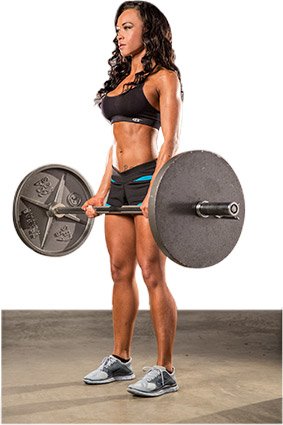
For the chest – lie on your back on a bench press or any similar sturdy flat surface. Before doing the normal bench press, warm up first by doing a set of 8 to 12 repetitions using a third of the weight you normally can lift. After the warm up, do three sets of 8 to 12 repetitions of your normal bench press routine. Just keep in mind to avoid arching your back as you lift the weights.

For the biceps – lie on an inclined bench with both hands carrying dumbbells of equal weights. Lift the right arm for two counts and return for three counts, do the same with the left arm. Repeat for 8 to 12 times. Do three sets of this exercise.

For the thighs and buttocks – with heavy dumbbells on each hand, gently squat until your thighs are parallel to the ground, then stand upright again. Repeat for 8 to 12 times. Do two to three sets of this exercise.

For the calves – stand upright with heavy dumbbells on each hand. Gently tip your toes as high as you can without wobbling or getting imbalanced. Repeat for 8 to 12 times and do up to two sets.
The workout exercises above are indeed quite simple and easy that you might think that they would not work. However such a simple regiment would be easy to maintain, and the results will come in time and last for you to enjoy your body. You may alternate the above exercise with a 30 to 45 minute cardiovascular exercise, so that you would also be able to shed off fat as you gain muscle.

To get fit, you do not need to spend hours in the gym. You just need to maintain a fitness routine and make it a lifestyle. Of course you should have a balanced diet and do everything in moderation. In time you and other people would see the results. Soon you will have the body you would want.

Brigi G by Fit 4 Health

Monday, 26 January 2015

6 Exercise Swaps for a More Effective Workout

One of the most common ways to learn how to exercise in a gym is by watching others go through their workouts. I’m sure most of us, at one time or another, have tried an exercise after watching someone else perform the movement. But just because someone with a buff body is doing an exercise does not mean that particular exercise is effective. In fact, there are many exercises that seem to be producing a desired outcome, yet aren’t really creating a beneficial physiological response. If you’re doing certain exercises because you saw other gym goers do them, you might want to consider trying these exercises instead: 

If you want to work your chest…
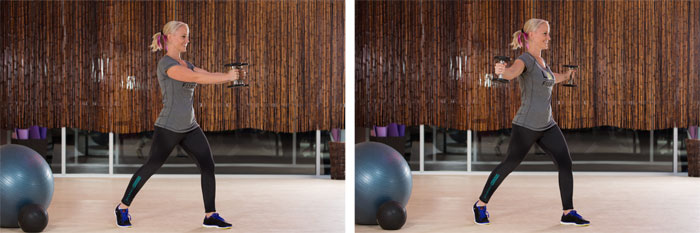
Instead of This: Standing Chest Flys With Dumbbells
standing chest flys
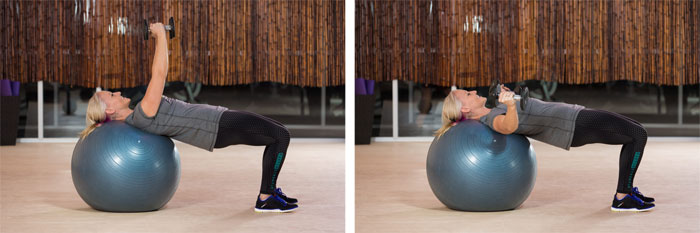
Do This: Lying Flys 
lying flys
When the goal is to strengthen the chest muscles, the load should be placed directly into the pectoralis major and minor, as is the case with push-ups, the bench press, pec-deck machine, or flys with dumbbells or cables. This is because the pull of resistance is lined up directly with the muscles, so when they shorten they are generating the greatest amount of force to move the shoulder joint. When doing chest flys while standing and holding dumbbells, the deltoid muscles of the shoulder are doing most of the work, while the pectoralis major or minor act as secondary muscles, which makes it more of a shoulder exercise than a chest exercise. If an instructor has you doing this exercise and says it’s for your shoulders, however, that’s fine.

If you want to work your glutes… 
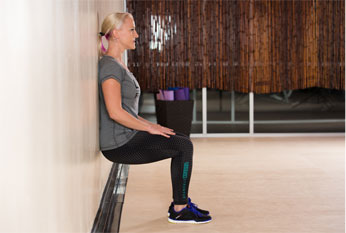
Instead of This: Wall Sit 
wall sit
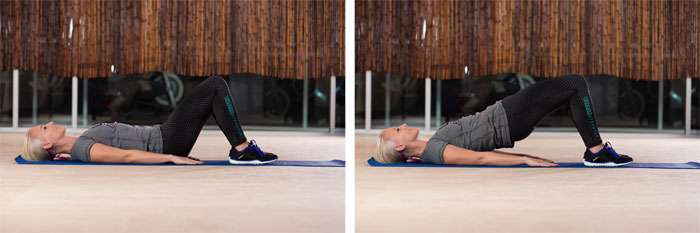
Do This: Glute Bridge
glute bridge
The purpose of squats is to strengthen and tone the muscles of the butt, thighs and hips. The most effective way to strengthen a muscle and develop definition is to take it through a full range of motion (ROM), which includes lengthening as well as shortening the involved muscle fibers. During a wall sit, an exercise featuring an isometric (non-moving) contraction, muscles are shortening, but they are not making the transition from lengthening to shortening because only a finite amount of muscle fibers are engaged. Compare that to an exercise like a regular squat where the muscles transition from lengthening to shortening through a complete ROM, which covers much more distance and allows more work to be completed. A wall sit makes you feel like your muscles are burning, but that is because they are holding static, non-moving contractions. The actual strength benefits, however, are minimal. The glute bridge is a better option because they take the hips through a full ROM. The benefit of lying on the ground is that it focuses the work on the hip extensor muscles of the glutes, hamstrings and adductors. 

If you want to work your inner thighs… 
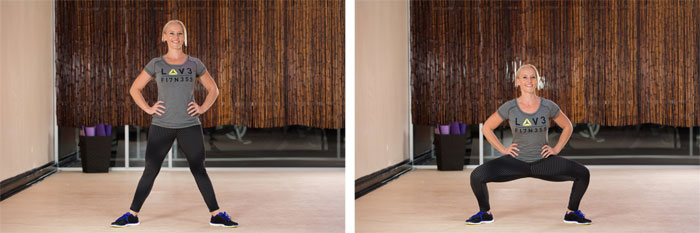
Instead of This: Plié Squats 
plie squats
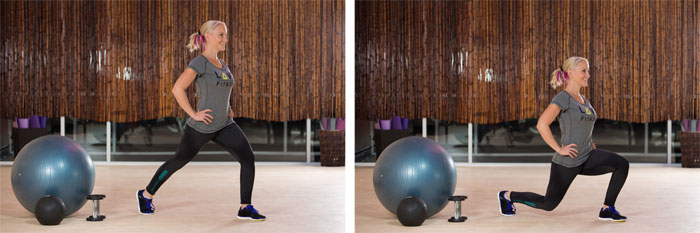
Do This: Lunges 
lunges
Plié squats are often done to create the perception of working the adductor muscles of the inner thigh. When the feet are in a plié position, the hips are in external rotation, which does lengthen the adductor muscles of the inner thigh. Holding this position tricks you into feeling your inner thigh because those muscles are being stretched during the motion. However, just because you feel a stretch doesn’t mean those muscles are doing more work. Understanding how a muscle works during gait can help us determine the best way to train that muscle with exercise. The adductor muscles of the inner thigh are responsible for creating hip flexion and extension during gait. They can bring the leg closer to the midline of the body (adduction), but should be trained with exercises that emphasize extension and flexion of the hip to help prepare the muscles for the forces they experience during normal movement patterns. Plié squats won’t necessarily increase your risk of injury, but they don’t provide the best option for training the adductor muscles. Don’t be fooled—if you really want to strengthen and tone your inner thigh muscles, do single leg step-ups, lunges or single-leg squats to engage all of the hip muscles.  

If you want to work your inner and outer thighs…
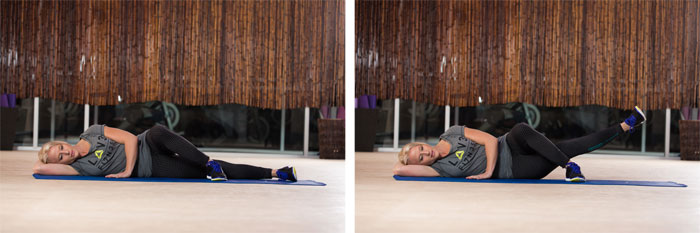
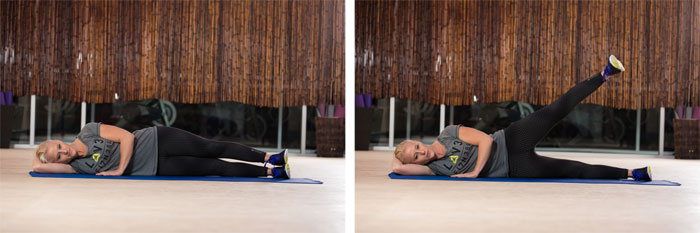
Instead of This: Lying Inner/Outer Thigh Leg Lifts 
inner thigh raises
outer thigh lifts
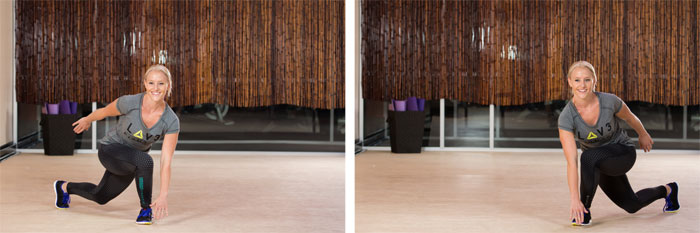
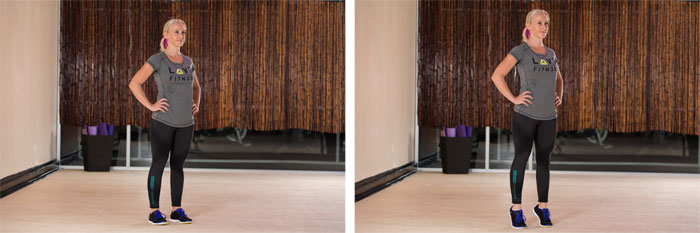
Do This: Ice Skaters 
ice skaters
Lying on your side and lifting your legs off of the ground can help you feel like you’re using the muscles of the inner and outer thigh, but this is not the case. Again, we need to understand how these muscles actually function during gait to determine the most effective way to use them during exercise. Traditional anatomy teaches that the muscles of the outer thigh work to move the leg away from the midline of the body. However, during the gait cycle the muscles that move the leg away from the body actually work to stabilize the body when you’re standing on one leg. For example, when you’re walking, your right outer-thigh muscles stabilize your body when you are balancing on your right leg and your left leg is swinging through the air. The most effective way to strengthen your outer-thigh muscles is to do single-leg exercises like step-ups, lunges or ice-skater (lateral) bounds. While leg lifts are unlikely to cause an injury, they are not the best use of your limited exercise time. 

If you want to work your abs… 
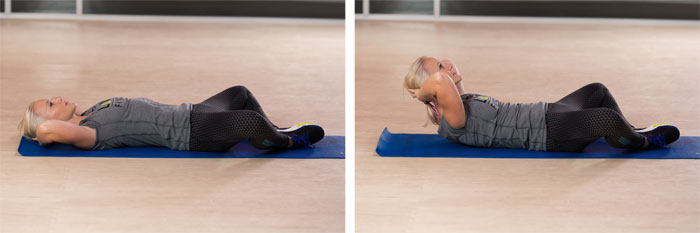
Instead of This: Frog Leg Crunch 
frog leg crunches
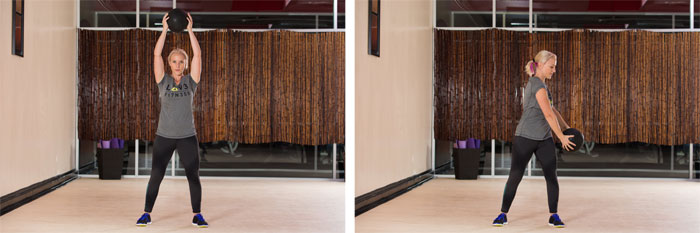
Do This: Medicine Ball Chops 
medicine ball chop
The idea behind frog-leg crunches is that placing the hips in an abducted position (with the upper thighs and knees touching the floor) will recruit the lower abs. The standard crunch involves using the abdominal muscles to roll the rib cage toward the pelvis, which can strengthen these muscles, but does not train them the way they are actually used during upright movement patterns. If your ab muscles were really responsible for flexing your spine, you would walk around bending forward every time your foot hit the ground. During gait, the six-pack muscle of the rectus abdominis is involved in decelerating the anterior (forward) rotation of the pelvis, while the external obliques are responsible for assisting with rotation of the trunk. While lying on the floor to train the abs can create the perception of muscle involvement and can be useful for individuals training for specific appearance-based goals, if you want to train your body the way it was actually designed to function, then consider training your core from a standing position. Medicine ball chops, for example, involve the muscles of the hips, thighs, back and shoulder, which can all be considered core muscles because of their attachments to the spine and pelvis. Start with the medicine ball near the right hip, sink into a quarter squat, and then use the hips and arms together to push the ball overhead before bringing it down to the left hip; alternate from side to side. 

If you want to work your calves… 
Instead of This: Toe Raises 
toe raises
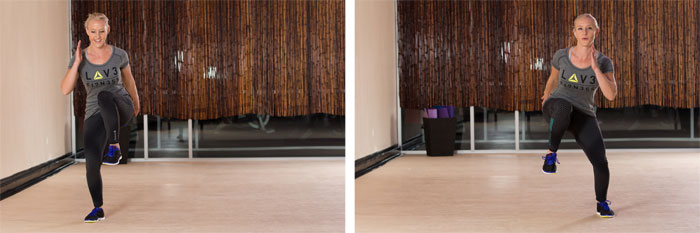
Do This: The Heisman 
the heisman
Standard toe raises are great for strengthening and toning the calves because this exercise focuses on the concentric action of muscle shortening, which can increase size and definition. However, the function of the calf muscles during dynamic movements such as walking, running or jumping is to help decelerate the force of the body hitting the ground. As a result, the calves can experience extremely large lengthening forces. This means that exercises that focus on the shortening action of the muscles do not adequately prepare the muscles for the forces they frequently experience. Toe raises can make a calf stronger, but this exercise also increases muscle tightness, which can be a liability during explosive movements when the calves are required to rapidly lengthen as the foot hits the ground. In addition, people who wear shoes with an elevated heel keep their calves in a shortened position all day. Doing additional exercises to shorten the muscle could lead to a muscle imbalance along with potential knee or hip soreness. If you want to strengthen and tone your calves, adding sprints or agility drills to your workouts, such as the Heisman, are better options. 
If you only have a limited amount of time to exercise, it’s worth taking the time to take a close look at your exercise selection and focus on the ones that will provide the greatest benefits. If you have any questions about how to perform these exercises, consider investing in a few training sessions with an ACE Certified Personal Trainer who can provide the guidance you need to meet your fitness goals in the shortest amount of time possible. 

Friday, 2 January 2015

Chest and Tricep Workouts That Will Get You Results


chest and tricep workoutsThere are many ways we can improve our bodies. We can do it through diet, exercise, meditation and more. Exercise is one of the best things you can do for your body. Not only does your body look better, but you feel better after you exercise. Many people exercise, but admit to having trouble areas on their body. Don’t worry, anyone can improve these trouble areas, you just need to know how to improve them. On this blog, we are going specifically target how to work your chest and tricep muscles through different workouts.
There is a lot involved when you want to build more muscle, including which exercises you do, how you do them and what you eat. Yes, eating is just as important as doing the exercises themselves. There is a phrase: “You have to eat big to get big.” Don’t worry, it’s talking about big muscles, not fat. So if you are stuck in a rut with your chest and triceps, you may need to not only step up your exercises, but step up your eating. In this course we offer, you will learn not only how to eat properly, but how you should work out in order to see results. The more you can learn about how to build muscle through exercises and diet, the quicker you will be able to see results on your body. If you want to learn why it takes time to gain the muscle you want, this blog goes further into depth about how long it takes to build muscle. It will show you all the different ways you can build muscle and how long each method takes.

Knowing What Triceps and Chest Muscles Do

Getting cut triceps and a strong chest my look nice on your physique, but it is also important to know how they work and how they help your body. The better you can understand how your muscles work to help your body, the better you can appreciate the muscles.
Triceps are the muscles located on the back of your upper arm. What these muscles do is help straighten your arm and extend your elbow joint. Want a good example of one of your triceps put to use? Pick up a pen or pencil and start writing on a piece of paper. The reason your elbow is steadied and held in place is because of your triceps.
Your chest muscles are called pectoralis major and pectoralis minor, also shortened to “pecs.” The pectoralis major is the larger of the two and is the muscle that can be found across each side of your chest. The pectoralis minor is a triangular-shaped muscle that can be found underneath the pectoralis major. When building your chest muscles, it is your pectoralis major muscles you are working in order to get the nice-looking physique you want. But this muscle is not just about looking good, it has four functions in the body. It is primarily responsible for the shoulder joint’s movements. The chest muscles have two different parts that are in charge of two different movements. These muscles help you to throw, flap your arms, rotate the arm the way it does when you arm wrestle and keep your arm attached to the trunk of your body. Yeah, it does a lot. That’s why it’s so big and covers a good size of your body.
If you are interested in learning more about how your body works to lose fat and gain muscle, we offer this course, which will give you all the facts. You will learn how muscles work in your body and what you can do to enhance them.

Working Your Chest

Since the chest is a big muscle, you need to be patient with getting results right away. You also need to spend more time on that area than you would other smaller muscles. There are a number of different exercises you can do that will help you build muscle in your chest. These exercises range from simple things you can do at home to movements that require weights.
Bench Press
This is an extremely popular exercise that not only helps develop your chest muscles, but your deltoids, trapezius, coracobrachialis, shoulder blade and your triceps as well. While it helps to develop these other muscles, the primary muscle it works is the chest. The bench press is also an exercise you have to be careful when doing. If the bench you are working on does not have a safety for the press, you will need to have a spotter present while doing your exercise. Many people do repetitions until failure, which can be dangerous if you lose control and have the weights crash on you. Once you have your surroundings secure and safe, you can move on and find a weight that you feel comfortable with. It should be a weight that is challenging for you to lift, but light enough for you to go to at least 10 repetitions. The way you grip the bar or position the bench press changes up the different muscles used. Doing a bench press on a flat bench focuses on the lower chest muscles. If you use a decline on the bench, you can work your lower chest muscles. If you use an underhand grip on the bar, it works the chest by the clavicle. If you do a press with your hands close together, you are involving your triceps more.

Push Ups
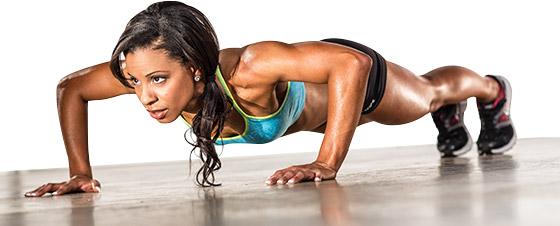
The great thing about push-ups is that you are able to see results fast. One week you might be able to only do 10, but if you keep at it and adding an extra push-up every time you do them, you will be doubling that or tripling it in no time. This exercise is a triple threat, as it targets the pecs, triceps and anterior deltoid. First, start out by seeing how many push-ups you can do before you cannot do any more. Make sure to remember that number or write it down because that will be your base number. From then on, it will be your goal to increase that number every time you go to do a set of push-ups. In addition to targeting your chest and tricep muscles, push-ups also help your abdominal muscles as well, since they help hold the body up in position.
Cable Cross Overs
If you have a gym membership, one of the best exercises you can do for your chest are cable crossovers. You need a high pulley machine to execute this, as you will be pulling both cables on either side of you toward, then across your chest until your knuckles meet. Then bring your arms back slowly with control.

Working Your Triceps

A lot of times, your tricep muscles are worked when you do your chest exercises. However, they are not the primary muscles used for those exercises, so you will need to do some exercises that specifically target your triceps. Triceps that are toned well and are defined give the upper arm a nice shape. Here are some exercises that can help get you that cut look.
Dips
This exercise is easy to do whether you are at the gym or at home. All you need is a chair. For dips, you will need to start off on the edge of the chair and hold the edge with both your hands with your knuckles facing forward. Push yourself off the seat and lower — or dip — yourself. A good dip is when you can get your arms at a 90-degree angle. Repeat until failure and then do two more sets.
Tricep Push-Down
For this exercise, you will need a high pulley machine. Most gyms have these. Adjust the bar to be at a good height where you can pull down on it. You will need to stand straight with your feet shoulder-width apart. Grab the bar and keep the arms rigid against your torso, then push down until your arms are fully extended. Slowly bring the arms back up and repeat until failure.
Overhead Dumbbell Extension
Pick a weight that you can safely and comfortably lift over your head with one arm. Make sure your stance is straight with your feet shoulder-width apart. Position your weight above and behind your head, like you are about to scratch your back with it. Make sure your elbow is pointing toward the ceiling. From there, you will need to lift your arm up until it is completely extended, then slowly bring it back down. You will do this until you can’t go any further, then do two more sets.
Kickbacks
If you have weights and a bench at home, you can easily do this exercise. If not, it’s to the gym you go. You will need to grab a weight that you feel comfortable bringing forward and back. Try it out a couple times so you can be sure which one works best for you. Then place your left knee and left hand (or right knee and right hand) on the bench to steady yourself. Hold the dumbbell and bring it up so your arm is at a 90-degree angle. Keep your upper arm stable and slowly extend your forearm back until it is parallel with the floor. Return to starting position, then switch to the other side.

Eating Right to See Results

Doing the proper exercises is only part of the equation. The body needs key nutrients in order for your muscles to grow. The most important one is protein, which helps rebuild muscles torn from lifting and exercise. The honest truth is that eating well can change your life. The right foods can make you healthier, stronger and feel better overall. To lean more about how food helps us and acts as medicine to keep us healthy, you can take this course, which teaches you how food can be used as medicine.

Stretching the Muscles

Before and after every time you work out, it is important to stretch. What stretching does is loosen up and warm up the muscles so they can be ready for exertion. If you exercise or lift with cold muscles, it is easier to pull and strain a muscle, which results in pain for the next few days. Always take one off day during the week as well. If you are one of those people that has to be active every day, practice yoga, which will help your muscles to stretch and relax. If you are unfamiliar with yoga, we offer an introduction to yoga course, which can help you to learn key poses and teach you the skills you need to help take care of your body.