Saturday, 15 August 2015

40 Min Cardio HIIT Workout Butt, Thighs, Abs: Ultimate Workout for Bel...


Workout Details

I'm typing this write up pre-filming, but I already know this one is going to be brutal. The only thing that gets you through a tough workout like this one is reminding yourself of how effective it is if you just keep pushing. This HIIT workout is very effective at fat burning, but it's also fantastic for reshaping and firming the butt and thighs, and toning the abs. You wont get more than 2 active intervals in before you realize how much lower body work is in this routine - there's a hidden squat or lunge in almost all of these exercises and your butt and thigh muscles are going to be screaming by the time you're done with this!
It's impossible to spot reduce fat from anywhere on the body, but one of the best things to reduce overall body fat and stubborn belly fat is with cardio of varying intensities and time spans. You probably already knew that, but this is not your ordinary cardio workout. In fact, this bodyweight HIIT and cardio workout will put your typical treadmill, elliptical, or group fitness cardio to shame.
If you do it right (with proper form and at an intensity that challenges you personally) you're going to struggle your way through this workout video - and that's a good thing. Assuming that you are at least a moderately experienced exerciser who is capable of reading, and listening to your own body's messages, I don't want to you to work your way comfortably through this routine; I want you to push yourself - move as fast as you possibly can, concentrate on going for a full range of motion with each rep, and do your best to make it through each active interval with minimal extra rest. With that said, keep in mind that you should never push yourself to the point of losing your stomach during a workout. In contrast to what you see on television regarding exercise; the end goal during a good workout isn't to vomit. Stop before you reach that point - it usually only takes a very quick rest before you can catch your breath, regain your composure, and start again. As you get more and more fit, you will require shorter and fewer rests along the way.


Why this is a fat burning powerhouse: High intensity interval training (HIIT) is short, intense, unsustainable bursts of physical activity, paired with intervals of quick rests. We're using a traditional Tabata workout timing structure in this particular video; 20 seconds on, 10 off. In a nutshell, this training style causes a sort of metabolic disturbance, resulting in the body burning calories at a higher rate - up to 48-72 hours later, some research indicates. In addition to the research-backed, tried and tested fat burning HIIT in this video, we also have a burnout bodyweight cardio workout after the more intense part of the routine; this will not only drive up the total calories and fat burned for the workout, but also help increase your endurance and stamina. I've thrown in some intervals of core work that focus specifically on the abs, obliques, and lower back, just to wake up those muscles (once you're at a healthy bodyweight, those muscles may even start to make an appearance).

Friday, 14 August 2015

10 Ways to Get the Best Fitness Workout Routine

When it comes to a holistically hale and hearty life, fitness is definitely one of the watchwords! If you do not feel fit and healthy, you simply can't feel happy from within! I'm sure none would disagree. Each one of us must make sure that we take out some time from our hectic schedules to pursue a fitness workout routine. Let's take a look at some of the ways we could aim for a fitter self!

1. The best exercise for abs: side plank.
You should lie down on your left side with your elbow below your shoulder and your legs stacked. Then the right hand should be placed on your left shoulder or on your right hip. Once you have braced your abs and lifted your hips off the floor, hold on for as long as you can. Switch sides and repeat.


2. Standing dumbbell fly: For broader shoulders
A dumbbell should be held in each hand by your sides. Without shrugging, the upper body should be used to swing the weights up by a few inches. The arms and torso should form an upside down V shape. It will contribute hugely to your fitness healthy lifestyle!

3. Towel Cable Row: For great arms!
A towel is to be hooked to a cable pulley, following which you should stand in front of it, set up to do a row, while holding an end of the towel in each hand. Then the shoulder blades should be squeezed together and the towel rowed to your rib cage.

4. Pec Minor Dip: One of the best workout routines for chest
Once you've suspended your body over parallel bars, let your shoulder blades come together as you lower your body towards the floor. Make sure your elbows are locked while doing this. Thereafter, your shoulders should be spread and your body pushed upward again. There, can you feel your pecs working? Even with slight movement, it can do a lot to improve the overall size and shape of your chest.

5. Deadlifts for back muscles.
Begin with a low squat position and grab the bar with an overhand grip. Then your torso should be raised once you've sat back on your hips, pushed through your heels, and ascended upward. Throughout the motion, a tight core and straight back should be maintained.

6. The kettlebell complex: Most effective functional fitness workout
This will work wonders for you if you are short of time, or looking for a quick workout involving minimal stuff. All you need for this is a kettlebell and 20 minutes!

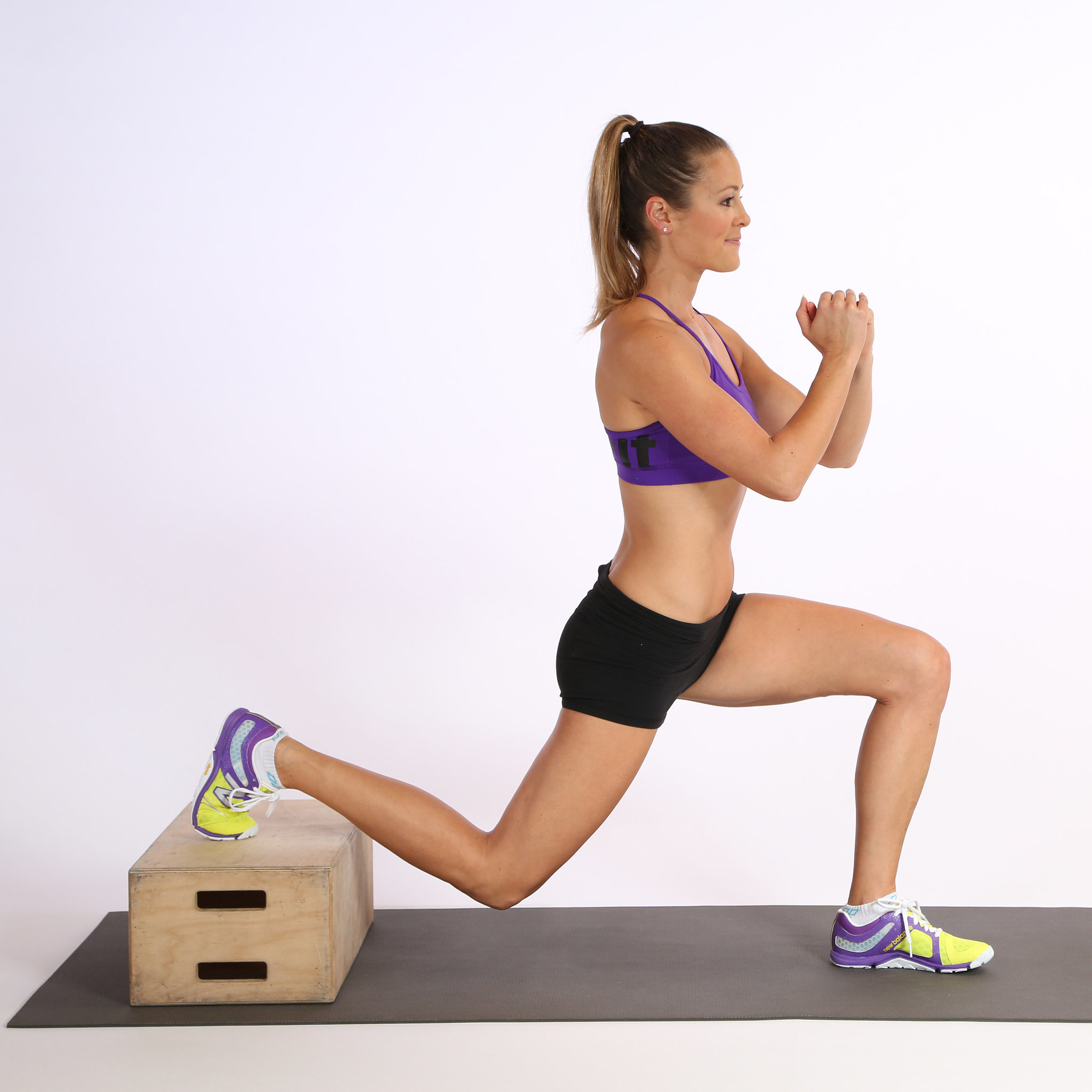
7. Bulgarian split squat: one of the best leg workouts
Hold a dumbbell in each hand once you stand lunge-length in front of a bench. Then the top of your left foot should be rested on the bench behind you. Your body should be lowered until your rear knee nearly touches the floor and your front thigh is parallel to the floor.

8. TRX Atomic Pushup: An excellent time-crunch move
Begin with your feet in a TRX suspension trainer or on a sliding surface. Follow this up with a pushup and then your knees should be pulled to your chest and then pushed back.

9. Squat with Ball: The best workout routine for toned thighs
Once you place an exercise ball between the wall and the curve of your lower back, stand with your feet apart by shoulder-width. Follow this up with bending your knees and lowering 5 to 10 inches. Make sure your shoulders are level and your hips square. This position should be retained for 3 seconds and then repeated.

10. K-Tread: Workout even while you're swimming, for a fitness healthy lifestyle!
In the deep end of the water, tread on it, making small circles with cupped hands and the right leg should be lifted straight in front of you, bringing it at hip level. Reach for the toes of left leg towards bottom of pool. Following this, the legs should be switched quickly, bringing right leg down as the left leg is raised, and hold on to this position for 5 seconds. This should be continued for 30 seconds, altering sides.

Happy workout, folks!

Thursday, 13 August 2015

Crossfit Workouts For Beginners


Here I'm gonna talk about some Crossfit workouts for beginners. Beginners at Crossfit may find all this talk about the "Workout Of The Day", sumo deadlifts and kettlebell swings a little confusing if they haven't heard of them before.
The Crossfit workouts are basically like this: Each day, a workout is prescribed by the trainer, called "Workout of the day", or WOD. Every person at the Crossfit gym performs this same workout, the goal is usually to finish the workout in as short a time as possible or do as many reps or rounds as possible.
You don't need to worry if you're a beginner and think you can't handle a Crossfit workout, because the workout is scalable to pretty much any fitness level. The trainer can help you find an easier variation of every exercise that is performed.
Most of the exercises are easy to perform, it's the speed and lack of rest in between sets that is most challenging. If you've been in the gym a lot and are able to put up respective numbers, you may still find yourself drained in a matter of minutes of doing a Crossfit workout, that's how I felt in the beginning.
If you're still afraid of dipping right into a Crossfit workout, then here are some Crossfit workouts for beginners that you can practice with:

1. Squats. Any variation of squats will do. Doing them with no weight in the living room of your house will give you plenty of practice. Just make sure to watch your form. There are also plenty of variations that you will learn at Crossfit.

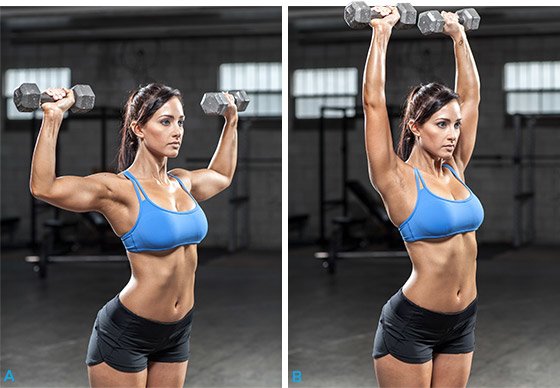
2. Shoulder Presses. If you have a barbell, or dumbbells, then you can practice doing shoulder presses in order to gain a bit of strength before trying Crossfit.
3. Crunches. Any form of crunches will do, since they all do pretty much the same thing. Planks are also excellent to strengthen your core.

4. Push ups. Regular push ups will do just fine, but if you want to get a bit of preparation for the speed of Crossfit workouts then you may want to try the clapping push ups. They are pretty much the same, except that you push much faster and then clap your hands once in between reps. Warning: you might fall on your face, that's what happened to me once when I tried clapping my hands two times.

And finally, I would recommend trying to get into good cardiovascular shape, preferably doing high-intensity, anaerobic cardio exercises since these are a major part of Crossfit.
So these are a few Crossfit workouts for beginners that you can practice with, but like I said before I don't think you need to worry about anything since the exercises are scalable so you can just show up at a Crossfit workout and start.

Tuesday, 11 August 2015

6 Benefits of Using Weightlifting Machines


Thanks to the popularity of high-intensity exercise programs, many fitness centers are changing their equipment offerings and creating space for high-intensity conditioning programs. Likewise many personal trainers now make exercises like barbell deadlifts, sled pushes, Turkish get-ups, overhead presses and kettlebell swings standard components of clients’ workout programs. It’s important to keep in mind, however, that the sight of a huge tire, the shape of a kettlebell, the sound of a barbell dropping on a platform or the noise of a heavy rope slamming against the ground could be intimidating to the novice exerciser.
It’s also important to consider whether high-intensity workouts are appropriate for someone who is just starting to exercise. While there is a ton of evidence supporting the benefits of high-intensity exercise for clients of all skill levels, that doesn’t mean it’s appropriate for every single person walking into a gym. Now, you might argue that using full body exercises is more functional and helps clients prepare for challenges they may face in their daily lives. Your primary role as a trainer, however, is to not only give clients a workout for the day, but to help them learn how to make physical activity a regular part of their daily lives.
I used to define myself as a “functional trainer” and took pride in creating a variety of movement-based exercise programs. A number of years ago I attended a lecture given by strength coach Mike Boyle, author of the book Functional Training for Sports. He described functional training as training with a purpose, and asserted that challenging exercises may provide a variety of benefits, but if the exercises don’t address a client’s specific interests, or if the client is uncomfortable doing the exercises separate from the trainer, are they truly functional?
In other words, you need to consider the needs of your clients and eliminate the tendency to use the types of workouts you enjoy. Even though I like using barbells and kettlebells for my personal workouts, when it comes to exercising on their own many of my clients are more comfortable using weightlifting machines. More importantly, machines can help clients become stronger while establishing the healthy behaviors necessary to make exercise a consistent part of their daily routines.
Strength training provides a number of benefits and the primary feature of machines is that they use cams and pulleys to place the greatest amount of resistance at the point where a particular muscle is in its strongest position, thus helping that muscle to develop to its fullest potential. If the goal of an exercise program is to create large, well-defined muscles, machine training can be an extremely functional way to achieve that outcome.
Here are six benefits of machine-based training that can help you reconsider whether it’s worthwhile adding them to your clients’ programs.

1. Controlling mechanical overload and path of motion  
There are two components of muscle: the elastic component of fascia and the connective tissue responsible for providing shape and transmitting forces from one section of muscle to another, and the contractile element of the actin and myosin protein filaments responsible for controlling muscle contractions. Improving muscle size and strength requires using external resistance to stimulate the contractile element to become capable of generating higher levels of force. Machine training can be extremely effective for achieving this outcome.

3. Creating metabolic overload
Metabolic overload occurs when a muscle is required to work to a point of momentary fatigue and does not have the energy to generate another contraction. Muscle growth occurs either as a result of mechanical or metabolic overload. A long-time bodybuilding secret for achieving rapid muscle growth is the use of drop sets, which involves doing an exercise to the point of momentary fatigue, immediately lowering (dropping) the weight, and then continuing to the next point of exhaustion. Machines provide the safest and most time-efficient means of being able to perform drop sets to the point of complete fatigue, which ensures that all fibers in a particular muscle have been engaged.

4. Time-efficient solution for circuit training
Circuit training requires transitioning from one exercise to another with a minimal amount of rest and can be effective for creating both a mechanical and metabolic overload for your clients. You might design circuits featuring barbells, kettlebells and weight sleds and encourage your clients to work to the point of fatigue. However, it can be intimidating for clients to use this equipment on their own. The solution is to design a machine-based circuit for your clients to follow when you’re not working directly with you, which allows them to experience the benefits of circuit training without the need to know how to properly use advanced equipment.

5. Focus on developing definition in specific muscles
In addition to the many health benefits of strength training, including improved metabolic efficiency, enhanced neuromuscular coordination or stronger muscles, many clients simply want to look better. Muscle definition is the result of a muscle remaining in a state of semi-contraction. Machines are designed to create mechanical overload in a specific muscle, which means they can help improve definition in that muscle. One unique programming strategy is to do a compound, multijoint exercise (e.g., a barbell squat) followed immediately by a muscle-isolation exercise (e.g., a machine-based hamstring curl) to continue using a specific muscle to the point of fatigue, which results in greater definition.

6. Safety
When used properly, free-weight equipment like barbells, dumbbells, kettlebells and medicine balls can be extremely effective. However, if an individual lacks a base level of strength or basic movement skills, using this equipment could increase the risk of injury. Even if an individual is strong, the ego is sometimes stronger, causing him to lift a weight that is heavier than his existing level of strength. While overloading a barbell for a squat or bench press could cause serious injury, machines allow a user to lift with maximal loads with a minimal risk of injury from falling weights.
The role of a personal trainer is to help clients live healthier lives. If we design exercise programs that are so challenging that our clients don’t feel comfortable working out on their own then we our failing in our mission. While I still design challenging barbell and kettlebell workouts for when I am working directly with a client, I now take the time to also develop a machine-based exercise program that the client can use on those days when we don’t meet or when he or she may be traveling out of town.
Don’t get stuck in the trap of training your clients like you train yourself. You can design the best program in the world, but if the client doesn’t feel comfortable doing it when you’re not there, you’re doing them a major disservice. Opening up my way of thinking to appreciate the benefits of old-school exercise machines has helped me deliver solutions that meet my clients needs and that is the true definition functional training.


Monday, 10 August 2015

How and why you should train with TRX

TRX - WHAT IS IT?
Well, it is amazing! There’s not one thing I don’t love about TRX for myself and for my clients. Maybe you have seen that “ropey, strappy thingy” at the gym or maybe you just want to know more, or perhaps you’re hearing about TRX for the first time. No matter what, I want to cover the basics for you in hopes that you try it out and learn what all the hype is really about.
Being a TRX Certified Instructor, I use TRX in my own training routine as well as with my clients. I use TRX Training at my gym and also have one in my home for an anytime workout. I love how you can pack it up and take it to the park, do a workout in your own home, or bring it along with you when traveling. No excuses, right? No matter your fitness level, the TRX is perfect and versatile for everyone; athletes, rehab, stay at home moms, body builders, young and old. TRX offers a cardio workout, a resistance workout, muscle flexibility workout, as well as balance. No matter what your goals are, you can benefit from the TRX. Before we discuss everything there is to know about the TRX, it’s important to first understand exactly how the body works.

HOW THE BODY WORKS: 
I am a trainer who incorporates many types of functional and corrective training in my clients’ routines. You’ll see why in just a moment. It is so important to understand the fundamentals and foundation of your body. Everything you do in life starts with one part of your body. Any guesses? IT’S YOUR CORE. Your core is not just about those six pack abs you see - it is so much more than that. Your core is made up of your pelvis, back, chest muscles, and also the abdominals. It is your core that is responsible for your body stability, flexibility and balance. Makes sense, right? Also, do we always move in the same direction every day like robots? No, we surely do not! We move with twisting, bending movements and we’re going left, right, down, up, side-to-side, as well as forwards and backwards. This is called “multi-plane” movements. Once you think of your body moving “all around” these different ways, wouldn’t you agree it would be very important to train your body the same way?
Whether you’re picking up after the kids or dog, playing sports, cleaning your house or car, and of course then working out, you are using your CORE whether you know it or not. For the most part, you are moving multi-plane. This is very important for us to understand because the stronger your core is and the more familiar your body is with moving multi-plane, the less injuries you will have, not only in your lower back but in your entire body.

WHAT IS TRX EXACTLY?
TRX stands for Total Body Resistance Exercise. It’s a type of training that uses your own body weight and gravity to build strength, balance, coordination, flexibility, core and joint stability, all while preventing injuries. Not to sound intimating, the TRX was originally designed by a Navy Seal who needed to stay in shape within limited space using something he could easily take on his travels. (This is why you can pack it up and take it with you nearly anywhere you can place the anchor point.) Consequently, he created TRX and boy, did the rest of the world catch on. 

THE MANY ADVANTAGES OF USING THE TRX SYSTEM:


  For starters, you can minimize your training time by working your whole entire body switching from one exercise to the next in just seconds. The best part to me? As I mentioned, in every exercise you engage your core. So, this is great news if you’ve been focusing on your core. Now watch how much harder things become when you REALLY engage your core. Are you up for the challenge? Just think of how developing good core strength and stability will only enhance your performance and way of life. Your whole body will work and feel better.
Another advantage in using your own body weight and gravity is you are able to adjust your own personal fitness level. I love that you have control of the intensity just by walking yourself closer or further away from the anchoring point. That means instead of having to grab a different set of dumbbells or add more weight to machines, you just simply adjust your foot placement. Easy enough, right? This is also why you can keep your heart rate up and keep moving. No wasted time (important in my workouts!) which keeps you constantly challenging your body through every exercise.
WHAT ARE SOME EXERCISES I CAN ADD TO MY ROUTINE TO HELP MY PERFORMANCE?
With any new workout routine (yoga, weights, spin class,) it’s important to start off with the basics. Make sure you have mastered the proper form and technique before you move on to advanced movements. The basic movements (yet still challenging) include: Chest Press, Row, Lunge, Squat, Plank, Tucks, Pike, Side Lunge, Oblique Twist and Back Extension. Say hello to CORE work! Some of my favorite moves that are more advanced are: atomic push-ups and single-leg squats. What I also LOVE doing with TRX is stretching. You can get fantastic full body stretches for your entire body in ways like no other. 
TRX has been a huge part of the fitness industry and is only growing larger, from professional athletes who need peak performance to everyday people who just want to feel and look their best. Personally, I love that TRX is exactly what I preach all the time--there is no tension on the joints if alignment and form are on point. That is how all workouts should be. It is uncomplicated to learn and a truly great way to incorporate new resistance training to any workout routine. You can find videos online to understand more and when you purchase one, it comes with a fantastic workout DVD. 
My hope when you see TRX for the first time is to feel more encouraged and give it a try!

 Posted by Monica Nelson of Monica Nelson Fitness

Sunday, 9 August 2015

CrossFit and the Paleo Diet Provide the Ideal Fitness Combination

CrossFit and the Paleo Diet complement one another. CrossFit is an intense type of fitness training that is designed to improve your overall fitness. The Paleo Diet is focused on quality, non-processed food to ensure you're as healthy as you can be. As such, the pairing of this training and food lifestyle is the ideal fitness combination.

CrossFit and the Paleo Diet
CrossFit originally promoted the Zone Diet which is based on precise measurements of carbs, proteins and fats. However this diet is very difficult to adhere to because of the need for specific measurements.
In contrast, the Paleo Diet does not require you to measure your food intake, and is focused on the consumption of quality food. Also known as the Caveman Diet, it eliminates the frustration that comes with trying to measure out food portions.

The Rules of the Paleo Diet
In simple terms, the approach is:
  • Do not eat processed food

  • Consume only quality food

  • There's no limit on the amount of food that can be eaten
The approach is based on the philosophy of only eating foods that people ate in the Paleolithic era. That means there are no processed foods which eliminates all fast foods, sweets and anything unnatural from your diet.
However there are a number of benefits to this diet. For example, there is no limit to the amount of seafood or lean meats that you can consume. The same €no limit€ rule also applies to fruits and vegetables.
The focus is on eating quality, natural foods which means that processed foods, cereals and grains, dairy products and legumes are not part of this diet.
The belief is that humans survived the Paleolithic era eating foods that were not processed and it contributed to the long-term survival and evolution of humans. This type of eating has several aspects that must be followed for it to provide the health (and weight loss) benefits that are attributed to those who follow it.

The Seven Key Components of the Paleo Diet
  1. You can eat large portions of animal meat (protein) without hesitation, as long as it's unprocessed.
  2. Obtain your carbohydrates from fruits and vegetables, and not the alternative sources such as pasta.
  3. Acquire necessary fiber from non-starchy fruits and vegetables. Again, there is no limit to the amount that can be eaten.
  4. Include some mono-saturated fats such as avocados, Brazilian nuts and canola oil, as well as polyunsaturated fats such as salmon and oil, and equal amounts of Omega 3 and Omega 6 fats.
  5. Eat foods that have low sodium, and elevated potassium levels. Salt is not something that is part of this diet but foods such as bananas provide a great snack for CrossFit participants.
  6. You should have an alkaline loaded diet which means that approximately one-third of your diet should be vegetables.
  7. Consume foods with elevated levels of plant phytochemicals, vitamins, minerals and antioxidants. Foods such as broccoli and lettuce are essential components to meeting the food requirements of the Paleo Diet.


    These seven rules will put you in a position to achieve superior health, reduce the risk of lifelong illness and lose a large amount of weight.
    When you combine CrossFit and Paleo it provides you with the opportunity to maximize your training and health which leads to exceptional results, and reduced WOD times.
    CrossFit participants find they are able to workout longer with greater focus and intensity. And they don't feel hungry as their bodies are fueled with quality, unprocessed food.
    The Paleo Diet is the best nutrition for anyone participating in CrossFit.


    Source Simon Wood / My Crossfit WOD