Wednesday, 26 August 2015

Weight Loss And The Proper Nutrition

Large-healthy-food-selectionApproaching the matter of nutrition and weight loss, we have to emphasize the two basic issues that nutrition itself is a culture of eating proper food in a proper manner. Let’s start with the first, proper food.

All cells and tissues in our body are formed by the food we eat. And also food is the energy source for our body functions. So, this can explain why proper food is so important.

Food is one of our strongest motivators. And unfortunately, most of us consider food to be a source of pleasure only!

Our bodies are not fixed statues – they are always in process, which we call metabolism.

Perception, memory and all the intricate complexities of bodily functions are possible because of having or producing enzymes, hormones and a thousand other wonders – that are produced in the body from what we eat.

As a source of energy our body uses carbohydrates (sweets), fat and protein. To be more specific, carbohydrates are the source of immediate energy, proteins are the body building blocks, and fats are the high-energy storage. But these roles sometimes overlap.

And faulty nutrition is the usual cause of illness!

At the same time, with correct choices we can prevent many food-related diseases such as heart attack (!), stroke, essential hypertension, diabetes and – even cancer!

More than a century ago, Ellen G. White, in "Counsels on Diet and Foods", shared her observation: "At mealtime cast off care and anxious thought. Do not feel hurried, but eat slowly and with cheerfulness, with your heart filled with gratitude to God for all His blessings". Isn’t it wonderful?

Just let me share with you part of our experience with nutrition and weight loss. If you haven't had any previous experience of following the simple principles I suggested when discussing how to reduce the amount of daily food, you might find them difficult to follow, but this is just on the face of it.

In reality it is much easier than it seems! And I promise, I’ll teach you how to master it. Because this issue of how to practice eating habits is essentially an important one!

The same food or eating process itself can bring you joy and fullness of life, or, on the other hand, if taken wrongly, can cause considerable damage to your health and even shorten your life!

How does overeating or eating the wrong food cause harm? The answer is: whatever food that our organism is not able to digest normally, becomes poisonous to us. Thus any poison will shorten our life!

This is the reason, why I suggest that my clients practice this: before starting to eat, gently close your eyes for a few moments, forget all your problems for a while and give yourself a smile! And then you can start eating.

Another recommendation is this: when eating, try to keep your eyes gently closed (or just turn your eyes away from the served food), while slowly chewing a small portion of food in your mouth.

Believe me, this process will bring you much more flavor, and benefits at the same time. Because just by doing this small thing you will lessen the portion of consumed meal by three to five times!!! (As I have already mentioned)

I would emphasize the importance of taking time to eat. When eating, if possible, make it a social occasion to communicate with your family or with your friends. But! (Always, there are some "buts"). If you decide to improve your eating habits, see if the company would be appropriate at this time, especially at the beginning. For this reason, it is better at first to have all the changes stabilized, so that you can resist any temptations...

But even when in difficult situations, we should never compromise basic principles of good nutrition. Always watch what you eat or drink!!! A well mannered person will know how to do this without compromising friendly relationships.

As we do this, we will have the added benefits of alertness, clear thinking, and a perception that is fully aware of life’s joyful events. But real joy comes from facing reality and patiently dealing with whatever life has to offer. If we take time to learn what is good for us and make a serious effort to put it into practice, we can expect to be rewarded with extra energy and a longer and happier life!

Let’s take a look at sweets. Which are conglomerates of simple sugars, most important of which is glucose. This simple sugar is the supplier of the most bodily energy. Penetrating into the blood stream it meets the constant need of all the cells. Due to insulin, glucose is able to pass through the cell membrane and become available for use.

At the same time, our bodies are capable of properly handling only a limited amount of simple sugars in a given period of time. When exceeded (if we eat too many sweets), the pancreas is forced to work overtime producing insulin for converting excess sugar into fat.

Small amounts of sugar will not do this, but we must remember that there is hidden sugar in most processed food and drinks. And this is the problem – we usually eat far more sweets than our pancreas can cope with!

Let’s see how we can avoid this problem. When we plan our diet we should give preference to the natural source of sweets, like fruits, then wheat, rice, potatoes, beans, and other starch-containing foods. Because these vegetable foods require quite a long period of time for to be digested, and simple sugar is released gradually. This allows our body to process this energy in an orderly fashion.

Latest scientific researches have revealed that: consuming excessive sugar (too many sweets) can lead to such problems as:

* Constipation.
* Causing dental caries by providing an ideal culture medium in the mouth, and by slowing down the internal fluid circulation in the teeth.
* Depression of the immune system, by interfering with the germ-killing capacity of white blood cells.
* Promotion of adult-onset diabetes.

Now we come to the practical application of the above for the weight loss. With the exception of some fruits the ideal diet will include only a minimal amount of sugar, and provide an abundance of complex carbohydrates such as those found in vegetables and whole-grain pasta.

Brigi G by Fit 4 Health

Tuesday, 25 August 2015

5 Whole Foods to Replace Ergogenic Aids

Supplements are a significant component of the sports nutrition industry, and many manufacturers claim their products can assist with everything from sport performance and weight loss to energy production and muscle recovery. These products are commonly referred to ergogenic aids, which are any external influences believed to enhance physical activity or performance. Nutritionally, these products include sport powders, pills, gels, bars, drinks, jellybeans or any other substance used to boost performance, and a majority of athletes have tried one or more ergogenic aid at one time or another.
While the research is unclear (or nonexistent) regarding the benefits of many of these products, whole foods can provide as much, if not more, power to performance without the added sugars, chemicals or artificial flavors.

What are Whole Foods?
Whole foods are those that are eaten in or close to their natural state. Kory DeAngelo M.S., R.D., a clinical nutrition supervisor at the Bastyr Center for Natural Health, recommends eating whole foods “in their natural form, including an abundance of fruit, vegetables, whole grains and healthy proteins, to give the body an array or vitamins, minerals, fiber and other phytonutrients.”
DeAngelo believes that nature provides the body’s essential nutrients in the whole foods package, and that supplements should not replace healthy eating. In fact, she says, many whole foods cost less and can be used as ergogenic aids. Here are some examples of healthy, whole food alternatives to nutritional supplements.
 
Coconut Water
A growing body of research suggests that coconut water, which some have dubbed “nature’s Gatorade,” is an effective rehydration beverage. One study, for example, showed that fresh young coconut water could be used as a post-exercise rehydration beverage because it doesn’t cause nausea or upset stomachs and is easier to consume in larger quantities compared to plain water and an carbohydrate-electrolyte beverage (Saat et al., 2002).

Beet Juice
Studies examining the benefits of pharmacological sodium nitrate supplementation have found that it can reduce the oxygen cost of submaximal exercise. Bailey et al. (2009) examined the effects of sodium nitrate naturally derived from beetroot juice. In this double-blind study, eight men ingested either beetroot juice or black currant cordial for six consecutive days and completed a “step” progression of moderate to severe exercise. Researchers found that beetroot juice enabled the men to perform the same amount of work with 19-percent less oxygen. When the severe cycling bout occurred, time to exhaustion was extended by approximately 90 seconds, a 16 percent improvement.
Beetroot juice also appears to have cognitive benefits, as well. One study of 40 healthy adults found that those who consumed beetroot juice performed better on cognitive tests than those who drank apple or black currant juice (Ji, 2015).
Beetroot juice is best ingested from freshly juiced beets or in whole form.

Raisins
Carbohydrates are classified as high- or low-glycemic index foods. In terms of exercise, ingesting certain carbohydrates at certain times (before, during and after) may help or hinder performance, nausea and fatigue. Raisins have been shown to be a good plant-based replacement for sport gels and jellybeans for the long-distance cycler and athlete.
One study, for example, compared the effects of eating sun-dried raisins vs. jellybeans during a 10-kilometer time trial. The results showed that raisins are just as effective as jellybeans in maintaining blood glucose levels. In fact, raisins produced the same respiratory exchange ratio, energy expenditure and fat oxidation (Rietschier, 2013).

Ginger
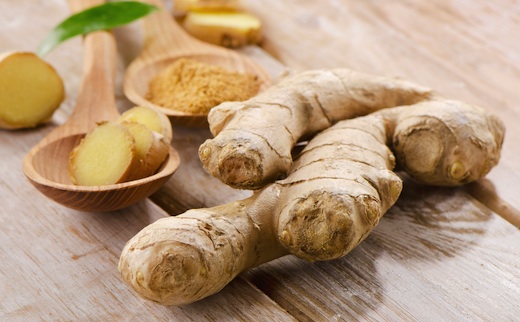
Ginger contains the same analgesic and pharmacological properties as a non-steroidal anti-inflammatory drug. One study tested ginger supplementation for attenuating muscle damage and delayed onset muscle soreness (DOMS). The study tested 20 non-weight-trained participants who trained high intensity elbow flexor eccentric exercise to induce muscle damage. This occurred after a five-day supplementation period of ingesting either 4 grams of ginger or a placebo. The results showed that the 4 grams of ginger may be used to accelerate the recovery of muscular strength following intense exercise. The ginger did not help muscle damage or DOMS, but accelerated the recovery of muscle strength (Matsumura et al., 2015).
Another study compared raw and heat-treated ginger supplementation for muscle pain for 11 days. Results showed that daily ginger supplementation reduced muscle pain caused from eccentric exercise. The study showed that both forms of ginger reduced pain 24 hours after eccentric exercise compared to the placebo (Black et al., 2010).

Green Tea
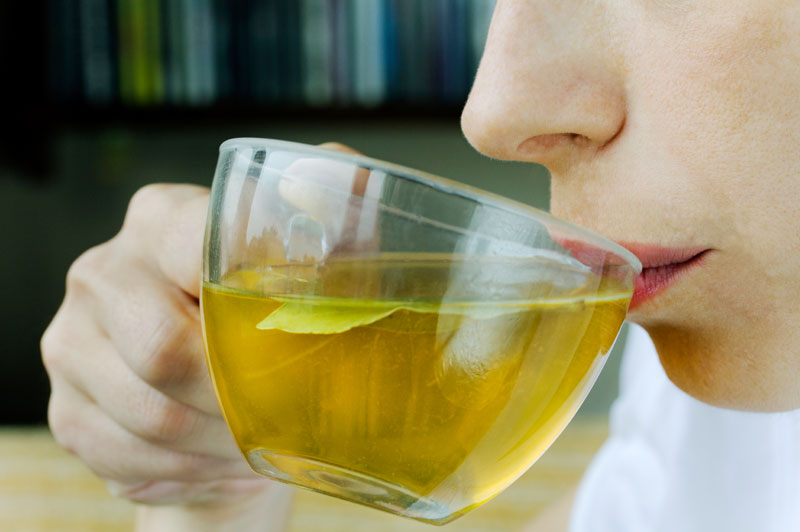
Caffeine is found in many sport foods, beverages, gels and weight-loss pills. While caffeine is not essential for healthy living, many people consume it as an ergonomic aid. One theory on why caffeine is used as an aid includes that caffeine spares muscle glycogen and enhances fat oxidation. Though more research is needed to prove that theory, caffeine does create a favorable intracellular ionic environment in active muscles. Caffeine does not improve maximum oxygen output directly, but can allow an athlete to train longer with resistance to fatigue and/or with a greater power output. Drinking green tea in its natural form provides the body with both caffeine and antioxidant properties. Plus, the consumer controls how much to consume with the body’s intuitive response to the beverage.

Why Eat Whole Foods?
Kory suggests eating whole foods consistently over time to optimize performance and recovery.  DeAngelo agrees. “When we consistently eat whole foods as the basis for our diet,” she says, “the nutrient density helps to decrease inflammation and can help us recover faster. When we eat a well-balanced whole-foods diet, we maintain better energy levels, which helps with endurance.”
The key is to eat clean and incorporate as much variety as possible. In part two of this series, we’ll further examine whole food research that benefits the human body for exercise pursuits.

References
Bailey et al. (2009). Dietary nitrate supplementation reduces the O2 cost of low-intensity exercise and enhances tolerance to high-intensity exercise in humans. Journal of Applied Sciences, 4, 1144-1155. 
Black et al. (2010). Ginger reduces muscle pain caused by eccentric exercise. The Journal of Pain, 11, 9, 894-903.
Ji, S. (2015). Beet juice boosts cognitive function in one dose. Green Med Info.
Matsumura et al. (2015). The effects of pre-exercise ginger supplementation on muscle damage and delayed onset muscle soreness. Phytotherapy Research, 29, 6, 887-893.
Rietschier, H.L. (2001). Sun-dried raisins are a cost-effective alternative to sports jelly beans in prolonged cycling. Journal of Strength and Conditioning, 25, 11. Retrieved 11 July 2015.
Saat, M. et al. (2002). Rehydration after exercise with fresh young coconut water, carbohydrate-electrolyte beverage and plain water. Journal of Physiological and Anthropology and Applied Human Sciences, 21, 2, 93-104.

Sunday, 23 August 2015

40-Minute Metabolism Boosting Workout | Class FitSugar

This full-body workout will get your heart rate up while building
metabolism-boosting muscle. Plus it's fun! Grab a set of dumbbells
between five and 10 pounds, press play, and get ready to sweat.

Saturday, 22 August 2015

11 Proven Health Benefits of Chia Seeds

Chia seeds are among the healthiest foods on the planet.
They are loaded with nutrients that can have important benefits for your body and brain.
Here are 11 health benefits of chia seeds that are supported by human studies.

1. Chia Seeds Deliver a Massive Amount of Nutrients With Very Few Calories

Chia seeds are tiny black seeds from the plant Salvia Hispanica, which is related to the mint.
This plant grows natively in South America.
Chia seeds were an important food for the Aztecs and Mayans back in the day.
They prized them for their ability to provide sustainable energy… in fact, “chia” is the ancient Mayan word for “strength.”
Despite their ancient history as a dietary staple, only recently did chia seeds become recognized as a modern day superfood.
In the past few years, they have exploded in popularity and are now consumed by health conscious people all over the world.
This is what chia seeds look like:
Chia Seeds In A Bowl
Don’t be fooled by the size… these tiny seeds pack a powerful nutritional punch.
A 1 ounce (28 grams) serving of chia seeds contains (1, 2):
  • Fiber: 11 grams.
  • Protein: 4 grams.
  • Fat: 9 grams (5 of which are Omega-3s).
  • Calcium: 18% of the RDA.
  • Manganese: 30% of the RDA.
  • Magnesium: 30% of the RDA.
  • Phosphorus: 27% of the RDA.
  • They also contain a decent amount of Zinc, Vitamin B3 (Niacin), Potassium, Vitamin B1 (Thiamine) and Vitamin B2. 

This is particularly impressive when you consider that this is just a single ounce, which supplies only 137 calories and one gram of digestible carbohydrate!
Just so that we’re all on the same page, 1 ounce equals 28 grams, or about 2 tablespoons.
Interestingly… if you subtract the fiber, which may not end up as usable calories for the body, chia seeds only contain 101 calories per ounce.
This makes them one of the world’s best sources of several important nutrients, calorie for calorie.
To top things off, chia seeds are a “whole grain” food, are usually grown organically, are non-GMO and naturally free of gluten.
Bottom Line: Despite their tiny size, chia seeds are among the most nutritious foods on the planet. They are loaded with fiber, protein, Omega-3 fatty acids and various micronutrients.

2. Chia Seeds Are Loaded With Antioxidants

Chia Seeds in Glass BowlAnother area where chia seeds shine is in their high amount of antioxidants (3, 4).
These antioxidants protect the sensitive fats in the seeds from going rancid (5).
Although antioxidant supplements are not very effective, getting antioxidants from foods can have positive effects on health (6).
Most importantly, antioxidants fight the production of free radicals, which can damage molecules in cells and contribute to ageing and diseases like cancer (7, 8).
There are some claims online about chia seeds having more antioxidants than blueberries, but I was unable find a study to verify this claim.
Bottom Line: Chia seeds are high in antioxidants that help to protect the delicate fats in the seeds. They also have various benefits for health.

3. Almost All The Carbs in Them Are Fiber

Wooden Spoon With Chia SeedsLooking at the nutrition profile of chia seeds, you see that an ounce has 12 grams of “carbohydrate.”
However… 11 of those grams are fiber, which isn’t digested by the body.
Fiber doesn’t raise blood sugar, doesn’t require insulin to be disposed of and therefore shouldn’t count as a carb.
The true carb content is only 1 gram per ounce, which is very low. This makes chia a low-carb friendly food.
Because of all the fiber, chia seeds can absorb up to 10-12 times their weight in water, becoming gel-like and expanding in your stomach (9).
Theoretically, this should increase fullness, slow absorption of your food and help you automatically eat fewer calories.
Fiber also feeds the friendly bacteria in the intestine, which is important because keeping your gut bugs well fed is absolutely crucial for health (10).
Chia seeds are 40% fiber, by weight. This makes them one of the best sources of fiber in the world.
Bottom Line: Almost all of the carbohydrates in chia seeds are fiber. This gives them the ability to absorb 10-12 times their weight in water. Fiber also has various beneficial effects on health.

4. Chia Seeds Are High in Quality Protein

A Pile of Chia SeedsChia seeds contain a decent amount of protein.
By weight, they are about 14% protein, which is very high compared to most plants.
They also contain a good balance of essential amino acids, so our bodies should be able to make use of the protein in them (11, 12).
Protein has all sorts of benefits for health. It is also the most weight loss friendly nutrient in the diet, by far.
A high protein intake reduces appetite and has been shown to reduce obsessive thoughts about food by 60% and the desire for night time snacking by 50% (13, 14).
Chia seeds really are an excellent protein source, especially for people who eat little or no animal products.

Bottom Line: Chia seeds are high in quality protein, much higher than most plant foods. Protein is the most weight loss friendly macronutrient and can drastically reduce appetite and cravings.

5. Due to The High Fiber and Protein Content, Chia Seeds Should be Able to Help You Lose Weight

Overweight Woman Holding a Scale With Thumbs upMany health experts believe that chia seeds can help with weight loss.
The fiber absorbs large amounts of water and expands in the stomach, which should increase fullness and slow the absorption of food (15).
There have been several studies on glucomannan, a fiber that works in a similar way, showing that it can lead to weight loss (16, 17).
Then the protein in chia seeds could help to reduce appetite and food intake.
Unfortunately, when the effects of chia seeds on weight loss have been studied, the results have been rather disappointing.
Although one study showed that chia seeds can reduce appetite, there was no significant effect on body weight (18).
In a study on 90 overweight people, 50 grams of chia seeds per day for 12 weeks had no effect on body weight or health markers (19).
In another 10 week study of 62 women, chia seeds had no effect on bodyweight but did increase the amount of Omega-3s in the blood (20).
Although just adding chia seeds to your diet is unlikely to affect your weight, I personally believe that they can be a useful addition.
A weight loss diet is about more than just adding or subtracting single foods. The entire diet counts, as well as other lifestyle behaviors like sleep and exercise.
When combined with a real food based diet and a healthy lifestyle, I can definitely see how chia seeds could help with weight loss.
Bottom Line: Chia seeds are high in protein and fiber, both of which have been shown to aid weight loss. However, the studies on chia seeds have not noted any effects on weight.

6. Chia Seeds Are High in Omega-3 Fatty Acids

Like flax seeds, chia seeds are very high in Omega-3 fatty acids.
The Word Chia Spelled With Chia Seeds
In fact, chia seeds contain more Omega-3s than salmon, gram for gram.
However… it’s important to keep in mind that the Omega-3s in them are mostly ALA (Alpha Linolenic Acid), which is not as beneficial as you may think.
ALA needs to converted into the “active” forms, EPA and DHA, before it can be used by the body.
Unfortunately, humans are inefficient at converting ALA into the active forms. Therefore, plant Omega-3s tend to be vastly inferior to animal sources like fish (21).
Studies have shown that chia seeds (especially if they are milled) can increase blood levels of ALA and EPA, but not DHA… which is a problem (20, 22)
Because they don’t supply any DHA (the most important Omega-3 fat), I think chia seeds are overrated as an Omega-3 source.
In order to get the DHA your body and brain desperately need… either eat fatty fish regularly, take fish oil, or take a DHA supplement if you are vegan or vegetarian.
Bottom Line: Chia seeds are very high in the Omega-3 fatty acid ALA. However, humans are not good at converting this into DHA, the most important Omega-3 fatty acid.

7. Chia Seeds May Improve Certain Blood Markers, Which Should Lower The Risk of Heart Disease and Type 2 Diabetes

Chia Seeds in a Heart Shaped BowlGiven that chia seeds are high in fiber, protein and Omega-3s, they should be able to improve metabolic health.
This has been tested in several studies, but the results have been inconclusive.
In two studies, a diet with chia seeds, soy protein, oats and nopal, has been shown to lower LDL cholesterol and triglycerides, increase HDL cholesterol and reduce inflammation (23, 24).
Because these studies also used other ingredients, nothing can be concluded about the chia seeds themselves.
Rat studies have also shown that chia seeds can lower triglycerides, raise HDL (the “good”) cholesterol and reduce inflammation, insulin resistance and belly fat (25, 26).
However, a study that looked at just chia seeds did not note any improvements (20).
Overall… it is possible that chia seeds can improve these risk factors, but probably won’t have a major effect unless followed by other beneficial changes in the diet.
Bottom Line: The effects on cholesterol levels and other risk factors is inconclusive. Some studies show an effect, others do not.

8. They Are High in Many Important Bone Nutrients

Smiling Elderly WomanChia seeds are high in several nutrients that are important for bone health.
This includes calcium, phosphorus, magnesium and protein.
The calcium content is particularly impressive… 18% of the RDA in a single ounce.
Gram for gram, this is higher than most dairy products.
Chia seeds may be considered an excellent source of calcium for people who don’t eat dairy.
Bottom Line: Chia seeds are high in calcium, magnesium, phosphorus and protein. All of these nutrients are essential for bone health.

9. Chia Seeds Can Cause Major Improvements in Type 2 Diabetics

White Bowl Full of Chia SeedsThe most successful application of chia seeds to date was in a study on type 2 diabetic patients
In this study, 20 diabetic patients received either 37 grams of chia seeds, or 37 grams of wheat bran, for 12 weeks (27).
When they got the chia seeds, they saw improvements in several important health markers.
Blood pressure went down by 3-6 mm/Hg and an inflammatory marker called hs-CRP went down by 40%. A risk factor called vWF also decreased by 21%.
There was also a small drop in blood sugar, but it wasn’t statistically significant.
Given that chia seeds are high in fiber, it does seem plausible that they could help reduce blood sugar spikes after meals, but this needs to be confirmed in studies.
Bottom Line: A study in type 2 diabetics showed that chia seeds can significantly lower blood pressure and a marker for inflammation.

10. Chia Seeds Can Improve Exercise Performance as Much as a Sports Drink

Man With Sports DrinkLegend has it that the Aztecs and Mayans used chia seeds to fuel performance back in the day.
There is one recent study suggesting that this may be effective…
In this study, 6 participants “carb loaded” with either gatorade, or a mix of half gatorade/half chia seeds (28).
Then they ran for an hour on a treadmill, followed by a timed 10 kilometer long run.
There was no difference between the two groups.
In other words, replacing half of the gatorade with chia seeds did not reduce the performance of the athletes, indicating that chia seeds were of some use.
According to this study, chia seeds can help athletes “carb load” for endurance events, while increasing their intake of nutrients and decreasing their intake of sugar.
However, I’d personally like to see some larger studies on this. Given that most of the carbs in chia seeds are fiber, it doesn’t make much sense that they could be used for carb loading.
Bottom Line: One small study shows that chia seeds can partly replace gatorade as a way of carb loading for endurance athletes, but this needs to be studied more.

11. Chia Seeds Are Easy to Incorporate Into Your Diet

Chia Seed PuddingOkay, this last one is not a health benefit, but important nonetheless.
Chia seeds are incredibly easy to incorporate into your diet.
The seeds themselves taste rather bland, so you can add them to pretty much anything.
They also don’t need to be ground like flax seeds, which makes them much easier to prepare.
They can be eaten raw, soaked in juice, added to porridges and puddings, or added to baked goods.
You can also sprinkle them on top of cereal, yogurt, vegetables or rice dishes.
Because of their ability to absorb both water and fat, they can be used to thicken sauces and even used as egg substitutes in recipes.
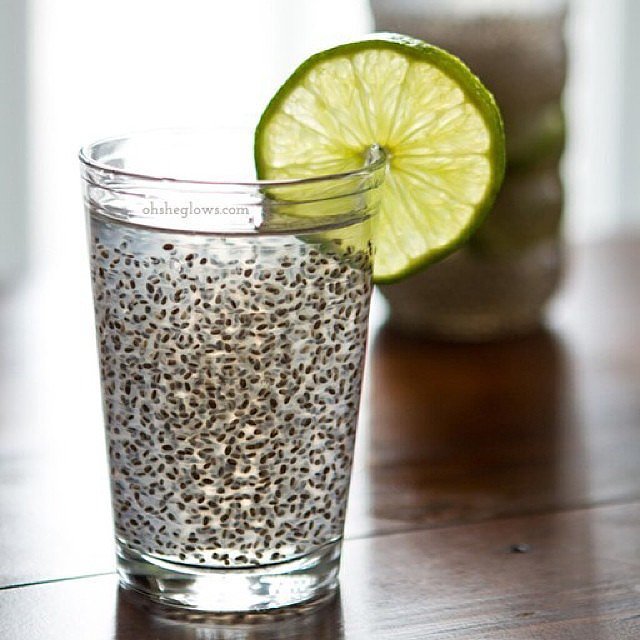
They can also be mixed with water and turned into a gel.
Adding chia seeds to recipes will dramatically boost the nutritional value.
If you want to buy chia seeds, then there is an excellent selection on Amazon with thousands of customer reviews.
They do seem to be well tolerated… but if you’re not used to eating a lot of fiber, then there is a possibility of digestive side effects if you eat too much of them at a time.
A common dosage recommendation is 20 grams (about 1.5 tablespoons) of chia seeds, twice per day.

Source

Thursday, 20 August 2015

15-Minute Full-Body Workout: Fast and Furious Calorie Burn

Short on time? Then this is the workout for you. Autumn Calabrese,
creator of the 21-Day Fix (21DayFix.com), shortened her signature Dirty
30 Workout just for us. It may only be 15 minutes long, but every second
is designed to tone you all over while keeping your heart rate up. Yep,
you're about to burn significant calories while building
metabolism-boosting muscle.


Wednesday, 19 August 2015

Heart-pumping Plyometrics Workout

It is widely accepted that two of the most efficient ways to burn fat and get lean are strength training and high-intensity interval training. Plyometrics, a form of strength training that requires jumping and repetition, is really a combination of the two. It increases heart rate and therefore often results in a high-intensity interval.
Plyometric training uses explosive movements to build strength and to condition the muscles and heart. The exercises are typically jumping movements—both feet need to leave the ground at the same time. During each landing the muscles get a stretch, which allows the exerciser to jump with even more power on the next one. The continual stretching and contracting of the muscles quickly whips muscles into shape.
At one time, plyometrics were primarily used by athletes to improve power for their sports, but now they are solid part of the fabric of the fitness world. Fitness professionals and enthusiasts everywhere use plyometrics as either a stand-alone workout or in parts of other workout regimens. Plyometrics boost muscle power, strength, balance and agility.

How Often Should My Clients Do Plyometrics?

Plyometrics should not be performed every day because muscles need a break from all that high impact. Similar to other types of strength training, a 48-hour rest between intense plyometric sessions is recommended. For beginning clients, help them work on building a solid foundation of fitness before adding plyometric moves to their programs.

Can I Modify With Low-impact Moves?

While it is possible to modify high-impact activities to make them low-impact, this takes away the benefits of plyometric activity. In other words, you might be doing a great exercise, but it won’t be a plyometric workout. That being said, don’t hesitate to modify your clients’ workouts—it’s better to start slowly and take more recovery time as needed.

Are Plyometrics Primarily Strength or Cardio?

Plyometrics are used primarily to build strength, but they also are a great way to introduce anaerobic interval training to your clients’ programs. Anaerobic intervals increase cardiovascular capacity and will get your clients into shape quickly.
Here is a 15-minute plyometric workout to use with your clients. Perform each exercise for 30 seconds with a 30-second rest in between. Have clients perform the series of five exercises, rest for two minutes and then repeat the series a second time. Don’t forget to have your clients cool down and stretch at the end of the workout.
Begin with one minute of light jogging and stationary squats to warm up.

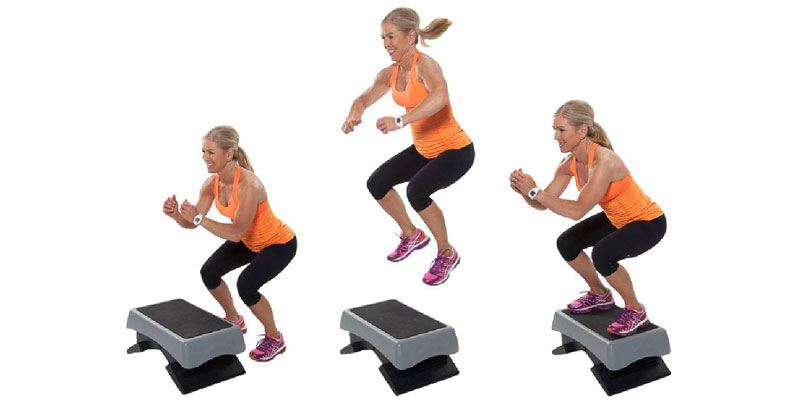
BOX OR STEP JUMPS


Begin in a deep squat position with a step or sturdy platform or box in front and arms bent next to the sides of the body.
Swing the arms and jump as high as possible, landing quietly and with control in a squat position on the step. Both feet should land at the same time and weight should stay in the heels.
Jump down, landing in start position and repeat quickly. Do as many as possible for 30 seconds.
Rest for 30 seconds.

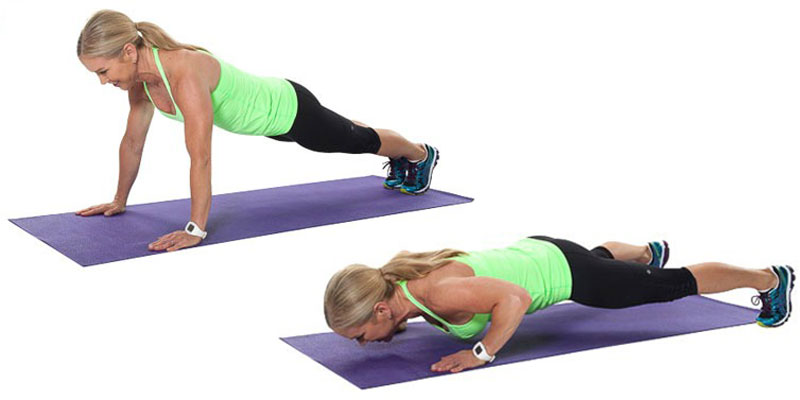
PUSH-UP JACKS


Begin in a plank position with the shoulders over the wrists, feet together, and the body in a straight line.
Lower to a push-up while jumping the feet to a wide position. Keep the abdominals tight and land with the spine straight and chest close to the floor.
Jump the feet back together while straightening the arms to push up to the starting position. Repeat as many times as possible for 30 seconds.
Rest for 30 seconds.

SPLIT JUMPS

Start in a stationary lunge position, with the right foot in front and the left foot behind resting on ball of foot. Both legs should be bent at a 90-degree angle at the bottom of the lunge.
Swing the arms and jump as high as possible, switching foot positions while in the air. When landing, the left foot will be in front. Land in a bent-knee lunge. Note: Be sure that the feet leave and land at the same time.
Repeat quickly but get a full range of motion each time. Do as many as possible in 30 seconds.
Rest for 30 seconds.

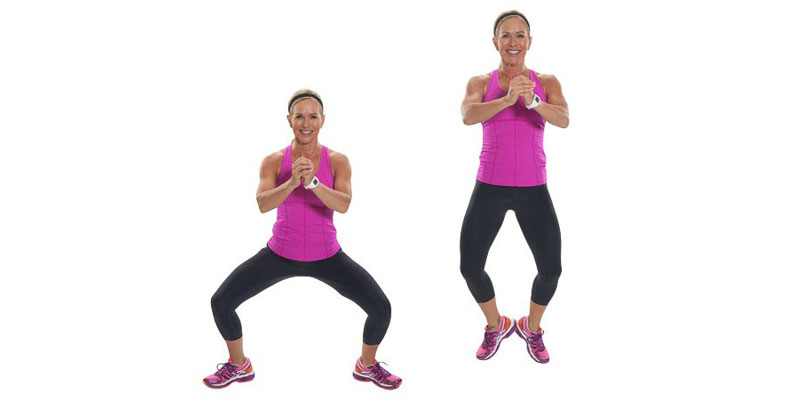
DIAMOND JACKS


Start with the legs wider than shoulder-distance apart. Turn the toes slightly out and bend the knees in a wide plié position; hold the hands in front of the chest.
Using the lower-body muscles, jump up as high as possible and touch the heels together before landing in the starting starting position. Repeat quickly and perform as many as possible in 30 seconds.
Rest for 30 seconds.

CORE BODY HOPS


Begin in a plank position with the shoulders over the wrists, feet together and the body in a straight line.
From this position, bend the knees and hop both feet up to the left hand while keeping the feet together. Hop back to the starting position and repeat to the right.
Perform as many as possible in 30 seconds. Be sure to keep the core tight and don’t let the back sag.
Rest for two minutes and repeat from the entire series from the beginning.

Source 

Monday, 17 August 2015

7 Reasons Why You Should Be Using Coconut Oil

It is a common misconception that coconut oil is bad for you. People all over the world are experiencing the healthy benefits of using coconut oil. It is actually one of the healthiest oils you can consume. Here are the top seven reasons why you should use coconut oil as an alternative to other common cooking oils.
 
 1. Coconut oil doesn't turn to fat in your body.

Unlike many other common oils, like soy (vegetable) and corn, coconut oil won't make you fat. Coconut oil contains medium-chain triglycerides (MCT), which are an easy fuel for the body to burn, without turning to fat. Most other cooking oils and fats contain long-chain triglycerides (LCT). LCT's are usually stored as fat. Since coconut oil is a MCT, it is more easily absorbed and converted to energy quicker.

People in the tropics have relied on coconuts as a traditional staple in their diet for centuries. They consume large amounts of coconut oil every day. Instead of getting fatter, it helps them stay healthy, lean and trim. When they switch from coconut oil to our modern oils, they develop obesity and the health problems that our modern society faces.

Some other people who have known this truth for a long time are people who are in the animal feed business. When livestock are fed vegetable oils, they put on weight and produce more fatty meat. When they are fed coconut oil, they become very lean.

2. Coconut oil increases your metabolism.

Not only does coconut oil convert to energy quicker in your body, it increases your metabolism, which promotes weight loss. Because it boosts your metabolism, it helps your body burn fat more effectively.

Coconut oil may triple your calorie burn. Since coconut oil is a MCT, it is converted to energy so quickly that it creates a lot of heat. In a study published in the American Journal of Clinical Nutrition, MCT's burn three times more calories for six hours after a meal than LCT's.

The February 15, 2005 issue of Woman's World magazine stated that coconut oil is the "underground high-metabolism secret."

This is great news for people who have thyroid problems, since coconut oil improves sluggish thyroids by stimulating the production of extra thyroid hormones. Most other common oils, like vegetable (soy) and corn have been shown to inhibit thyroid function.

3. Coconut oil has omega 3 fatty acids.

Most cooking oils contain omega 6 fatty acids, something we get way too much of in the United States. Our omega 6 to omega 3 ratio should be 1:1 but it is more like 50:1. We need to drastically cut back our omega 6 oils and consume much more omega 3 oils to be healthy. And coconut oil is filled with these healthy omega 3 fatty acids.

4. Coconut oil gives you energy.

Because of the healthy omega 3 fatty acids and the fact that it increases the metabolism, most people that switch to coconut oil feel a burst of added energy in their daily life.

This is because coconut oil is nature’s richest source of medium-chain triglycerides (MCT's), which increase metabolic rates and lead to weight loss. MCT's promote thermogenesis, which increases the body's metabolism, producing energy.

This is because coconut oil is nature’s richest source of medium-chain triglycerides (MCT's), which increase metabolic rates and lead to weight loss. MCT's promote thermogenesis, which increases the body's metabolism, producing energy. Many people with chronic fatigue syndrome and fibromyalgia have found that adding coconut and coconut oil to their diet was helpful to them.

5. One of the best things you can use on your skin and hair is coconut oil.

Coconut oil one of the best things you can apply directly on your skin and hair. It gives temporary relief to skin problems like rashes. It aids in healing and restoring skin to a younger appearance. It has also been known to help with people who suffer from yeast infections in the skin, as well as many other skin problems.

Not only does is soften and smooth your skin, coconut oil has antioxidant properties that protect the skin from free radical damage. Coconut oil makes excellent massage oil too.
 
 6. Coconut oil has healthy benefits that most other oils do not.

Evidence is mounting that coconut oil has anti-fungal, anti-bacterial and anti-viral effects when both consumed and used topically on the skin.

Most oils oxidize and turn rancid very quickly causing free radical damage in our bodies. Coconut oil is not easily oxidized and does not cause harmful free radical damage like polyunsaturated vegetable oils. Free radical damage is thought to be responsible for many ailments in our body from arthritis to increased susceptibility to cancers.

Coconut oil also helps our bodies absorb other nutrients more effectively, such as Vitamin E.

7. Coconut oil is one of the best oils you can use for cooking.

It has a higher smoke point than olive oil, which means it can take higher temperatures better. There are several healthy omega 3 oils we can choose to consume, such as flax and olive oil, but they don't do well under the high heat we use for cooking. Coconut oil can be used in higher cooking temperatures.

It is harder for coconut oil to go rancid, unlike other cooking oils, which are usually rancid long before you even bring them home. Rancid oils cause free radical damage in the body, which is a leading cause of cancer. Coconut oil is stable for over a year at room temperature.

Because of the misinformation we have been given for years, we have lost out on the healthy benefits that coconut oil has given the people of the tropics for centuries. But now it has been rediscovered! Coconut oil is so effective, it won't be long before we see coconut oil supplements promoted, but you can get the jump on the popular crowd and start consuming and cooking with coconut oil today!

Source B@Dream Health 4 Fitness